

 英语
英语 德语
德语 阿拉伯语
阿拉伯语

Content
- 1 What Is the Melting Point of Steel?
- 2 Why Does Steel's Melting Point Vary So Much?
- 3 Melting Points by Steel Type
- 4 How Is the Melting Point of Steel Actually Measured?
- 5 From Furnace to Ingot: How Steel Is Actually Melted
- 6 Melting Point vs Structural Failure Temperature
- 7 Steel Melting Point in Forging and Manufacturing
- 8 Melting Point in Welding and Cutting Compared with Forging
- 9 How Steel's Melting Point Compares to Other Metals
- 10 Common Misconceptions About Steel's Melting Point
- 11 Frequently Asked Questions
- 11.1 What temperature does steel melt at in Celsius?
- 11.2 What temperature does steel melt at in Fahrenheit?
- 11.3 Is stainless steel's melting point different from carbon steel's?
- 11.4 Why does structural steel fail in fires long before it melts?
- 11.5 What is the difference between melting point and forging temperature?
- 11.6 Does adding carbon raise or lower the melting point of steel?
- 11.7 Why is steel's melting point given as a range instead of one number?
- 11.8 How hot does a weld pool get compared to steel's melting point?
- 11.9 Does steel's melting point change with pressure or altitude?
What Is the Melting Point of Steel?
1370°C – 1540°C / 2500°F – 2800°F
Steel does not melt at a single fixed temperature. Because steel is an alloy of iron and carbon, often combined with elements such as chromium, nickel, manganese, or molybdenum, its melting point falls within a range rather than at one exact figure. Most commercial steel grades begin turning to liquid somewhere between 1370°C and 1540°C (2500°F to 2800°F), with the precise value shifting depending on the exact chemical makeup of the grade in question.
This range matters far beyond a curiosity for metallurgists. Foundries use it to set furnace targets, fabricators use it to understand how close their welding or cutting processes come to full liquefaction, and engineers use it to judge how a structure will behave if it is ever exposed to extreme heat. A one hundred degree swing in melting point can change furnace energy consumption, refractory lining choices, and even the grade of steel selected for a specific application.
Two related terms are worth separating early. The solidus temperature is where melting begins, and the liquidus temperature is where the metal is fully liquid. Between these two points, steel exists in a mixed, partially molten state that foundry operators sometimes call the mushy zone. Casting and pouring decisions are made with this zone in mind, since pouring too early risks incomplete flow, while overheating wastes energy and can promote grain growth that weakens the final product.
Consider a practical example. A structural fabrication shop cutting steel plate with an oxy-fuel torch is working with a flame temperature well above the melting point, which is why the cut edge briefly liquefies and is blown away by the oxygen stream. A foundry pouring an engine block, by contrast, deliberately heats the metal only a modest margin above the liquidus temperature, since excess superheat wastes fuel and can degrade the finished casting. The same physical property, melting point, drives two completely different operating decisions depending on the process.

Why Does Steel's Melting Point Vary So Much?
Pure iron melts at a comparatively predictable 1538°C (2800°F). The moment carbon and other alloying elements are introduced, that number starts to shift. Each element changes the crystal lattice of the metal slightly differently, and the cumulative effect is what produces the wide melting range seen across the steel family.
Carbon
Even small increases in carbon content lower the melting point noticeably. Raising carbon from roughly 0.05 percent to 2.0 percent can pull the melting point down by well over 100°C, which is why high-carbon tool steels generally melt at lower temperatures than very low-carbon mild steel.
Chromium
Chromium is the defining element of stainless steel and tends to raise resistance to corrosion while having a moderate effect on melting behavior, keeping stainless grades within a fairly narrow band compared with other alloy families.
Nickel
Nickel improves toughness and helps stabilize the internal structure of stainless steels at high temperature, which is part of why nickel-bearing grades are common in equipment that must withstand repeated thermal cycling.
Manganese
Manganese is added to almost every commercial steel grade in small amounts. It assists with deoxidizing molten steel during production and has a mild depressing effect on the overall melting range.
Molybdenum
Molybdenum raises high-temperature strength and is common in alloy and tool steels that need to hold their hardness while working near the upper end of the forging window, without meaningfully raising the melting range.
Silicon
Silicon is used as a deoxidizer during steelmaking and contributes to strength in certain spring and electrical steels, with only a minor influence on where the metal begins to soften and liquefy.
Trace impurities matter too. Sulfur and phosphorus, left over from raw materials if not properly refined, can lower the effective melting behavior at grain boundaries and contribute to a phenomenon called hot shortness, where the metal becomes brittle and prone to cracking at high working temperatures even before it approaches its bulk melting point. This is one reason modern steelmaking places so much emphasis on tightly controlling residual element levels rather than only tracking the primary alloying additions.
The practical takeaway for anyone selecting material is that the phrase "the melting point of steel" is really shorthand for a family of closely related values. Two coils sitting side by side on a warehouse floor, one mild steel and one high-carbon tool steel, can have melting points that differ by well over 100 degrees Celsius even though both are correctly described as steel.
Melting Points by Steel Type
The table below groups common steel families and the melting ranges typically associated with each. These figures reflect general industry references rather than a single mill's specification sheet, so always confirm exact values against the certified data for a specific heat or grade before it becomes part of a critical calculation.
| Steel Type | Melting Point (°C) | Melting Point (°F) |
|---|---|---|
| Low-carbon (mild) steel | 1410 – 1530 | 2570 – 2785 |
| Medium and high-carbon steel | 1410 – 1530 | 2570 – 2785 |
| Stainless steel | 1375 – 1530 | 2500 – 2785 |
| Low alloy steel | ≈ 1432 | ≈ 2610 |
| High alloy steel | ≈ 1415 | ≈ 2600 |
| Tool steel | 1400 – 1425 | 2550 – 2600 |
| Structural steel | ≈ 1425 | ≈ 2600 |
Notice how tool steel and structural steel sit slightly lower than the wider carbon steel band. Tool steels carry higher carbon and additional alloying elements that pull the melting point down, and structural grades are formulated for weldability and toughness rather than for withstanding the very highest furnace temperatures.
It is also worth noting that within any single category, the range is not evenly distributed. A 1020 mild steel and a 1095 high-carbon steel are both technically carbon steel, yet the higher carbon grade will consistently sit toward the lower end of the band while the leaner grade sits toward the upper end. Anyone specifying furnace settings for a mixed batch of scrap or stock should account for this spread rather than assuming a single midpoint temperature will suit every piece equally.
How Is the Melting Point of Steel Actually Measured?
Melting point figures do not come from guesswork. Metallurgists and materials labs rely on a handful of established techniques to pin down solidus and liquidus temperatures for a given steel composition.
Differential thermal analysis
A small sample is heated alongside an inert reference material, and the temperature difference between the two is tracked. The point where the steel sample absorbs extra heat to change phase reveals the solidus and liquidus points precisely.
Optical pyrometry
In production furnaces, non-contact optical pyrometers read the radiant energy given off by molten or near-molten steel to estimate surface temperature without a probe touching the metal directly, which is essential given how quickly a thermocouple would be consumed by liquid steel.
Immersion thermocouples
Disposable, sacrificial thermocouple probes are dipped directly into molten steel for a brief reading. Each probe is used once and discarded, since the tip is destroyed by the heat, but the reading is highly accurate for that single measurement.
Phase diagram reference
Rather than measuring a physical sample every time, engineers frequently consult the iron-carbon phase diagram and alloy-specific phase diagrams, which map how solidus and liquidus temperatures shift as composition changes, allowing melting behavior to be predicted from a known chemistry.
Production furnaces typically combine several of these methods. A continuous optical pyrometer might monitor general trends throughout a heat, while periodic immersion thermocouple dips confirm the actual bath temperature at key decision points such as just before tapping the furnace.
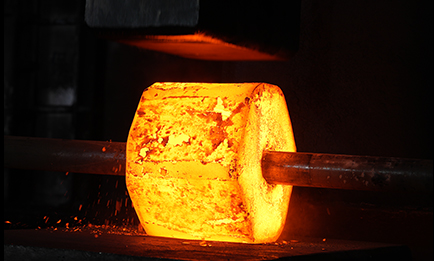
From Furnace to Ingot: How Steel Is Actually Melted
Understanding where the melting point comes into play across production helps explain why the number is treated as such a critical operating parameter rather than a background fact.
Electric arc furnace (EAF)
Scrap steel is loaded into a refractory-lined vessel and melted using electric arcs struck between large graphite electrodes and the charge. Bath temperatures are pushed comfortably above the liquidus point, often into the 1600°C to 1700°C range, to ensure full melting and to allow time for refining reactions before tapping.
Basic oxygen furnace (BOF)
Molten iron from a blast furnace is combined with scrap and blown with high-purity oxygen, which triggers exothermic reactions that help sustain the high temperatures needed to keep the charge liquid while carbon and impurities are oxidized out.
Induction furnace
Common in foundries producing smaller batches or specialty alloys, induction furnaces use electromagnetic fields to heat the charge directly, offering precise temperature control that is well suited to hitting a specific superheat target above the liquidus point.
In every case, the target bath temperature is set with the alloy's specific liquidus point as the floor, plus a superheat margin that gives the operator working time for pouring, alloying additions, and temperature loss during transfer to a mold or continuous caster. Too little superheat risks the steel partially solidifying before it reaches the mold; too much wastes energy and can increase refractory wear.
Melting Point vs Structural Failure Temperature
~1370–1540°C
The temperature at which steel physically turns from solid to liquid. Reaching this point requires a furnace or an extremely intense, sustained heat source.
~500–600°C
The temperature range where load-bearing steel begins to lose enough strength that it can no longer safely support its designed load, long before the metal is anywhere near molten.
This distinction is one of the most misunderstood points about steel behavior. A steel beam does not need to melt to fail. Structural steel typically retains only a fraction of its room-temperature yield strength once it passes roughly 500 to 600°C, which is why fire protection engineering focuses on keeping steel below that threshold rather than below its melting point. An architect or engineer designing for fire resistance is working with a completely different number than a foundry operator pouring molten steel into a mold.
Load also changes the picture. A lightly loaded member can survive higher temperatures than a heavily loaded one before it deforms, so the exact failure temperature for any given structural element depends on how much weight it is carrying relative to its rated capacity, not on a single universal number.
This gap between melting point and functional failure also explains why steel is often described as losing strength gradually rather than failing all at once. Between roughly 200°C and 300°C, most carbon steels retain nearly all their room-temperature strength. From there upward, the strength curve bends downward at an accelerating rate, so the difference between 500°C and 600°C matters far more to a structural calculation than the same one-hundred-degree gap would near room temperature.
Steel Melting Point in Forging and Manufacturing
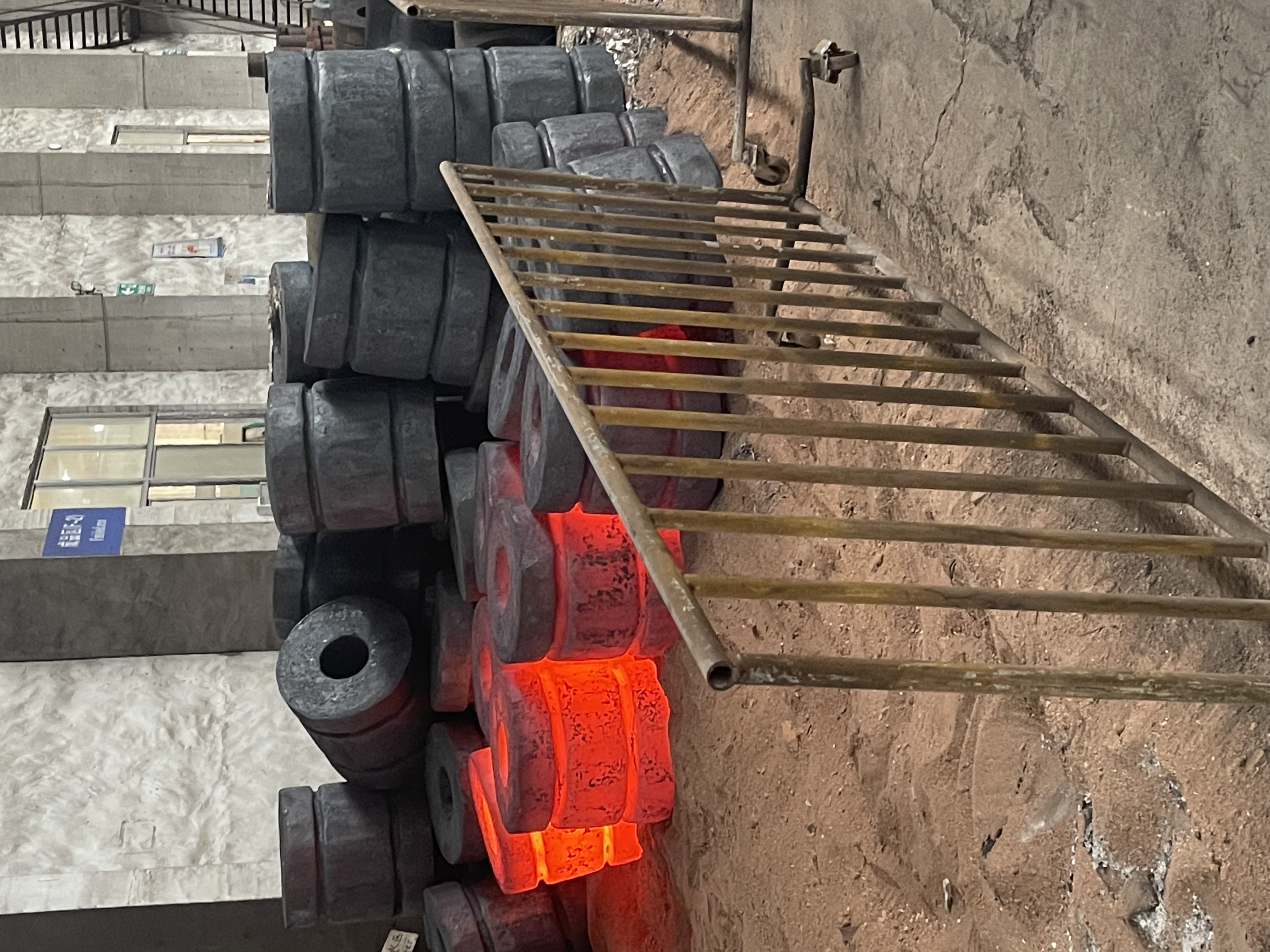
Melting point is not the number that matters most on a forging shop floor. What matters is the forging temperature window, a band that sits comfortably below the melting range so the metal is hot enough to be reshaped by hammering or pressing, yet never approaches liquefaction.
Heating the billet
Steel stock is heated in a furnace toward the hot working range, commonly cited around 1100°C to 1250°C (roughly 2000°F to 2300°F) for many carbon and alloy grades, well below the melting range shown earlier in this article.
Soaking for uniform temperature
The workpiece is held at temperature long enough for heat to penetrate evenly through its cross-section, avoiding a situation where the surface is workable but the core is still comparatively cold and resistant to deformation.
Steel forging under pressure
Hammers, presses, or rolling equipment reshape the softened but still solid steel into the desired form. Staying well under the melting point keeps the grain structure intact and is part of why forged parts are prized for strength compared with cast equivalents.
Controlled cooling
After shaping, the part is cooled in a controlled manner, sometimes with subsequent heat treatment, to lock in the mechanical properties the forging process was designed to achieve.
Understanding the gap between forging temperature and melting point explains a lot about why forging equipment is engineered the way it is. Furnace controls, pyrometers, and soak-time procedures all exist to keep the workpiece safely inside the forging window. Overshoot that window and drift toward the melting range, and the risk of burnt steel, coarse grain structure, and cracking during shaping rises sharply. This is one reason experienced shops treat melting point data not as an operating target, but as a hard ceiling to stay well clear of during any hot working process.
Hot forging vs cold forging
Most steel forging happens hot, in the temperature window described above, because heated steel deforms with far less force than steel at room temperature and recrystallizes as it works, avoiding the buildup of internal stress. Cold forging, by contrast, shapes steel at or near room temperature, relying on the metal's ductility rather than heat. Cold forging is unrelated to the melting point discussion in a direct sense, but it is worth mentioning because the choice between hot and cold forging is itself partly driven by how a given steel grade's properties change as it approaches, or stays far from, its thermal limits.
Common defects linked to overheating during forging
When a furnace operator allows stock to creep too close to the melting range, a handful of predictable defects tend to appear. Grain growth produces a coarse internal structure that reduces toughness. Incipient melting at grain boundaries, sometimes called burning, can permanently damage the material even if the bulk of the piece never visibly liquefies. Scale formation accelerates as temperature rises, wasting material and complicating downstream finishing. Recognizing these signs early is part of why furnace temperature control and monitoring remain a central focus in forging operations.
Melting Point in Welding and Cutting Compared with Forging
Welding and thermal cutting sit at the opposite end of the temperature spectrum from forging. Where forging deliberately avoids the melting range, welding depends on reaching it, at least locally, to fuse two pieces of steel together.
During arc welding, the immediate weld pool typically exceeds the bulk melting point of the base steel by a meaningful margin, since the arc itself burns at several thousand degrees and localized superheating helps ensure full fusion between the parent metal and filler material. This is a narrow, highly localized event, unlike furnace melting where the entire charge is brought to temperature. The surrounding base metal only a short distance from the weld pool may still be close to room temperature, which is why welding introduces steep thermal gradients and why controlling heat input and cooling rate is so central to weld quality.
Thermal cutting processes such as oxy-fuel cutting and plasma cutting work similarly, driving a narrow kerf of steel past its melting point so it can be ejected as molten slag, while the surrounding plate stays largely unaffected structurally, aside from a narrow heat-affected zone.
How Steel's Melting Point Compares to Other Metals
Placing steel alongside other common industrial metals helps put its melting behavior in context, especially for anyone choosing between materials for a high-temperature application.
| Metal | Melting Point (°C) | Melting Point (°F) |
|---|---|---|
| Lead | ≈ 327 | ≈ 621 |
| Zinc | ≈ 420 | ≈ 788 |
| Aluminum | ≈ 660 | ≈ 1221 |
| Copper | ≈ 1085 | ≈ 1985 |
| Pure iron | ≈ 1538 | ≈ 2800 |
| Steel (general range) | 1370 – 1540 | 2500 – 2800 |
| Titanium | ≈ 1668 | ≈ 3034 |
| Tungsten | ≈ 3422 | ≈ 6192 |
Steel sits comfortably above aluminum and copper, which explains why aluminum and copper require far less furnace energy to melt and are commonly used where lower processing temperatures are an advantage. Titanium melts at a noticeably higher temperature than most steel grades, and tungsten sits in a category of its own, which is why tungsten is chosen for filaments and components that must survive extreme, sustained heat that would liquefy steel outright.
Interestingly, steel's melting point is close to, and in most alloy formulations slightly below, that of pure iron. This is consistent with the general metallurgical principle that alloying an element almost always lowers its melting point relative to the pure base metal, a pattern that holds true across most common alloy systems, not just steel.
Common Misconceptions About Steel's Melting Point
Steel has one exact melting point, the same way water freezes at exactly zero degrees Celsius.
RealitySteel is an alloy, so it melts across a range defined by its solidus and liquidus temperatures, which shift with composition rather than sitting at one fixed number.
A steel structure only becomes dangerous once it starts to melt.
RealityStructural steel loses a large share of its load-bearing capacity around 500°C to 600°C, hundreds of degrees below its melting range, so failure risk rises long before the metal is anywhere close to liquid.
Stainless steel always has a higher melting point than plain carbon steel because it is a premium material.
RealityThe two ranges overlap substantially, and depending on the exact grades being compared, some carbon steels can have a higher melting point than some stainless grades.
Forging requires heating steel close to its melting point to make it soft enough to shape.
RealityForging deliberately stays well below the melting range, typically 100°C to 300°C lower, since working too close to liquefaction damages the grain structure and increases the risk of cracking.
Frequently Asked Questions
What temperature does steel melt at in Celsius?
Most commercial steel grades melt somewhere between 1370°C and 1540°C, with the exact figure depending on carbon content and the presence of other alloying elements such as chromium, nickel, or manganese.
What temperature does steel melt at in Fahrenheit?
In Fahrenheit, the same range translates to roughly 2500°F to 2800°F, again shifting somewhat depending on the specific grade and its alloying content.
Is stainless steel's melting point different from carbon steel's?
The two ranges overlap significantly. Stainless steel typically falls between 1375°C and 1530°C, while carbon steel typically falls between 1410°C and 1530°C, so the difference between a specific stainless and a specific carbon grade is usually smaller than people expect.
Why does structural steel fail in fires long before it melts?
Load-bearing capacity drops sharply once steel passes roughly 500°C to 600°C, a temperature far below its melting range. The steel is still solid at that point, but it has lost too much strength to keep supporting its designed load.
What is the difference between melting point and forging temperature?
Melting point is where steel turns fully liquid. Forging temperature is a lower working window, commonly around 1100°C to 1250°C for many grades, chosen specifically to stay well clear of the melting range while still making the metal soft enough to reshape.
Does adding carbon raise or lower the melting point of steel?
Adding carbon lowers the melting point. Higher carbon content pulls the melting range down, which is part of why high-carbon tool steels generally melt at somewhat lower temperatures than very low-carbon mild steel.
Why is steel's melting point given as a range instead of one number?
Steel is an alloy, not a pure element, so it does not have a single fixed melting point the way pure iron does. The exact solidus and liquidus temperatures shift with the specific mix of carbon and alloying elements in each grade.
How hot does a weld pool get compared to steel's melting point?
A typical arc welding weld pool runs well above the bulk melting range of the base steel, often around 1600°C or higher in the immediate arc zone, since the process needs enough superheat to ensure full fusion between the base metal and filler.
Does steel's melting point change with pressure or altitude?
Melting point does shift slightly with pressure in a strict thermodynamic sense, but the effect is small enough at normal atmospheric conditions that it is not a practical factor for everyday furnace, forging, or welding operations.