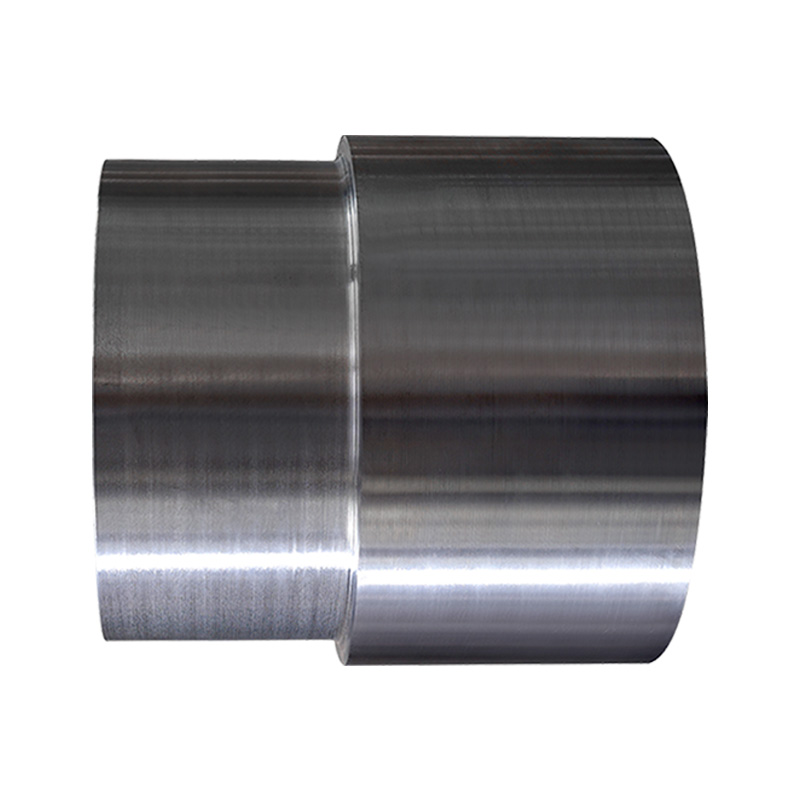
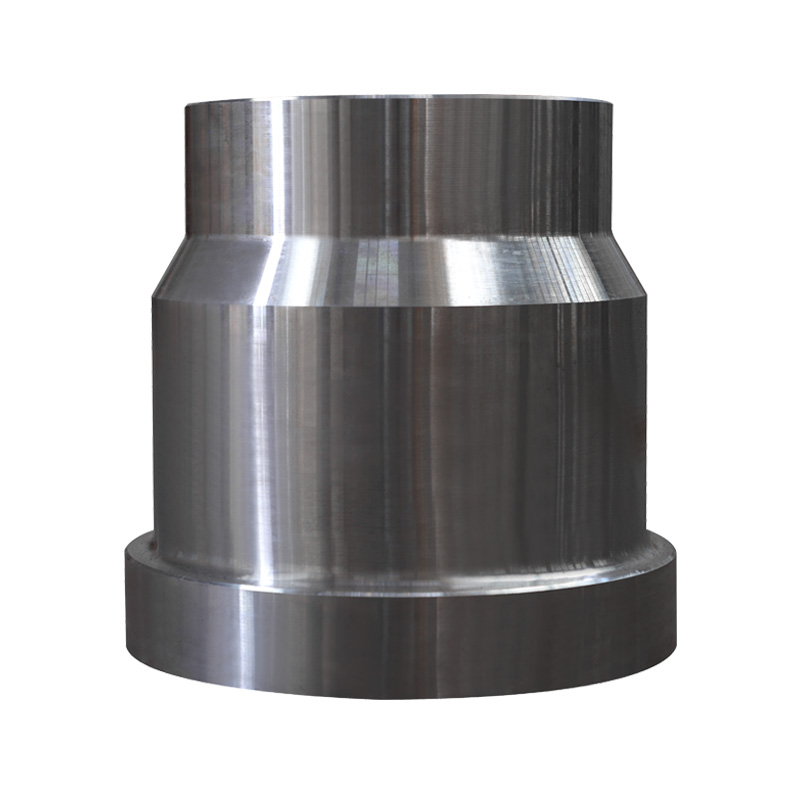
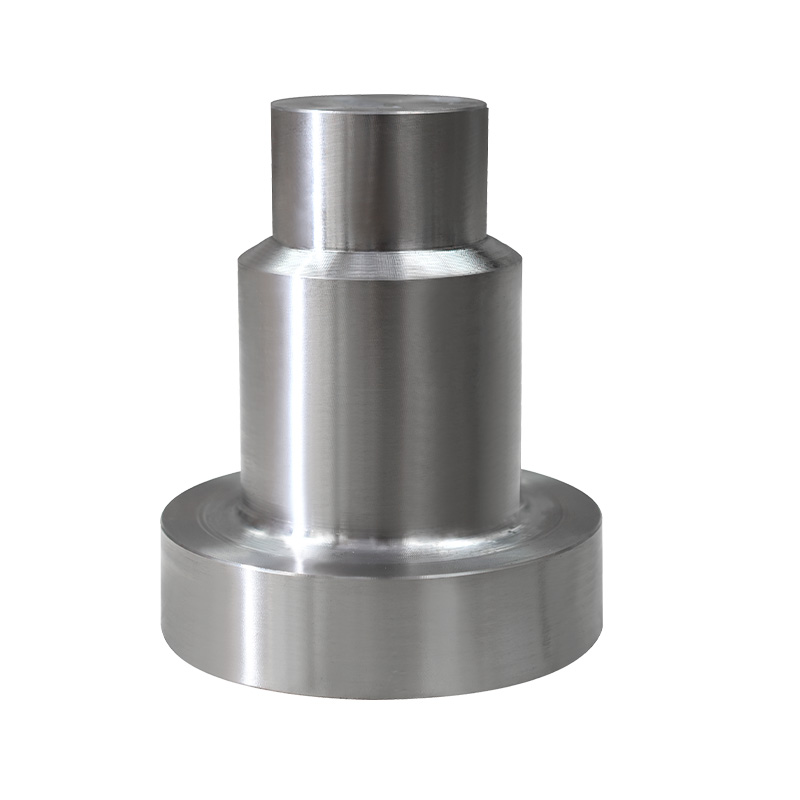
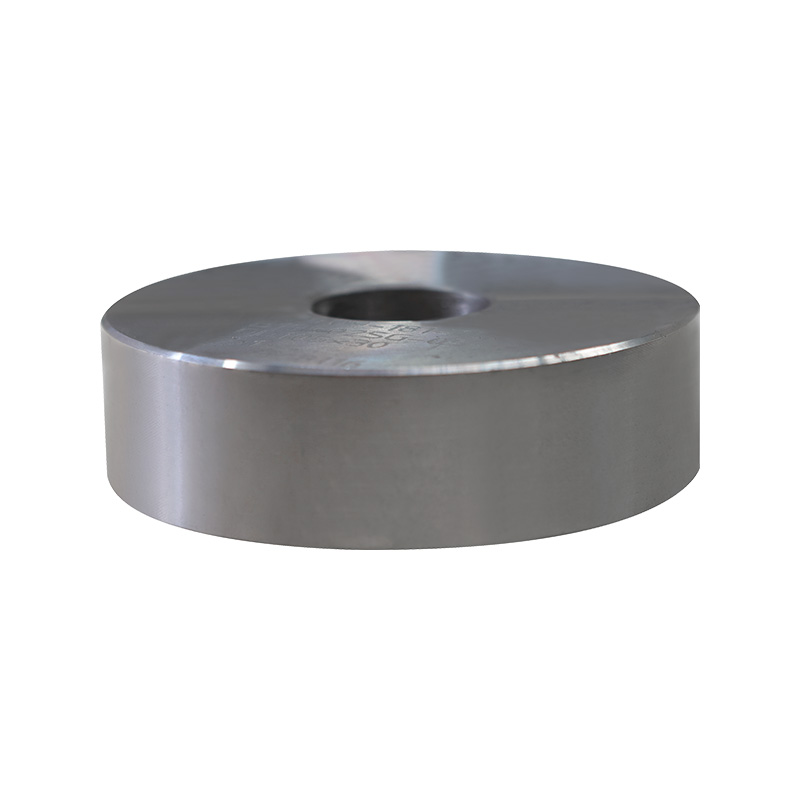
Annealed steel is steel that has been heated to a specific temperature and then cooled slowly in a controlled manner to reduce hardness, relieve internal stresses, and improve ductility and machinability. This heat treatment process fundamentally alters the steel's microstructure, making it softer and easier to work with for subsequent forming, machining, or steel forging operations. The result is a material with improved workability, greater toughness, and more predictable mechanical behavior — qualities that are critical in virtually every sector of manufacturing.
Whether you are sourcing raw blanks for steel forging, preparing sheet metal for deep drawing, or machining complex geometries, annealing is often the treatment that makes the difference between a smooth process and a failed component. This article covers everything from the metallurgical fundamentals to practical comparisons with other heat treatments, so you can make informed decisions about when and how to anneal steel.
The Metallurgical Science Behind Annealed Steel
To understand what annealing does, it helps to understand what happens inside steel at a microscopic level. Steel is primarily iron with carbon dissolved into its lattice structure, along with alloying elements such as manganese, chromium, nickel, or molybdenum. When steel is cold-worked — through rolling, drawing, pressing, or steel forging — the grains of the metal become distorted and elongated. Dislocations (defects in the crystal lattice) multiply, causing the steel to harden and lose ductility. This phenomenon is called work hardening or strain hardening.
Annealing reverses this process. By heating the steel to a temperature above its recrystallization point, the deformed grains are given enough thermal energy to reorganize into new, equiaxed (roughly equal in all dimensions) grains free of dislocations. Slow cooling then allows the carbon atoms to redistribute uniformly through the iron lattice, preventing the formation of hard, brittle microstructures like martensite. The final microstructure is typically ferrite and pearlite, which are both relatively soft and tough.
Key Microstructural Changes During Annealing
Three overlapping stages occur during a full anneal cycle:
- Recovery: At lower temperatures, residual stresses begin to relieve and some dislocations annihilate each other, reducing internal strain without significantly changing the grain structure.
- Recrystallization: New, stress-free grains nucleate and grow at the expense of the deformed grains. This is where most of the softening occurs. Recrystallization typically begins between 400°C and 700°C depending on alloy composition and degree of prior cold work.
- Grain Growth: If heating continues above the recrystallization temperature, grains begin to merge and coarsen. Excessively large grains can reduce toughness, so the annealing temperature must be carefully controlled.
Understanding these stages allows metallurgists and production engineers to tailor the annealing cycle precisely — controlling not just the final hardness but also the grain size, which directly affects machinability and the response of the material to subsequent steel forging or forming operations.
Types of Annealing Processes Explained
Not all annealing is the same. The specific cycle used depends on the steel grade, the degree of cold work, the desired final properties, and the subsequent manufacturing steps planned. The following are the most widely used annealing methods in industrial practice.
Full Annealing
In full annealing, steel is heated to 30°C to 50°C above the upper critical temperature (Ac3) for hypoeutectoid steels or above the lower critical temperature (Ac1) for hypereutectoid steels, held at that temperature until thoroughly soaked, and then cooled very slowly — typically inside the furnace at a rate of about 10°C to 20°C per hour. This produces the softest possible condition for a given steel grade and is often used before heavy machining, forming, or when preparing blanks for precision steel forging.
Process Annealing (Subcritical Annealing)
Process annealing heats steel below the lower critical temperature (Ac1), typically in the range of 550°C to 700°C. It does not fully recrystallize the steel but relieves work hardening enough to restore some ductility. This is widely used in wire drawing and sheet metal production between cold-working passes. It is faster and less expensive than full annealing.
Spheroidizing Annealing
Spheroidizing converts the lamellar (plate-like) cementite (iron carbide) in the steel's pearlite structure into spherical carbide particles embedded in a ferritic matrix. The result is maximum softness, excellent machinability, and outstanding formability. Spheroidizing is particularly important for high-carbon steels (above 0.6% C) that will undergo cold heading, deep drawing, or precision machining. The cycle involves heating to just below Ac1, holding for extended periods (often 8 to 24 hours), and slow cooling.
Isothermal Annealing
In isothermal annealing, the steel is heated into the austenite range, then quickly cooled to a specific intermediate temperature and held there until the transformation from austenite to the desired microstructure is complete. The advantage over full annealing is much better control of the final microstructure and a significant reduction in cycle time. It is commonly used for alloy steels where slow furnace cooling alone would take impractically long periods.
Stress-Relief Annealing
Stress-relief annealing targets residual stresses introduced by welding, casting, machining, or steel forging without significantly changing the hardness or microstructure. Temperatures are typically in the range of 150°C to 600°C, well below the lower critical temperature. This treatment is critical for components that must maintain dimensional stability during or after machining, and for weldments that would otherwise be prone to distortion or stress-corrosion cracking.
Bright Annealing
Bright annealing is carried out in a controlled atmosphere — often hydrogen, nitrogen, or a combination — to prevent oxidation and scale formation on the steel surface. The result is a clean, scale-free, bright metallic surface that requires no pickling or descaling afterward. It is commonly used for stainless steel strip, tubing, and precision components where surface quality is critical.
Annealed Steel vs. Other Heat-Treated Steel: A Detailed Comparison
Annealing is one of several heat treatment processes used to engineer the properties of steel. It is often confused with normalizing, tempering, and quenching — each of which produces a very different result. The table below summarizes the key differences.
Table 1: Comparison of common steel heat treatment processes
| Process |
Temperature Range |
Cooling Method |
Hardness Result |
Primary Purpose |
| Full Annealing |
Above Ac3 (typically 800–900°C) |
Very slow furnace cooling |
Minimum (softest) |
Maximum softness for forming/machining |
| Normalizing |
Above Ac3 (typically 850–950°C) |
Air cooling |
Moderate |
Uniform microstructure, grain refinement |
| Quenching |
Above Ac3 |
Rapid (water, oil, or polymer) |
Maximum (hardest) |
Maximize hardness and wear resistance |
| Tempering |
150–700°C (after quenching) |
Air cooling |
Reduced from quenched state |
Balance hardness and toughness |
| Stress Relief |
150–600°C |
Slow |
Unchanged |
Reduce residual stresses |
The most common point of confusion is between annealing and normalizing. Both heat the steel above its critical temperature, but the key difference lies in the cooling rate. Normalizing uses air cooling, which is faster, resulting in a finer grain structure and slightly higher strength and hardness than annealed steel. Annealed steel, by contrast, is cooled inside the furnace at a controlled, very slow rate — sometimes taking many hours — to achieve the absolute maximum softness.
For steel forging applications, this distinction matters a great deal. Normalized steel blanks are often easier to handle and transport without distortion, but annealed blanks are preferred when the forging process requires maximum material flow without cracking, especially for complex shapes or tight-tolerance closed-die forgings.
The Role of Annealing in Steel Forging Operations
Steel forging — the process of shaping metal using compressive forces applied through dies and presses or hammers — is one of the most demanding operations a material can undergo. The workpiece must deform plastically without cracking, tearing, or developing surface defects. The condition of the steel before forging has a direct and measurable impact on die life, press tonnage requirements, scrap rates, and the mechanical properties of the final forged part.
01
Annealing Before Cold Forging
Cold forging is performed at or near room temperature. The steel must start in an extremely soft, ductile condition to accommodate the large plastic deformation without fracturing. Spheroidized annealing is the standard pre-treatment for cold forging, producing a microstructure with globular carbides in a soft ferritic matrix that flows freely under pressure. Common applications include cold-forged fasteners, bolts, and precision shafts. According to data published by the Cold Forgers Association (CFA), proper spheroidize annealing can reduce cracking rates in cold forging by more than 60% compared to using as-rolled or normalized stock.
02
Annealing in Warm and Hot Steel Forging
Hot forging — conducted above the steel's recrystallization temperature, typically between 950°C and 1250°C depending on the alloy — softens the steel during the process itself, so extensive pre-annealing is less critical. However, inter-stage annealing between forging passes is widely used when multiple die operations are required. After each significant deformation step, the workpiece is annealed to restore ductility and relieve the accumulated strain before the next pass. This prevents cracking in subsequent forging steps and helps achieve the uniform microstructure required for demanding structural applications.
03
Post-Forging Annealing
After a steel forging operation — especially hot forging — the rapid and uneven cooling of the part can introduce significant residual stresses and non-uniform microstructures. A post-forge annealing or normalizing treatment is commonly applied to homogenize the microstructure, relieve residual stresses, and prepare the forging for machining. Post-forge stress-relief annealing is particularly important for large or complex forgings where differential cooling rates between the surface and core can create stress gradients large enough to cause distortion or even cracking during subsequent machining.
04
Annealing for Final Machinability
Many steel forgings are rough-machined before final heat treatment. To facilitate this machining step and reduce tool wear, the forging is annealed after forging and before machining. The annealed condition provides the softest, most machinable state. Once machining is complete, the part is typically hardened (quenched and tempered) to achieve the final mechanical properties. This sequence — steel forging, annealing, machining, hardening — is the standard production route for components such as gears, crankshafts, connecting rods, and axle shafts.
Mechanical Properties of Annealed Steel: Data and Benchmarks
The specific mechanical properties of annealed steel vary considerably depending on the grade. However, the following benchmarks — drawn from standard material data sheets and engineering references including ASM International's Metals Handbook (10th Edition) — give a reliable picture of what annealing achieves across common carbon and alloy steel grades.
Table 2: Typical mechanical properties of common steels in annealed condition (Source: ASM International Metals Handbook, 10th Edition)
| Steel Grade |
Carbon Content (%) |
Tensile Strength (MPa) |
Yield Strength (MPa) |
Elongation (%) |
Brinell Hardness (HB) |
| AISI 1020 |
0.18–0.23 |
395 |
295 |
36 |
111 |
| AISI 1045 |
0.43–0.50 |
565 |
310 |
16 |
163 |
| AISI 4140 |
0.38–0.43 |
655 |
415 |
26 |
197 |
| AISI 4340 |
0.38–0.43 |
745 |
470 |
22 |
217 |
| AISI D2 (Tool Steel) |
1.40–1.60 |
— |
— |
— |
217 (max) |
A few notable patterns emerge from this data. First, higher carbon content generally raises the annealed hardness and tensile strength while reducing elongation — even in the fully annealed state, high-carbon and high-alloy steels are harder and less ductile than low-carbon grades. Second, elongation values above 20% are routinely achievable in annealed low- and medium-carbon steels, making them highly suitable for cold working and forming. Third, for tool steels like D2, the annealing specification often sets a maximum hardness (e.g., 217 HB) rather than a target, because the priority is simply to soften the steel enough for efficient machining.
In steel forging practice, the incoming material hardness directly affects forging load calculations. A softer, annealed billet requires less press tonnage for the same degree of deformation compared to a normalized or hardened blank. For large forgings produced on hydraulic presses, this can translate into meaningful energy savings and reduced die wear over the life of a production run.
Common Applications of Annealed Steel Across Industries
Annealed steel is used in almost every sector of manufacturing. Its combination of softness, ductility, and machinability makes it the preferred starting point for components that will be further processed, and it is also used directly in applications where high hardness is not required but formability and toughness are.
Automotive
Body panels, chassis components, and structural members are often stamped from annealed or process-annealed sheet steel. Cold-forged drivetrain components — including CV joint housings, gear blanks, and steering knuckle preforms — rely on spheroidize-annealed wire rod or bar stock as the starting material. The automotive industry is one of the largest consumers of annealed steel globally, with major OEMs specifying strict annealing requirements in their material standards.
Aerospace
Aerospace forgings — turbine discs, structural brackets, landing gear components — are often annealed between forging stages to restore ductility and prepare the material for precise final machining. Annealing also plays a role in the production of aerospace fasteners, where cold-forged titanium and steel bolts require careful thermal processing to achieve the correct material condition before final coating and assembly.
Tool and Die Making
High-speed steels, cold-work tool steels, and hot-work tool steels are all supplied in the annealed condition for machining into dies, punches, and cutting tools. A tool steel supplied at 217 HB in the annealed state can be readily machined with conventional carbide tooling, whereas the same steel in its hardened state (58–65 HRC) requires grinding or EDM. Annealing is therefore a prerequisite for practical tool manufacturing.
Construction and Infrastructure
Annealed mild steel wire is used extensively in construction for binding and tying rebar, as well as for general-purpose fabrication work. The softness and flexibility of annealed wire makes it easy to bend and twist by hand, unlike harder drawn wire. Cold-formed structural sections also often begin as annealed or normalized strip, which is then roll-formed into the final shape without cracking.
Oil and Gas
Pressure vessels, valves, and pipeline components used in oil and gas service are frequently produced from steel forgings that have been annealed as part of the manufacturing sequence. Annealing after welding is also mandatory for many high-pressure, high-temperature, or sour service applications where residual stresses could contribute to stress-corrosion cracking or hydrogen-induced cracking under operating conditions.
General Manufacturing
Springs, wire products, fasteners, precision shafts, and countless other general engineering components are produced from annealed steel as a starting point. The annealed condition allows these parts to be formed, machined, or drawn into their final shape before any necessary hardening treatment is applied. Without annealing as a processing step, many of these components would be impossible to manufacture economically.
Annealing Furnaces and Process Equipment
The quality of annealing depends as much on the equipment used as on the process parameters specified. Modern annealing furnaces are sophisticated, precisely controlled systems designed to deliver uniform heat treatment across large batches of parts or continuous coils of strip.
Batch Furnaces
Batch furnaces — including box furnaces, pit furnaces, and bell furnaces — process a defined load of parts at one time. They are well-suited for annealing steel forgings, machined components, or tool steels where the part geometry and batch size vary. Bell furnaces (where a bell-shaped cover is lowered over a base loaded with coiled strip or stacked parts) are particularly common for annealing steel coil in the strip steel industry. Temperature uniformity within the load is critical and is typically specified to within plus or minus 10°C to 15°C across the entire charge.
Continuous Furnaces
For high-volume production — such as annealing wire rod after drawing, or processing strip steel — continuous furnaces allow material to pass through a controlled temperature profile without stopping. The residence time at temperature is controlled by the line speed. Continuous annealing lines (CAL) for strip steel can process material at speeds exceeding 300 meters per minute while delivering precise and repeatable thermal cycles. According to data from the World Steel Association, modern continuous annealing lines can reduce energy consumption by up to 30% compared to older batch annealing operations due to better heat recovery and process optimization.
Atmosphere Control
For many applications, the furnace atmosphere must be controlled to prevent oxidation or decarburization of the steel surface. Decarburization — the loss of carbon from the surface layer — is particularly damaging because it creates a soft, low-carbon surface on a higher-carbon steel, which can adversely affect fatigue strength and wear resistance. Controlled atmospheres typically use endothermic gas (a mixture of nitrogen, hydrogen, and carbon monoxide), pure nitrogen, nitrogen-hydrogen blends, or pure hydrogen to maintain the correct carbon potential at the steel surface throughout the annealing cycle.
Temperature Measurement and Control
Thermocouples embedded throughout the load — not just in the furnace chamber — are used to verify that the steel itself reaches and maintains the specified temperature range. For critical aerospace or automotive components, formal temperature surveys of the furnace are required at regular intervals to verify uniformity. Pyrometers and infrared sensors are increasingly used for continuous monitoring, especially in continuous furnaces where contact thermocouples are impractical.
Factors That Affect the Quality of Annealed Steel
Even with the correct process parameters specified on paper, the quality of the annealed steel depends on how consistently those parameters are achieved in practice. Several factors can cause variation in the annealed condition and must be carefully managed.
- Starting microstructure and prior processing: The degree of cold work in the steel before annealing affects the recrystallization kinetics. Heavily cold-worked steel recrystallizes more readily and at a lower temperature than lightly worked material. Steel forgings that have experienced non-uniform deformation across the cross-section may anneal non-uniformly as well.
- Heating rate: Excessively rapid heating can cause thermal shock in large parts or lead to non-uniform temperatures through thick sections. This can result in non-uniform microstructures or even cracking. A controlled, staged heating approach — often with a soak at an intermediate temperature — is used for large or complex forgings.
- Soak temperature and time: The steel must reach the target temperature throughout its entire cross-section and remain there long enough for the microstructural transformation to be complete. For thick sections, the required soak time increases substantially. A common industry rule of thumb is to allow one hour of soak time per inch of cross-section, though this varies with alloy and furnace loading.
- Cooling rate: The cooling rate after soaking is the most critical variable in determining the final microstructure of annealed steel. Too fast a cooling rate (for example, if furnace doors are opened prematurely) can result in higher hardness than specified, formation of bainite or martensite, and residual stresses. Cooling rate specifications must be strictly followed and verified with thermocouple data.
- Load density and part stacking: How parts are loaded into a batch furnace affects how heat is transferred to each piece. Poorly arranged loads can result in some parts being over-heated while others are under-heated. Proper load planning is an important part of quality annealing process management.
- Alloy composition: Different alloying elements have different effects on the critical temperatures and transformation kinetics. Chromium, molybdenum, and other carbide-forming elements raise the temperatures required for full annealing and slow down the transformation on cooling. For alloy steels, the annealing parameters must be specifically tailored to the alloy rather than assumed from carbon steel practice.
Annealed Steel in the Context of Modern Steel Forging Technology
Modern steel forging operations have become increasingly sophisticated, with tighter tolerances, more complex geometries, and higher-performance alloys pushing the limits of what is achievable. In this environment, the role of annealing has evolved and become more precisely integrated with the overall manufacturing process.
Near-Net-Shape Forging and Annealing
Near-net-shape forging aims to produce a forging that is as close as possible to the final part geometry, minimizing machining allowances and material waste. This approach places high demands on the material's flow behavior during steel forging. Pre-anneal quality — including precise control of grain size, carbide morphology, and hardness — is more critical for near-net-shape forging than for forgings with generous machining stock. Any non-uniformity in the annealed billet translates directly into dimensional variability in the forged part.
Finite Element Simulation and Annealing Parameters
Finite element analysis (FEA) software is now routinely used to simulate steel forging processes before any physical tooling is cut. These simulations require accurate material flow stress data as a function of temperature and strain rate — and the flow stress values depend critically on the initial material condition. Engineers specify whether the billet material should be annealed, normalized, or as-rolled, and the simulation uses the corresponding material model to predict metal flow, die fill, and strain distribution. Using accurate, well-characterized annealed material data in FEA models can reduce trial-and-error iterations in tooling development by 40% or more, according to industry experience reported in the Journal of Materials Processing Technology.
Annealing of Advanced High-Strength Steels (AHSS)
Advanced high-strength steels — including dual-phase (DP), transformation-induced plasticity (TRIP), and press-hardened steels — are increasingly used in automotive body structures for weight reduction. The annealing cycles for these steels are far more complex than for conventional carbon steels. Precise control of the intercritical annealing temperature (between Ac1 and Ac3) is required to achieve the correct balance of ferrite and martensite or austenite in the final microstructure. For press-hardened steels, the blank is heated in the austenite range, hot-stamped in a cooled die, and quenched in-die — a process that combines hot steel forging and heat treatment in a single step.
Environmental and Energy Considerations in Annealing
Annealing is an energy-intensive process. Heating large batches of steel to 800°C or higher and then slowly cooling them over many hours consumes significant amounts of natural gas or electricity. The steel industry is under increasing pressure to reduce its carbon footprint, and annealing furnaces are one of the most significant energy consumers in the production chain. Hydrogen-fired furnaces are being developed as a lower-emission alternative to natural gas, and regenerative burner technology can recover heat from furnace exhaust to preheat combustion air, reducing fuel consumption by 25% to 40% compared to conventional burner systems (Source: International Energy Agency, "Iron and Steel Technology Roadmap," 2020).
Frequently Asked Questions About Annealed Steel
Can annealed steel be hardened after annealing?
Yes. Annealing puts the steel in its softest, most workable state, but it does not permanently alter the steel's composition. Once the annealed steel has been machined or formed into the desired shape, it can be hardened through quenching and tempering to achieve the required final hardness and strength. This is the standard production sequence for most engineering steel components, including those produced by steel forging.
How long does annealing take?
Annealing cycle times vary widely depending on the process type, the section size of the steel, and the alloy. A simple process anneal of light-gauge wire might take only a few minutes in a continuous furnace. A full anneal of large alloy steel forgings in a batch furnace can take 12 to 24 hours or more, including the controlled cooling stage. Spheroidizing cycles for high-carbon steels are among the longest, sometimes requiring 16 to 30 hours at temperature.
What is the difference between annealed and cold-drawn steel?
Cold-drawn steel has been pulled through a die at room temperature to reduce its diameter or cross-section, which increases its strength and hardness through work hardening but reduces ductility. Annealed steel, by contrast, has been heat-treated to relieve that work hardening, restoring ductility and softness. Cold-drawn and annealed (CDA) steel refers to material that has been cold-drawn for dimensional precision and then annealed to restore ductility — combining the dimensional accuracy of cold drawing with the workability of annealing.
Is annealed steel suitable for structural applications?
Annealed steel is generally not used in structural applications where high strength is required, because it is in its softest, lowest-strength state. However, it is widely used in structural applications that require toughness, ductility, or weldability rather than maximum strength — such as mild steel structural sections, pressure vessel plates, and pipeline steels. After annealing, these materials can be welded with minimal risk of heat-affected zone cracking, which would be a serious concern with hardened steels.
What grades of steel are most commonly supplied in the annealed condition?
Tool steels (D2, H13, M2, A2) are almost universally supplied in the annealed condition because their high carbon and alloy content makes them extremely hard in as-processed states. High-carbon spring steels and bearing steels (52100) are also commonly supplied annealed for the cold-forming and machining phases of production. Cold-heading quality (CHQ) wire for fastener production is supplied in the spheroidize-annealed condition as a standard requirement. Many alloy steel bars used as blanks for steel forging are also specified in the annealed or normalized-and-annealed condition by the buyer.
Conclusion: Why Annealing Remains Central to Steel Manufacturing
Annealing is not a new process — it has been practiced by metalworkers for thousands of years — but its importance in modern steel manufacturing has not diminished. If anything, the increasing complexity of steel grades, the tighter tolerances demanded by end users, and the growing use of multi-step processing routes involving cold and warm steel forging, machining, and hardening have made precise annealing more critical than ever.
Annealed steel is, at its core, steel that has been given the opportunity to reach its most workable state. It is the foundation on which all subsequent processing is built. Without proper annealing, the economics of steel forging, cold forming, and precision machining would be far less favorable — tool life would suffer, scrap rates would rise, and the dimensional precision achievable in the finished component would be reduced.
For engineers, buyers, and production managers working with steel, understanding annealing — its types, its effects on microstructure and properties, its role in forging and machining sequences, and the process variables that affect its quality — is essential knowledge. The ability to specify the correct annealing treatment for a given application, and to verify that the treatment has been correctly applied, separates parts that perform reliably in service from those that fail prematurely.
Whether you are designing a cold steel forging process for high-volume fastener production, sourcing annealed bar stock for precision machining, or troubleshooting a cracking problem in a multi-stage forming operation, the principles described in this article provide the technical foundation you need to make better decisions and achieve better results.



 英语
英语 德语
德语 阿拉伯语
阿拉伯语