

 英语
英语 德语
德语 阿拉伯语
阿拉伯语

Content
- 1 What Are Tool Steels: The Direct Answer
- 2 The Seven Tool Steel Families and What Separates Them
- 3 The Alloying Elements That Define Tool Steel Behavior
- 4 Specifications and Standards Buyers Should Recognize
- 5 How Tool Steel Gets Its Properties: The Production Sequence
- 6 Heat Treatment Parameters: Why the Numbers Vary by Grade
- 7 Tool Steel vs. Other Steel Categories: Where the Line Is Drawn
- 8 Surface Treatments and Coatings That Extend Tool Steel Life
- 9 Performance Benchmarks: Hardness, Toughness, and Heat Limits by Grade
- 10 Where Each Tool Steel Family Performs Best in Real Production
- 11 The Forging Question: Why It Changes Tool Life More Than Buyers Expect
- 12 Common Tool Steel Failure Modes and Their Root Causes
- 13 Cost Factors That Drive Tool Steel Pricing
- 14 A Practical Framework for Choosing the Right Tool Steel
- 15 Frequently Asked Questions About Tool Steel
- 15.1 What makes a steel a "tool steel" instead of a regular alloy steel?
- 15.2 Can tool steel be welded?
- 15.3 Why does forged tool steel cost more than rolled or cast tool steel?
- 15.4 What is the difference between air-hardening and oil-hardening tool steel?
- 15.5 How long does a properly selected tool steel die typically last?
- 15.6 Does higher hardness always mean better tool performance?
- 15.7 What is the difference between hot-work and cold-work tool steel?
- 15.8 Can a tool steel grade be substituted with a cheaper alternative without performance loss?
- 15.9 How is tool steel typically supplied to a machine shop or die maker?
- 15.10 Why do some tool steel parts crack during heat treatment instead of after years of use?
- 15.11 Is tool steel magnetic?
What Are Tool Steels: The Direct Answer
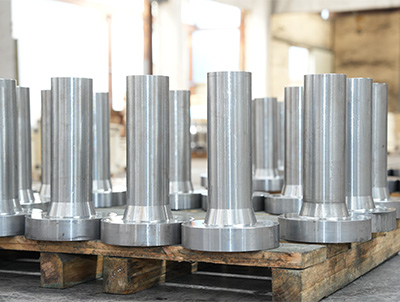
Tool steels are a family of carbon and alloy steels engineered specifically to shape, cut, or form other materials without losing their own hardness, edge, or dimensional accuracy under repeated mechanical stress and heat. Unlike structural steels, which are chosen mainly for strength and weldability, tool steels are chosen for wear resistance, toughness, and the ability to hold a precise shape through thousands or millions of work cycles. They are the steels behind stamping dies, injection molds, cutting blades, punches, drill bits, and forging dies.
The defining trait of any tool steel is its alloy chemistry. Manufacturers add controlled amounts of chromium, vanadium, molybdenum, tungsten, and sometimes cobalt to plain carbon steel. These elements form hard carbide particles inside the steel's microstructure during steel forging and subsequent heat treatment, and those carbides are what actually resist abrasion, deformation, and thermal softening on the job. A tool steel without the right carbide structure is just an expensive way to make a soft die.
According to data published by the American Iron and Steel Institute classification system, tool steels are grouped into seven main families based on their primary application and quenching method: water-hardening (W), shock-resisting (S), cold-work (O, A, D), hot-work (H), high-speed (T, M), special-purpose (L, F), and mold steels (P). Each letter prefix tells a metallurgist or buyer something specific about how that steel behaves before they even check a spec sheet.
The Seven Tool Steel Families and What Separates Them
Every tool steel grade traces back to one of the AISI families below. Knowing which family a grade belongs to tells you more about its real-world behavior than the alloy percentages alone.
| Family | Prefix | Primary Trait | Typical Use |
|---|---|---|---|
| Water-Hardening | W | High carbon, shallow hardening | Hand tools, light cutting edges |
| Shock-Resisting | S | High toughness, moderate hardness | Chisels, pneumatic tool bits |
| Cold-Work | O, A, D | Wear resistance at room temperature | Blanking dies, gauges |
| Hot-Work | H | Retains hardness above 500°C | Forging dies, extrusion tooling |
| High-Speed | T, M | Holds edge at cutting temperatures | Drill bits, lathe tooling |
| Special-Purpose | L, F | Low-alloy, machinability | Arbors, collets |
| Mold Steel | P | Polishability, low distortion | Plastic injection molds |
The most commonly specified grades in industrial purchasing today are D2 cold-work steel, H13 hot-work steel, and M2 high-speed steel. D2 contains roughly 12% chromium and 1.5% carbon, giving it air-hardening capability and strong abrasion resistance. H13 contains around 5% chromium plus molybdenum and vanadium, allowing it to survive thermal cycling in die-casting and forging applications without cracking.
The Alloying Elements That Define Tool Steel Behavior
Tool steel performance is not a single number on a data sheet. It is the combined result of several alloying elements, each contributing a specific mechanical effect. Understanding what each element actually does removes the guesswork from comparing two grades that look similar on paper.
Carbon
Carbon is the primary hardening agent in any tool steel. During quenching, carbon atoms trapped in the iron lattice distort the crystal structure into martensite, which is what gives hardened steel its resistance to indentation. Grades with carbon content above 1.0%, such as D2 at roughly 1.5%, can reach higher peak hardness than low-carbon grades like H13, which sits closer to 0.4% carbon.
Chromium
Chromium forms hard chromium carbides that resist abrasive wear, and it also improves the steel's ability to harden through thicker sections without a fast quench. High-chromium grades such as D2, with around 12% chromium, are described as air-hardening because the chromium slows the cooling rate needed to form martensite.
Vanadium
Vanadium forms extremely hard, fine-grained carbides that resist softening at elevated temperature and refine the steel's grain structure. Even small additions, typically under 1%, measurably improve wear resistance and grain stability during repeated heating cycles, which is why vanadium content is closely controlled in hot-work and high-speed grades.
Molybdenum
Molybdenum raises the temperature at which a tool steel begins to soften, a property directly relevant to hot-work and high-speed grades that operate under continuous frictional or radiant heat. It also reduces the risk of temper embrittlement during the tempering cycle, which matters for parts that undergo multiple reheating passes.
Tungsten
Tungsten performs a similar role to molybdenum in resisting softening at high temperature, but it does so with a denser, more stable carbide structure. Classic high-speed grades such as T1 rely on tungsten as the primary red-hardness contributor, though many modern shops favor molybdenum-based M-series grades for lower raw material cost.
Cobalt
Cobalt does not form carbides itself, but it strengthens the surrounding steel matrix and allows the existing carbides to remain effective at higher temperatures. Cobalt-bearing grades like M35 and M42 are specified when a high-speed tool must cut abrasive or high-temperature alloys that would rapidly dull a standard M2 edge.
No single element works in isolation. A grade's final performance comes from the ratio between these elements, which is why two steels with similar chromium content can behave very differently once molybdenum, vanadium, or carbon levels are adjusted.
Specifications and Standards Buyers Should Recognize
Tool steel is traded and certified against a handful of recurring standards. Recognizing these references on a mill certificate or supplier quote helps confirm that the material matches the intended grade rather than relying on a generic description.
| Standard Body | Designation System | What It Covers |
|---|---|---|
| AISI | Letter-number (D2, H13, M2) | Family classification by application and hardening method |
| ASTM | A681, A600, A681 | Chemical composition and mechanical property limits |
| DIN / EN | Numeric (1.2379, 1.2344) | European chemistry-based designation, common in imported tooling |
| JIS | SKD, SKH series | Japanese industrial standard, frequently seen in die-casting tooling |
A practical cross-reference worth remembering: AISI D2 corresponds closely to DIN 1.2379 and JIS SKD11, while AISI H13 corresponds to DIN 1.2344 and JIS SKD61. These cross-references matter when sourcing from suppliers in different regions, since the same physical alloy is frequently quoted under different designation codes depending on where the mill is located.
A mill certificate worth trusting will list the actual measured chemical composition, not just the nominal grade name, along with the heat number used for traceability. Buyers sourcing tool steel for critical tooling should request this certificate rather than accepting a grade name alone, since chemistry can drift slightly between production heats even within the same nominal grade.
How Tool Steel Gets Its Properties: The Production Sequence
A tool steel bar does not arrive at its working hardness from the mill. It goes through a defined sequence of metallurgical steps, and skipping or rushing any one of them changes the final part's performance permanently.
- Melting and alloying — base iron is combined with chromium, vanadium, tungsten, or molybdenum in an electric arc furnace to hit the target chemistry for the grade.
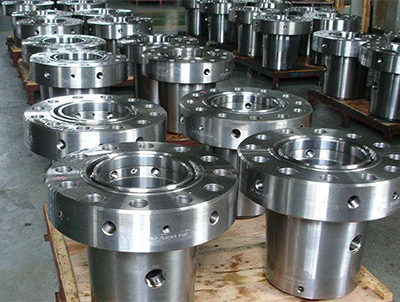
- Steel forging or hot rolling — the ingot is worked under pressure to break up the as-cast grain structure and align the carbides, which improves toughness compared to steel that is only cast and never forged.
- Annealing — the forged bar is slow-cooled to a soft, machinable state so toolmakers can mill or turn the rough geometry without excessive tool wear.
- Hardening (austenitizing and quenching) — the part is heated past its critical transformation temperature, typically 980°C to 1050°C depending on grade, then rapidly cooled in oil, air, or water to lock in a hard martensitic structure.
- Tempering — the hardened part is reheated to a lower temperature, often 150°C to 600°C, in one or more cycles to relieve internal stress and restore enough toughness to prevent brittle cracking in service.
Skipping the forging step and using only cast or rolled stock is a common cost-cutting shortcut in lower-grade tooling. The result is a part that reaches the correct hardness number on a Rockwell tester but fails early in service because the carbide distribution is uneven and crack-prone.
Heat Treatment Parameters: Why the Numbers Vary by Grade
Each tool steel family carries its own hardening temperature, quench medium, and tempering range, and using the wrong parameter set is one of the fastest ways to ruin an otherwise correctly machined part. The figures below reflect commonly published heat treatment windows used by commercial heat treaters.
| Grade | Austenitizing Temp | Quench Medium | Tempering Range |
|---|---|---|---|
| O1 | 790–815°C | Oil | 175–260°C |
| A2 | 925–955°C | Air | 175–540°C |
| D2 | 1000–1030°C | Air | 150–540°C |
| H13 | 995–1025°C | Air or salt bath | 540–650°C |
| M2 | 1190–1230°C | Oil, salt, or air | 540–595°C, multi-cycle |
Notice that M2 requires an austenitizing temperature roughly 200°C higher than O1, because high-speed steels need that extra heat to fully dissolve their dense tungsten and molybdenum carbides into solution before quenching. Heat treaters who apply an O1-style cycle to an M2 part will produce a piece that never reaches its intended hardness, regardless of how long it sits in the furnace.
Multi-cycle tempering, used on M2 and other high-speed grades, is not optional. The first tempering cycle transforms retained austenite into martensite, which then requires a second tempering cycle to relieve the stress that transformation creates. Skipping the second cycle on a high-speed grade leaves untempered martensite in the structure, a known cause of in-service cracking under cyclic cutting loads.
Tool Steel vs. Other Steel Categories: Where the Line Is Drawn
Buyers new to metals procurement often confuse tool steel with stainless steel or structural steel because all three share the word "steel." The distinction comes down to intended function, not just chemistry.
Tool Steel vs. Stainless Steel
Stainless steel is formulated around corrosion resistance, achieved with at least 10.5% chromium. Tool steel is formulated around wear resistance and dimensional stability under load. Some tool steel grades, such as the A and D series, contain enough chromium to resist mild corrosion, but corrosion resistance is a side effect, not the design goal.
Tool Steel vs. Structural Steel
Structural steel, such as A36 or A572, is optimized for weldability and predictable yield strength in beams and frames. It is almost never heat-treated to high hardness because that would make it brittle for construction use. Tool steel is the opposite: it is deliberately heat-treated to be hard, often sacrificing weldability entirely.
Tool Steel vs. Spring Steel
Spring steel, like 1095 or 5160, is tempered to a specific hardness range that maximizes elastic flex and fatigue resistance under repeated bending. Tool steel is tempered for static hardness retention under abrasive or impact contact, not for elastic flex.
Surface Treatments and Coatings That Extend Tool Steel Life
Heat treatment sets the bulk hardness of a tool steel part, but surface engineering adds a second layer of protection at the actual wear interface. For high-cycle production tooling, the coating or surface treatment often determines tool life as much as the base alloy choice.
| Treatment | Surface Hardness Added | Best Suited For |
|---|---|---|
| Nitriding | Up to 70 HRC equivalent | Hot-work dies, extrusion tooling |
| TiN coating | Surface hardness ~2,300 HV | Cutting tools, punches |
| TiCN coating | Surface hardness ~3,000 HV | High-abrasion stamping dies |
| DLC coating | Low friction coefficient | Forming tools, sliding contact dies |
| Black oxide | Minimal hardness change | Mild corrosion protection only |
Nitriding diffuses nitrogen into the steel surface at temperatures low enough to avoid disturbing the core hardness achieved during the original heat treatment, which makes it especially valuable for H13 hot-work dies that need a hard wear surface without sacrificing the toughness of the bulk material. PVD coatings such as TiN and TiCN are applied after final grinding and add a thin, extremely hard ceramic-like layer that resists galling and adhesive wear in sheet metal forming.
A point worth flagging for buyers: coatings cannot compensate for the wrong base grade. A TiN-coated O1 punch will still fail by bulk deformation under a load that exceeds O1's core toughness, because the coating is only microns thick and carries none of the part's structural load. Coating selection should always follow correct grade selection, not replace it.
Performance Benchmarks: Hardness, Toughness, and Heat Limits by Grade
Specification sheets describe tool steel performance using three recurring numbers: Rockwell C hardness (HRC), impact toughness in foot-pounds, and the red-hardness temperature ceiling. Comparing these numbers across common grades clarifies why a die designer picks one steel over another.
| Grade | Working Hardness (HRC) | Toughness Rating | Heat Resistance Ceiling |
|---|---|---|---|
| O1 | 57–62 | Moderate | 175°C |
| A2 | 57–62 | Moderate-High | 250°C |
| D2 | 58–62 | Low-Moderate | 425°C |
| H13 | 44–54 | High | 540°C |
| M2 | 62–66 | Low | 600°C |
A useful rule that experienced toolmakers apply: hardness and toughness move in opposite directions within the same grade. Pushing D2 to its maximum 62 HRC through a lower tempering temperature improves wear life but raises the risk of chipping on impact. Tempering it back to 58 HRC trades some wear life for a meaningfully tougher edge. This trade-off, not a fixed number, is what a metallurgist actually tunes when selecting a tempering schedule for a specific die application.
Where Each Tool Steel Family Performs Best in Real Production
Matching the steel family to the actual failure mode a tool experiences in service is the single biggest factor in tooling lifespan. The categories below reflect common failure patterns reported across metal stamping and forging operations.
High-Volume Stamping Dies
D2 and A2 dominate this category because sheet metal stamping wears a die through abrasive sliding contact rather than heat. D2's high chromium carbide content gives it strong resistance to that abrasive wear, and its air-hardening process minimizes distortion in large, complex die shapes.
Hot Forging and Die Casting Tools
H13 is the standard choice here because the tool surface repeatedly contacts metal at 700°C or higher. H13's molybdenum and vanadium content allow it to resist softening at these temperatures, a property called red hardness, while its lower carbon content keeps it tough enough to survive thermal shock cycling without cracking.
Cutting Tools and Drill Bits
M2 high-speed steel remains the workhorse grade for drill bits, taps, and lathe tooling because it retains cutting-edge hardness even as friction heats the tool tip during machining. Cobalt-enhanced variants such as M35 push that heat tolerance even further for cutting hardened or exotic alloys.
Plastic Injection Molds
P20 mold steel is selected for its machinability in the pre-hardened state and its ability to take a high-polish finish, which is critical for molding clear or cosmetic plastic parts where surface defects on the mold transfer directly to every part produced.
Cold Heading and Wire Forming Dies
Cold heading dies, used to form fastener heads and wire shapes through pure compressive deformation, typically rely on D2 or the higher-alloy D-series grades because the process generates intense localized pressure without significant heat. The dominant failure mode here is chipping at sharp internal corners rather than gradual wear, which makes toughness at the working hardness range just as important as the wear resistance number on the spec sheet.
Shear Blades and Slitting Knives
Shear blades that cut sheet metal or coil stock combine impact loading with abrasive sliding contact at the cutting edge, which makes the shock-resisting S-series grades or tougher A-series cold-work grades common choices over harder but more brittle D-series steel. A blade ground from D2 may hold an edge longer in light-gauge material but is more prone to chipping when the line encounters thicker stock or harder alloy coils than originally specified.
The Forging Question: Why It Changes Tool Life More Than Buyers Expect
A forged tool steel blank and a cast blank can carry identical chemical certificates and still perform completely differently in the field. The difference lives in the grain structure, not the chemistry sheet.
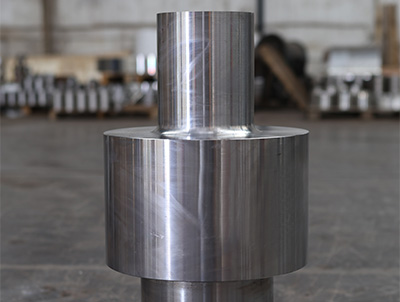
Steel forging mechanically compresses and works the metal, which closes internal porosity left over from casting and aligns the grain flow along the part's load-bearing axis. For a die or punch that takes repeated impact, this grain alignment is what prevents fatigue cracks from initiating at internal voids. Industry data on forged versus cast tool steel components consistently shows forged parts achieving longer service intervals under cyclical loading, which is why most premium die sets specify forged blanks even though they cost more per unit than cast or rolled equivalents.
For buyers evaluating supplier quotes, asking specifically whether the blank was forged, hot-rolled, or cast is one of the most useful single questions available, because the answer correlates directly with expected tool life even when the alloy grade on paper is the same.
Common Tool Steel Failure Modes and Their Root Causes
Most tool steel failures fall into a small number of recognizable patterns. Identifying which pattern occurred is the fastest way to diagnose whether the problem was grade selection, heat treatment, or operating conditions.
Abrasive Wear
Gradual loss of dimensional accuracy along the working surface, visible as rounded edges or a dull, scratched contact face. Root cause is usually insufficient carbide content for the abrasiveness of the material being processed, or a coating that has worn through to the base steel.
Chipping
Small fragments breaking away from a cutting edge or corner, typically at start-up or when foreign material enters the die. Root cause is most often hardness set too high for the toughness the application demands, or a tempering cycle that left the part more brittle than the grade is capable of tolerating.
Heat Checking
A network of fine surface cracks resembling dried mud, common on hot-work and die-casting tooling. Root cause is repeated thermal cycling between hot metal contact and cooling, which fatigues the surface faster than the core, and is accelerated when coolant flow is uneven across the die face.
Plastic Deformation
Visible bending, mushrooming, or flattening of a working edge under load, rather than cracking. Root cause is typically a grade with insufficient bulk hardness for the applied pressure, or a part that was never hardened correctly due to a furnace calibration issue.
Galling and Adhesive Wear
Material from the workpiece transferring onto the tool surface, creating a buildup that degrades surface finish on subsequent parts. Root cause is usually insufficient surface hardness or lubrication relative to the workpiece material, and is one of the failure modes that PVD coatings address most effectively.
Cost Factors That Drive Tool Steel Pricing
Tool steel price per kilogram varies far more than structural steel because alloy content, processing route, and form factor all move the price independently. Understanding which factor is driving a quote helps buyers evaluate whether a price difference between suppliers reflects genuine quality variation or simply a different production route.
| Cost Driver | Typical Impact | Why It Matters |
|---|---|---|
| Alloy content | High | Tungsten, molybdenum, and cobalt are priced on volatile global commodity markets |
| Forged vs. cast/rolled | Moderate-High | Forging adds press time and energy, but improves grain structure |
| Bar size and form | Moderate | Larger cross-sections and pre-ground flat stock carry premiums over round bar |
| Heat treatment service | Moderate | Vacuum hardening and multi-cycle tempering cost more than basic furnace cycles |
| Certification and traceability | Low-Moderate | Full mill certificates with heat numbers add administrative cost but reduce risk |
Tungsten and cobalt prices are particularly volatile because both metals depend heavily on a small number of producing countries, which means high-speed steel grades like M2 and M35 can see noticeably larger price swings over a given year than chromium-based cold-work grades such as D2 or A2. Buyers planning large tooling programs around high-speed grades sometimes lock in material pricing ahead of a production run specifically to manage this volatility.
When comparing quotes from different suppliers for what appears to be the same grade, the most common source of an unusually low price is a substitution of rolled or cast stock for forged stock, or a reduction in the number of tempering cycles applied during heat treatment. Both shortcuts produce a part that passes an initial hardness check but carries a materially shorter expected service life.
A Practical Framework for Choosing the Right Tool Steel
Selecting a tool steel grade comes down to answering four questions in order, rather than starting from a favorite grade and working backward.
- What is the dominant failure mode? Abrasive wear points toward high-chromium cold-work grades like D2; impact loading points toward shock-resisting S-grades; heat exposure points toward H-series hot-work grades.
- What is the operating temperature range? Anything running consistently above 300°C eliminates most cold-work grades from consideration regardless of their room-temperature hardness numbers.
- How complex is the part geometry? Intricate geometries with thin sections favor air-hardening grades, since they distort less during quenching than water- or oil-hardening grades.
- What machining and finishing steps follow heat treatment? Grades intended for grinding to a fine finish, like D2, need to be specified with grinding allowances in mind, since post-hardening dimensional movement varies by grade.
Running through these four questions before requesting quotes prevents the most common and expensive mistake in tooling procurement: ordering a grade that matches the hardness spec on paper but fails against the actual wear mechanism the part experiences in service.
Frequently Asked Questions About Tool Steel
What makes a steel a "tool steel" instead of a regular alloy steel?
The classification depends on intended use and processing, not just chemistry. A steel is considered a tool steel when it is formulated and heat-treated specifically to retain hardness, edge geometry, and wear resistance while shaping or cutting other materials, rather than being used as a load-bearing structural member.
Can tool steel be welded?
Some grades can be welded with preheat and post-weld heat treatment, but it is generally avoided on finished, hardened tooling because the heat from welding locally re-tempers or re-hardens the area, creating a brittle zone prone to cracking. Repairs are typically done before final hardening whenever possible.
Why does forged tool steel cost more than rolled or cast tool steel?
Steel forging requires additional energy, specialized press equipment, and more processing time to mechanically work the billet into shape. The added cost reflects the improved grain structure and reduced internal porosity, which directly extends service life in high-cycle applications.
What is the difference between air-hardening and oil-hardening tool steel?
Air-hardening grades, such as A2 and D2, reach full hardness when cooled in still air after austenitizing, which minimizes warping in complex shapes. Oil-hardening grades cool faster in an oil quench bath, achieving hardness more quickly but with a higher risk of distortion in thin or intricate sections.
How long does a properly selected tool steel die typically last?
Service life varies enormously by application, but a correctly matched D2 stamping die in moderate-volume sheet metal work commonly runs into the hundreds of thousands of strokes before requiring a re-sharpen, while a mismatched grade under the same conditions can fail within a small fraction of that cycle count.
Does higher hardness always mean better tool performance?
No. Hardness and toughness trade off against each other in every tool steel grade. Pushing hardness to its maximum improves wear resistance but increases brittleness, which can cause chipping under impact loads. The correct hardness target depends on whether the dominant stress on the tool is abrasive wear or mechanical shock.
What is the difference between hot-work and cold-work tool steel?
Cold-work tool steels are designed for room-temperature applications such as blanking and stamping dies, where wear resistance against abrasive sliding contact is the priority. Hot-work tool steels, identified by the H prefix, are formulated to retain hardness and resist thermal fatigue when the tool surface repeatedly contacts metal heated to several hundred degrees, as in forging and die casting.
Can a tool steel grade be substituted with a cheaper alternative without performance loss?
Sometimes, but only when the substitute grade matches the dominant failure mode of the original. Substituting O1 for A2 in a low-volume application with simple geometry may work acceptably, since both offer similar hardness, but substituting O1 for D2 in a high-volume abrasive stamping application will typically shorten tool life significantly because O1 lacks the chromium carbide content needed for sustained abrasion resistance.
How is tool steel typically supplied to a machine shop or die maker?
Tool steel is most commonly supplied as annealed round bar, flat bar, or pre-ground flat stock, all in a soft, machinable condition. The purchaser or a contracted heat treater then performs the hardening and tempering cycle after the part has been machined to its rough or near-final geometry, since machining hardened tool steel directly is slow and causes excessive tool wear on the cutting equipment.
Why do some tool steel parts crack during heat treatment instead of after years of use?
Cracking during the hardening quench, rather than during service, usually points to thermal shock from too rapid a cooling rate relative to the part's section thickness and geometry, sharp internal corners that concentrate stress, or insufficient preheating before the final austenitizing step. These are heat treatment process issues rather than alloy selection issues, and they typically affect a batch rather than isolated parts.
Is tool steel magnetic?
Most tool steel grades are magnetic in their hardened, martensitic state because martensite retains the ferromagnetic properties of the underlying iron lattice. A small number of specialty grades with very high retained austenite content can show reduced magnetic response, but this is uncommon in standard commercial grades like O1, A2, D2, H13, or M2.