

 英语
英语 德语
德语 阿拉伯语
阿拉伯语

Content
- 1 Stainless Steel vs Mild Steel: Quick Reference Comparison
- 2 Chemical Composition: Chromium Is the Defining Element
- 3 Mechanical Properties: How the Two Steels Compare
- 4 Corrosion Resistance: Where Stainless Steel Wins
- 5 Cost, Machinability, and Forging Suitability
- 6 Application Guide: Matching Steel to Your Forging Environment
- 7 Frequently Asked Questions About Stainless Steel and Mild Steel
- 7.1 Which steel is stronger, stainless steel or mild steel?
- 7.2 Does stainless steel always cost more than mild steel?
- 7.3 Can you weld mild steel to stainless steel?
- 7.4 Is mild steel corrosion-resistant at all?
- 7.5 What is the difference between 304 and 316 stainless steel?
- 7.6 Can forging temperatures affect the corrosion resistance of stainless steel?
When selecting a material for a forged industrial component, the choice between stainless steel and mild steel is one of the most consequential decisions you will make. The direct answer is clear: stainless steel contains at least 10.5% chromium and delivers superior corrosion resistance, while mild steel contains almost no chromium, costs significantly less, and is easier to machine. The best material depends on whether your part will face corrosive media, the mechanical loads it must carry, and your total production budget.
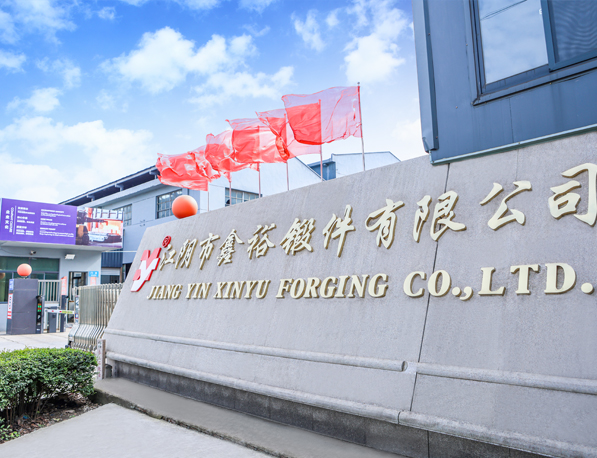
At Jiangyin Xinyu Forging Co., Ltd., we produce open die forgings, closed die forgings, and seamless rings for valves, oil and gas equipment, petrochemical plants, mining machinery, and nuclear projects. Our customers frequently ask how to evaluate these two steel families for a specific forging. This guide provides a detailed, fact-based comparison so you can choose with confidence.
The right choice is not about one steel being universally better. Stainless steel can be a poor choice for a dry, purely mechanical component where cost efficiency is the priority. Mild steel can be a poor choice for a part that will sit in humid air or contact aggressive fluids. Let us examine the differences step by step so you can make the right call.
Stainless Steel vs Mild Steel: Quick Reference Comparison
Below is a side-by-side summary of the most important differences. If you remember nothing else, keep this table in mind when evaluating a part.
| Property | Mild Steel (A36) | Stainless Steel (304/316) |
|---|---|---|
| Chromium content | Not specified, effectively 0% | 18.0–20.0% (304) |
| Nickel content | Not specified | 8.0–10.5% (304) |
| Yield strength | 250 MPa (36 ksi) | 215 MPa (304), 240 MPa (316) |
| Tensile strength | 400–550 MPa | 505 MPa (304), 580 MPa (316) |
| Corrosion resistance | Poor; requires coating | Excellent; self-healing oxide layer |
| Relative material cost | 1x baseline | 3–5x baseline |
| Machinability | Excellent | Fair; work-hardens during cutting |
| Magnetism | Magnetic | Magnetic in annealed condition |
| Typical forged applications | Structural, mining, machinery | Valves, chemical, oil and gas, nuclear |
Chemical Composition: Chromium Is the Defining Element
The most fundamental difference between these two steels is chromium. Stainless steel is defined by a minimum chromium content of 10.5%. When exposed to oxygen, this chromium reacts to form a thin, transparent layer of chromium oxide (Cr2O3) on the surface. This passive film is only 1–2 nanometers thick, but it is dense, stable, and self-repairing. If you scratch stainless steel, fresh metal reacts with oxygen within milliseconds to rebuild the layer. This is why stainless steel resists rust even after surface damage.
Mild steel has essentially no chromium. Its composition is mostly iron with a small amount of carbon — usually below 0.25% — plus up to 1.65% manganese and trace silicon. Without chromium, mild steel cannot form a protective oxide layer. In a moist environment, it rusts from the surface inward, and the porous rust actually accelerates corrosion by trapping moisture and oxygen against the steel.
The alloying elements tell the rest of the story. Stainless steel also contains nickel (8–10.5% in 304), which stabilizes the austenitic phase and improves toughness and formability. Mild steel contains none of these precious alloying additions, which is precisely why it costs so much less per kilogram.
Typical Chemical Composition
| Element | Mild Steel (A36) | Stainless 304 | Stainless 316 |
|---|---|---|---|
| Carbon | 0.25% max | 0.08% max | 0.08% max |
| Chromium | Not specified (0%) | 18.0–20.0% | 16.0–18.0% |
| Nickel | Not specified | 8.0–10.5% | 10.0–14.0% |
| Manganese | 0.80–1.20% | 2.00% max | 2.00% max |
| Silicon | 0.40% max | 0.75% max | 0.75% max |
| Sulfur | 0.05% max | 0.03% max | 0.03% max |
| Phosphorus | 0.04% max | 0.045% max | 0.045% max |
| Molybdenum | Not specified | Not present | 2.0–3.0% |
Mechanical Properties: How the Two Steels Compare
Many people assume stainless steel is always stronger than mild steel. The reality is more nuanced. A36 mild steel has a higher yield strength (250 MPa) than 304 stainless steel (215 MPa). However, 316 stainless steel surpasses both with a yield strength of 240 MPa and a tensile strength of 580 MPa. So the stronger metal depends entirely on which grades you compare.
Ductility is a point where stainless steel clearly wins. Austenitic stainless grades typically reach 40–45% elongation at break, while mild steel usually stops at 20–23%. This means stainless steel can deform more before fracturing, which is valuable in components subjected to thermal cycling, vibration, or occasional overloads.
Typical Mechanical Properties
| Property | Mild Steel (A36) | Stainless 304 | Stainless 316 |
|---|---|---|---|
| Yield strength (MPa) | 250 | 215 | 240 |
| Tensile strength (MPa) | 400–550 | 505 | 580 |
| Elongation (%) | 20–23 | 40–45 | 40–45 |
| Hardness (HB) | 120–150 | 150–200 | 150–200 |
| Modulus of elasticity (GPa) | 200 | 193 | 193 |
These values represent the annealed condition, which is the state in which most forgings are delivered. If a component receives a separate heat treatment, such as quenching and tempering for mild steel, its mechanical properties will change. Stainless steel, however, is generally used in the solution-annealed condition and cannot be hardened by conventional heat treatment.
Corrosion Resistance: Where Stainless Steel Wins
This is the single most important reason to choose stainless steel over mild steel. The self-repairing chromium oxide layer makes stainless steel highly resistant to atmospheric oxidation, water, and many chemical media. In a marine, chemical, or humid environment, mild steel can lose significant load-bearing capacity within a few years, while stainless steel remains structurally intact for several decades even with no paint or coating.
For industrial forgings, corrosion resistance is not just about appearance. It is about service life, inspection intervals, and equipment downtime. A forged valve in a water treatment plant, for example, faces continuous exposure to moisture and dissolved salts. If made from mild steel, the valve body would need constant repainting and frequent replacement. In contrast, a forged stainless steel valve can operate for years without maintenance.
There is an important distinction within stainless steel grades. 304 works well in general environments where chlorides are absent. 316 contains 2–3% molybdenum and is the grade of choice for chloride-rich environments such as coastal sites, chemical plants, and oil and gas facilities. The molybdenum addition prevents localized pitting and crevice corrosion, which are the two most common failure modes for stainless steel in service.
When a forged component is exposed to aggressive media, the material choice is rarely optional. Our valve forgings are frequently specified in 304 or 316 for this exact reason. The seamless ring and open die forging processes we use preserve the protective oxide layer, which remains intact after mechanical processing.
 Valve Forgings in Stainless Steel for Corrosive MediaExplore our valve forgings made from 304 or 316 stainless steel, preserving a protective oxide layer through seamless ring and open die forging. Ideal for aggressive media applications where corrosion resistance is critical.View Product →
Cost, Machinability, and Forging Suitability
Cost is often the decisive factor in material selection, especially for high-volume industrial production. Stainless steel typically costs 3 to 5 times more than mild steel per kilogram on the raw material market. The high price of chromium and nickel is the reason. For a large forged component, this gap can translate into tens of thousands of dollars per part.
Machining costs also differ substantially. Stainless steel is harder and work-hardens during cutting, which increases tool wear and requires slower cutting speeds. Mild steel machines quickly and produces predictable chips. A component that takes one hour to machine in mild steel might take 1.5 to 2 hours in stainless steel, elevating labor and tooling costs accordingly.
Forging behavior follows a similar pattern. Mild steel forges in the 1100–1200°C range with relatively low flow stress, meaning it fills the die cavity more readily. Stainless steel requires a higher forging temperature, typically 1150–1250°C, and has higher hot strength, which demands more press or hammer energy to achieve the same shape. Our engineers at our forging facility in Jiangyin account for this increased energy requirement when quoting projects.
Welding is another differentiator. Mild steel welds easily with common filler wires and does not require special precautions. Stainless steel, on the other hand, must be welded with appropriate filler and heat control to avoid carbide precipitation. If the steel is heated in the 450–850°C range for an extended period, chromium carbides can form at grain boundaries, depleting chromium and reducing corrosion resistance. Low-carbon grades such as 304L or 316L solve this by keeping carbon below 0.03%.
For your specific project, the total cost of ownership matters more than the purchase price alone. In a corrosive environment, the higher initial cost of stainless steel is often offset by longer service life, fewer replacements, and reduced maintenance labor.
Application Guide: Matching Steel to Your Forging Environment
The right choice depends on where the component will operate. Below is a practical guide based on the industries we serve with our forgings.
Oil and Gas and Petrochemical Components
Service conditions in oil and gas involve hydrocarbons, sour gas, seawater, and process chemicals at varying pressures and temperatures. Stainless steel is usually the only acceptable choice here. 316/316L is the standard grade for oil and gas forgings because of its resistance to chlorides and pitting. Mild steel would fail rapidly in a wellhead or manifold exposed to produced water.
Oil and Gas Forgings for High-Pressure ServiceDiscover our petrochemical forgings engineered for extreme pressure and corrosive environments. With 316/316L stainless steel options, these components ensure pressure boundary integrity and long-term reliability in wellheads and manifolds.View Product →
Mining Machinery Components
Mining equipment operates in dry, abrasive environments with heavy mechanical loads. Mild steel is typically the most economical choice for forged gears, shafts, and structural components in mining machinery. Its strength is adequate for most load conditions, and its lower cost is a real advantage in abrasive environments where parts get replaced on a regular schedule. Surface hardening through case carburizing or induction treatment can extend the life of mild steel components without switching to a more expensive material.
Mining Machinery Forgings for Abrasive ConditionsOur mining forgings provide durable strength for heavy loads and severe wear. Cost-effective mild steel options with surface hardening extend service life, making them a practical choice for abrasive mining environments.View Product →
Valve Components
The valve industry spans every sector. Low-pressure dry-service valves may use mild steel, but most process valves in oil and gas, water treatment, and chemical plants require stainless steel. The grade selection follows the media: 304 for general water and air, 316 for chemical and chloride environments, and 316L for welded construction or sour gas service. Forged valve bodies and stems from stainless steel resist corrosion far better than their mild steel counterparts.
Nuclear Project Components
Nuclear components demand low cobalt, low sulfur, and precise trace element control. Both 304 and 316 stainless are used because of their corrosion resistance, dimensional stability, and mechanical performance under irradiation. Mild steel is rarely selected for primary circuits in nuclear service.
General Machinery and Structural Parts
For non-corrosive mechanical parts such as crankshafts, drive shafts, and structural brackets, mild steel remains the default choice. It forges well, machines easily, and provides adequate mechanical properties for the vast majority of static and dynamic loads.
Whatever your application, the material decision should be made with the complete picture in mind: operating medium, temperature, pressure, expected service life, and maintenance strategy. Talk to our sales engineers and they will help you evaluate both material families against your requirements.
Frequently Asked Questions About Stainless Steel and Mild Steel
Which steel is stronger, stainless steel or mild steel?
There is no universal answer. A36 mild steel has a yield strength of 250 MPa, which exceeds the 215 MPa yield of 304 stainless steel. However, 316 stainless steel offers a yield strength of 240 MPa and a tensile strength of 580 MPa, both higher than mild steel. Ductility is always better in stainless steel. The stronger choice depends on the grade and the property being measured.
Does stainless steel always cost more than mild steel?
Yes, on a raw material basis. Stainless steel typically costs 3 to 5 times more per kilogram than mild steel. However, the total cost of ownership can be lower in corrosive environments because stainless steel requires no painting, no periodic recoating, and far fewer replacements over its life span.
Can you weld mild steel to stainless steel?
Yes, it is possible, but it requires careful technique. A nickel-based filler metal is typically preferred, and the heat input must be controlled to minimize grain growth. The joint will have different corrosion and mechanical characteristics from either base metal. If the welded assembly will be in a conductive and moist environment, galvanic corrosion is a concern.
Is mild steel corrosion-resistant at all?
Mild steel has no built-in corrosion resistance. It does form a very thin oxide layer initially, but this is brittle and porous and does not protect the base metal from continued oxidation. Coatings such as paint, zinc galvanizing, or epoxy must be applied to protect mild steel in wet environments.
What is the difference between 304 and 316 stainless steel?
The key difference is molybdenum. 316 contains 2–3% molybdenum, which dramatically improves resistance to pitting and crevice corrosion caused by chlorides. 304 has no molybdenum and is best suited for environments without chloride exposure. 316 also has slightly higher nickel content (10–14% vs 8–10.5%), which contributes to better overall toughness.
Can forging temperatures affect the corrosion resistance of stainless steel?
Yes. If stainless steel is held in the 450–850°C range for too long during heating or cooling, chromium carbides can precipitate at grain boundaries. This condition, known as sensitization, depletes chromium near the boundaries and makes the steel vulnerable to intergranular corrosion. Low-carbon grades like 304L or 316L mitigate this risk, as do controlled forging temperatures and rapid cooling after forming.