

 英语
英语 德语
德语 阿拉伯语
阿拉伯语

Content
- 1 The Direct Answer: 316L Wins in Corrosive Environments
- 2 Chemical Composition: What Actually Differs
- 3 Mechanical Properties and Forging Behavior
- 4 Corrosion Resistance: Where 316L Pulls Decisively Ahead
- 5 Industrial Applications and Grade Selection
- 6 Welding and Fabrication Considerations
- 7 Cost, Availability, and Lifecycle Value
- 8 Practical Decision Checklist
- 9 Frequently Asked Questions
- 9.1 1. Is 316L always better than 304?
- 9.2 2. Why is 316L called the "L" grade?
- 9.3 3. How much more expensive is 316L compared to 304?
- 9.4 4. Can 304 and 316L be welded together?
- 9.5 5. What PREN value should I consider for seawater service?
- 9.6 6. Does 316L have lower mechanical strength?
- 9.7 7. Will 304 rust in a coastal atmosphere?
- 10 Final Recommendation
The Direct Answer: 316L Wins in Corrosive Environments
When you compare 304 and 316L stainless steel for forged components, the deciding factor is molybdenum. 316L contains 2 to 3 percent molybdenum, while 304 contains none. That single alloying element lifts the pitting resistance equivalent number (PREN) from roughly 19 in 304 to about 26 in 316L, which translates directly to far better resistance against chloride-induced pitting and crevice corrosion.
So the conclusion is straightforward:
- Choose 316L for marine atmospheres, seawater contact, chemical processing, offshore oil and gas equipment, and any application where chlorides are present in the working fluid.
- Choose 304 for general atmospheric service, fresh water systems, food processing equipment where chloride exposure is minimal, and indoor installations that face no aggressive chemical attack.
This is not a small material substitution. The corrosion performance gap between these two grades will directly determine the service life of forged parts such as valve bodies, flanges, and pump components. We will walk through the composition data, mechanical properties, corrosion mechanisms, cost considerations, and the practical scenarios that should drive your decision.
Chemical Composition: What Actually Differs
The standard compositional limits for both grades are published in ASTM A240, the specification covering chromium and chromium-nickel stainless steel plate, sheet, and strip for pressure vessels and general applications. The three critical differences are molybdenum content, carbon maximum, and nickel range.
| Element | 304 | 316L |
|---|---|---|
| Chromium (Cr) | 18.0% – 20.0% | 16.0% – 18.0% |
| Nickel (Ni) | 8.0% – 10.5% | 10.0% – 14.0% |
| Molybdenum (Mo) | None specified | 2.0% – 3.0% |
| Carbon (C) | 0.08% maximum | 0.03% maximum |
| Manganese (Mn) | 2.0% maximum | 2.0% maximum |
| Silicon (Si) | 0.75% maximum | 0.75% maximum |
| Phosphorus (P) | 0.045% maximum | 0.045% maximum |
| Sulfur (S) | 0.03% maximum | 0.03% maximum |
| Nitrogen (N) | 0.10% maximum | 0.10% maximum |
What these numbers mean in practice:
- Molybdenum is the corrosion workhorse. It stabilizes the passive oxide film on the steel surface, especially in chloride-containing environments. Without it, chloride ions can break down the passive film and initiate pitting sites.
- The lower carbon in 316L (0.03% max) reduces the risk of chromium carbide precipitation during welding. This is why the "L" grade is preferred for welded fabrications without post-weld heat treatment.
- The nickel range in 316L is higher (10–14%) to balance the ferrite-forming effect of molybdenum and maintain a fully austenitic microstructure at room temperature.
Mechanical Properties and Forging Behavior
Both 304 and 316L are austenitic stainless steels. They share the same face-centered cubic crystal structure, which gives them excellent toughness — even at cryogenic temperatures as low as -196°C. The mechanical property differences between the two are modest, but they still matter for design engineers and forging shops.
| Property | 304 | 316L |
|---|---|---|
| Tensile Strength, MPa (ksi) | ≥ 515 (75) | ≥ 485 (70) |
| Yield Strength (0.2% offset), MPa (ksi) | ≥ 205 (30) | ≥ 170 (25) |
| Elongation in 2 in. (50 mm), % | ≥ 40 | ≥ 40 |
| Hardness, Brinell (HBW) | ≤ 201 | ≤ 217 |
| Modulus of Elasticity, GPa | 193 | 193 |
The slightly lower tensile and yield strength of 316L is a direct result of the lower carbon content. In practice, this difference is usually within normal design margins and rarely dictates the grade choice by itself. What matters more is how the material behaves during forging and heat treatment.
From a forging standpoint, both grades are processed in the same general temperature range: 1100 to 1250°C (2010–2280°F). The material should not be forged below approximately 950°C, because austenitic stainless has lower ductility at that point and may crack. Final forging operations should finish above the sensitization range of 425–815°C to avoid chromium carbide precipitation.
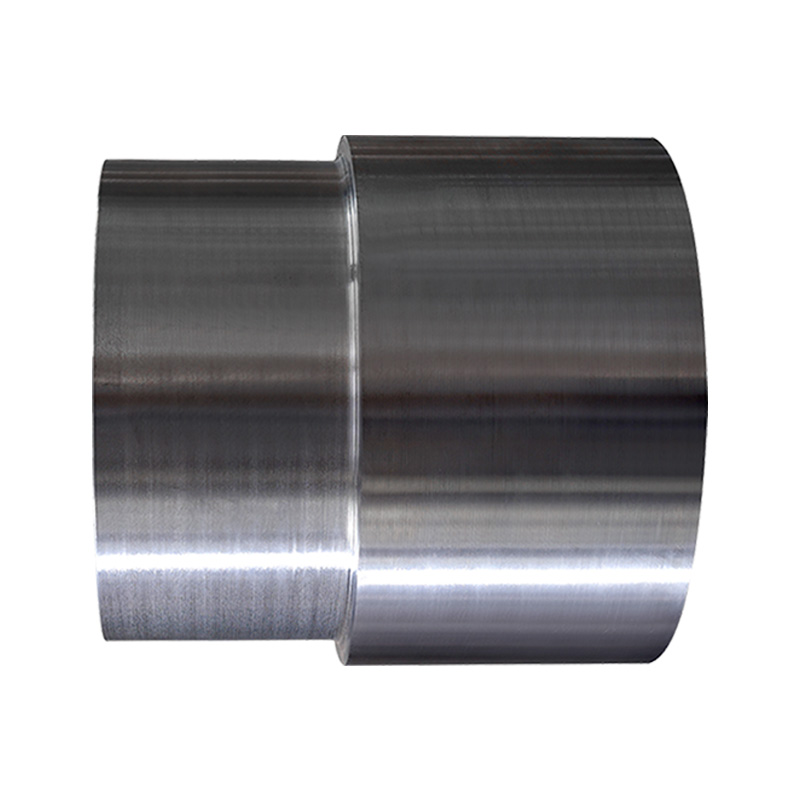
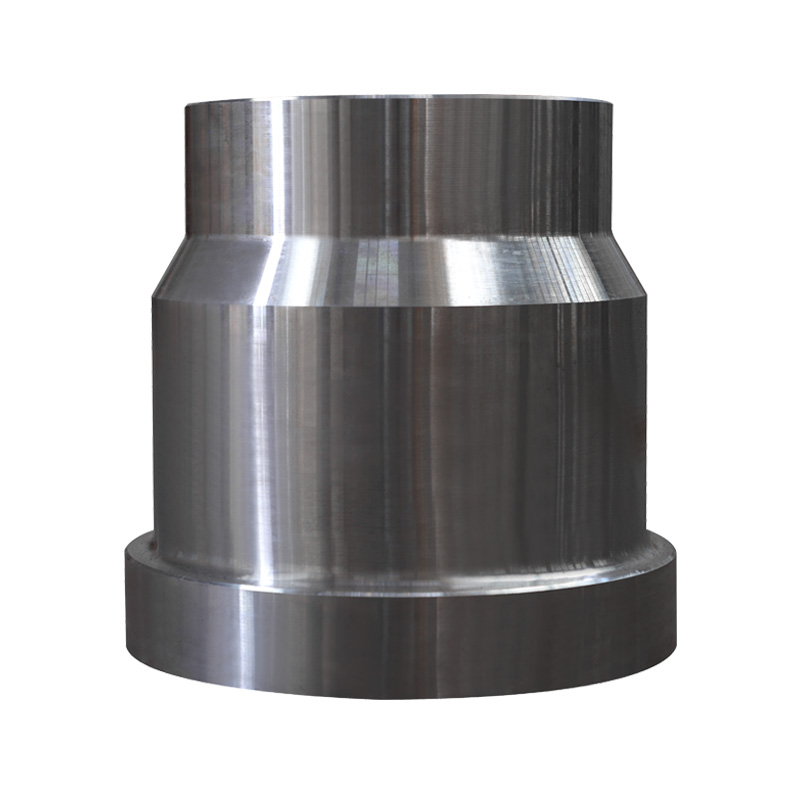
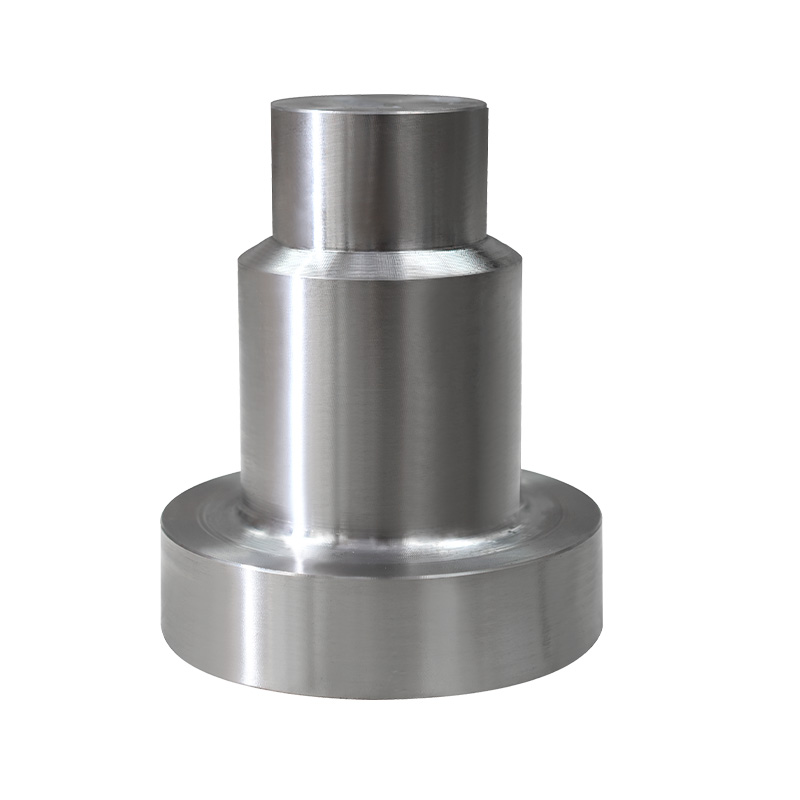
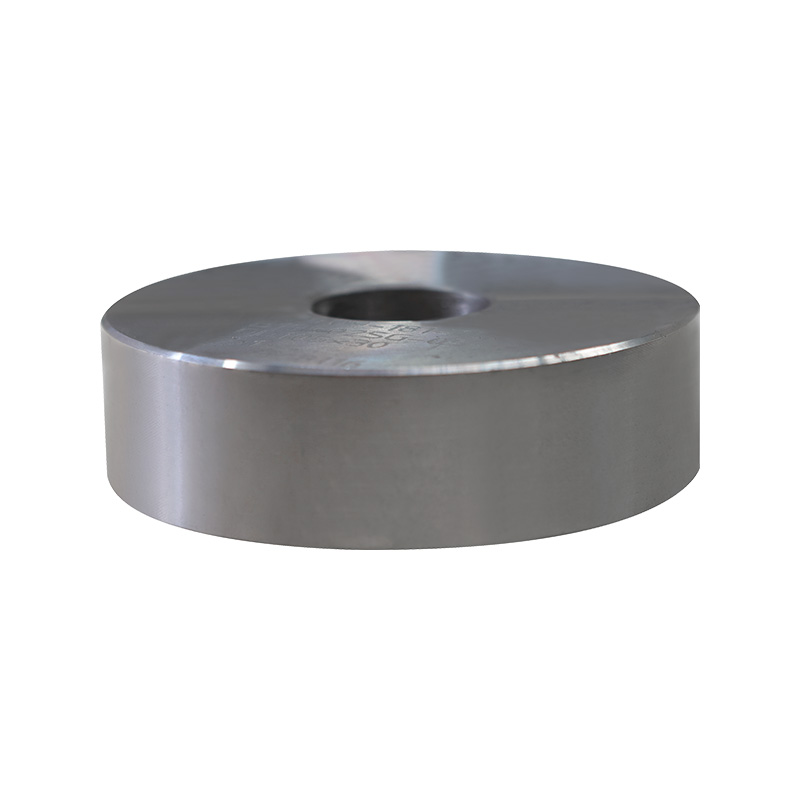
Our forging and heat-treatment capabilities handle both grades using controlled deformation ratios and precise annealing cycles to produce components with uniform grain structure and predictable mechanical performance.
Corrosion Resistance: Where 316L Pulls Decisively Ahead
Corrosion resistance is the single most important differentiator between these two grades. It is not a subtle difference — in many service environments, 304 will fail prematurely while 316L performs perfectly. The engineering metric used to estimate pitting resistance is the Pitting Resistance Equivalent Number (PREN), calculated as:
PREN = %Cr + 3.3 × %Mo + 16 × %N
Using typical composition values:
- 304: PREN ≈ 18.0 + 3.3(0) + 16(0.05) = 18.8
- 316L: PREN ≈ 16.5 + 3.3(2.5) + 16(0.05) = 25.6
The PREN difference of roughly 7 points is substantial. In practical terms, it means:
- Chloride pitting: 316L can tolerate chloride concentrations around 1,000 ppm at room temperature, while 304 typically fails when chlorides exceed a few hundred ppm over extended exposure.
- Crevice corrosion: In stagnant or shielded areas, 316L offers far better protection against the confined, acidic conditions that develop in crevices.
- Stress corrosion cracking (SCC): Both grades are susceptible to chloride SCC, but 316L has a significantly higher threshold temperature and chloride concentration before cracking initiates. Data published by the Nickel Institute shows 316L resists SCC in boiling 42% magnesium chloride solution for longer durations than 304.
For marine service, the difference is profound. Seawater typically contains around 19,000 ppm of chloride ions. In such an environment, 304 development of pitting is usually rapid — often visible within months in splash zones. 316L, while not completely immune, provides much longer service life in moderate temperature marine environments. Even so, permanently submerged marine applications require more corrosion-resistant grades like duplex stainless or super austenitic alloys.
Corrosion data from ASM International's corrosion engineering handbook shows that 316L has a critical pitting temperature of approximately 35°C in a standard ferric chloride test (ASTM G48 Method A), while 304's critical pitting temperature is around 15°C. This 20°C margin is why 316L is specified for heat exchangers and piping systems handling brackish water and process brines.
Industrial Applications and Grade Selection
In the world of industrial forgings, material selection is driven by the process fluid or operating atmosphere. The following table summarizes what grade is typically specified across common applications.
| Application Environment | Recommended Grade | Reason |
|---|---|---|
| Fresh water, humid indoor air | 304 | General corrosion resistance at lower cost |
| Marine / coastal atmosphere | 316L | Molybdenum resists chloride pitting from salt spray |
| Chemical processing, acids | 316L | Superior resistance to sulfuric, phosphoric, and organic acids |
| Food processing equipment | 304 or 316L | Both meet hygienic surface requirements; 316L for acidic foods |
| Oil and gas, offshore | 316L | Chloride-rich produced fluids and seawater exposure |
| Pharmaceutical, clean-in-place | 316L | Aggressive CIP cleaning chemicals (caustic, acids) |
| Nuclear reactor cooling loops | 316L | Excellent corrosion performance in high-purity water control systems |
For valve forging production specifically, the grade decision depends on the service fluid. Gate valves, globe valves, and ball valves used in water distribution lines are frequently forged from 304 because chlorides are negligible. When the same valve type is specified for chemical transfer or seawater service, 316L is required for body, bonnet, and trim components.
 Forged Valve Parts for Corrosive and High-Pressure ServicesValve forgings must withstand mechanical stress and corrosion. This manufacturer offers customized forged components for valve bodies, bonnets, and trims, with material options like 316L for chloride-rich environments.View Product →
In the oil and gas industry, offshore platforms and subsea equipment face the harshest environments. Produced water contains high chloride concentrations, and natural gas can carry hydrogen sulfide and carbon dioxide. 316L is the standard material for many forged flanges, connectors, and valve bodies in these services, because it provides a balance of corrosion resistance and mechanical strength that 304 cannot match.
Oil and Gas Forgings for Offshore and Subsea ApplicationsOffshore platforms and subsea equipment demand corrosion-resistant forged flanges, connectors, and valve bodies. This supplier provides 316L forgings that balance strength and resistance to chlorides and H2S.View Product →
For nuclear power plant components, 316L is widely used in primary circuit piping and reactor coolant pump components. The low carbon version is preferred to minimize sensitization during welding, which could otherwise reduce corrosion resistance in the heat-affected zone. The nuclear industry's emphasis on materials that can maintain integrity over decades of service makes 316L the more appropriate choice for critical forged components.
Nuclear-Grade Forgings for Primary Circuit ComponentsNuclear plants require forgings with low carbon to prevent sensitization. This manufacturer produces 316L forged parts for reactor coolant pumps and piping, ensuring long-term integrity under radiation and heat.View Product →Welding and Fabrication Considerations
The "L" in 316L stands for low carbon, and it is arguably the second most important difference after molybdenum. Standard 304 contains up to 0.08% carbon. When the material is heated in the range of 425–815°C during welding, carbon can react with chromium at grain boundaries to form chromium carbide. This removes chromium from the solid solution around the grain boundary, leaving that region vulnerable to intergranular corrosion.
316L minimizes this risk because carbon is limited to 0.03% maximum, which is below the solubility limit in the temperature range where sensitization normally occurs. This makes 316L a preferred material for fabricated assemblies, particularly where post-weld heat treatment is not practical, such as large forged weldments, field repairs, and piping spools.
Practical welding notes for both grades:
- Use AWS ER316L filler metal when welding 316L to maintain corrosion resistance.
- When welding 304, ER308L or ER308 filler is standard. For welding 304 to 316L, use ER316L filler to ensure the weld deposit has molybdenum.
- Avoid excessive heat input; keep interpass temperatures below 150°C for 304 to reduce sensitization risk.
- Post-weld solution annealing at 1040–1100°C followed by rapid cooling restores full corrosion resistance in both grades.
For forging shops, the grain size achieved during forging also affects weldability and corrosion performance. A finer, uniform austenitic grain structure, obtained through controlled final forging temperature and proper heat treatment, provides better resistance to intergranular corrosion after welding. This is one reason why working with a forging manufacturer with strong process control is important when specifying stainless components.
Cost, Availability, and Lifecycle Value
Raw material cost is often the first concern when a project engineer compares 304 and 316L. As of recent market data from specialty steel suppliers, 316L costs approximately 20 to 35 percent more than 304 in plate and bar forms. The price difference comes almost entirely from molybdenum, which is one of the more expensive alloying additions in stainless steel, and to a lesser extent from the higher nickel content in 316L.
But material cost is only one part of the equation. Let us consider a realistic scenario:
- A process valve body forged from 304 costs roughly $2,000 in raw material at current prices. It is installed in a service where chloride concentrations occasionally reach 500 ppm at 50°C. Within two years, pitting is visible, and the valve is replaced, including labor and downtime.
- The same valve body forged from 316L costs approximately $2,500–$2,700 in raw material, but continues to operate reliably for over ten years.
In the example above, the incremental material investment of $500–$700 results in a 5× longer service interval. When you factor in replacement labor, production loss during maintenance, and the risk of unscheduled shutdown, 316L is almost always the inexpensive choice in any process where chlorides are present.
For applications with no chloride exposure, 304 remains an excellent economic decision. It offers similar strength and fabrication characteristics, and the lower material cost can result in meaningful savings when you are purchasing hundreds of forged components.
Practical Decision Checklist
Use this checklist to decide which grade is appropriate for your forged component. Answer each question honestly, and the grade will make itself obvious.
| Question | If Yes | If No |
|---|---|---|
| Will the part contact seawater or salt spray? | 316L | 304 may suffice |
| Is the service fluid aggressive (acids, brines, chlorides)? | 316L | 304 is adequate |
| Will the component be welded in a large fabrication? | 316L (preferred) | 304 acceptable if PWHT is possible |
| Is the component for offshore or subsea service? | 316L | Not recommended |
| Is the budget extremely tight with no corrosion risk? | 304 saves upfront cost | 316L is still safer long term |
| Is the part used in high-temperature service above 500°C? | Both have similar limits | Not a decisive factor |
If your project involves forged components such as flanges, valve bodies, pump casings, or custom parts that must survive in challenging environments, err on the side of 316L. The upfront material cost premium is usually small compared to the cost of premature failure, and the long-term reliability is worth the investment.
Frequently Asked Questions
1. Is 316L always better than 304?
No. 316L is not universally superior. It is superior in chloride-rich, marine, and aggressive chemical environments. For general atmospheric exposure, fresh water, many food processing applications, and indoor service, 304 offers perfectly adequate corrosion resistance at a 20 to 35 percent lower material cost. The choice should always be based on service conditions, not on the assumption that higher grade means better.
2. Why is 316L called the "L" grade?
The "L" stands for low carbon. 316L limits carbon to 0.03% maximum, compared to 0.08% maximum in standard 316. This low carbon content prevents chromium carbide precipitation during welding, eliminating the risk of sensitization and intergranular corrosion. It makes 316L a better choice for welded fabrications.
3. How much more expensive is 316L compared to 304?
Based on recent specialty steel market pricing, 316L typically costs 20 to 35 percent more than 304 in equivalent mill product forms. The premium is driven by molybdenum and slightly higher nickel content. However, the lifecycle cost often favors 316L when corrosion-induced failures would lead to expensive downtime and replacement.
4. Can 304 and 316L be welded together?
Yes, 304 and 316L are weldable to each other. The recommended filler metal is AWS ER316L, which introduces molybdenum into the weld deposit and ensures that the joint maintains corrosion resistance closer to 316L. Pre-cleaning and proper heat input control are essential to avoid weld defects.
5. What PREN value should I consider for seawater service?
For prolonged seawater exposure, most OEM specifications recommend a PREN of at least 25. 316L with a typical PREN of 26 meets this threshold for many applications. For permanent submergence in warm or tropical seawater, materials with PREN above 40 (duplex or super austenitic grades) are strongly recommended.
6. Does 316L have lower mechanical strength?
Yes, slightly. The minimum tensile strength of 316L is 485 MPa versus 515 MPa for 304, and yield strength is 170 MPa versus 205 MPa. This is caused by the lower carbon content. In most applications, this difference is within design allowances and does not affect grade selection. Where higher strength is required, cold working can raise the yield strength of both grades.
7. Will 304 rust in a coastal atmosphere?
Yes, 304 will eventually show pitting and surface staining when exposed to coastal salt spray. The time to failure depends on distance from the coastline, airborne salt content, humidity, and rainfall. In locations within about 1.6 kilometers of the sea with high humidity, 316L is the safer choice for exposed forged parts.
Final Recommendation
If you are specifying forgings for industrial equipment, the grade decision starts with a clear question: What will this component be exposed to during service? If the answer includes chlorides, seawater, aggressive process chemicals, or outdoor coastal conditions, 316L is the correct choice. If the service environment is benign — fresh water, dry indoor air, non-aggressive liquids — 304 offers substantial cost savings with no meaningful loss of performance.
When you are sourcing forged components, the grade specification is only half the story. The forging process itself — including heating temperature, deformation ratio, and heat treatment — determines final grain structure and corrosion resistance. This is why partnering with a manufacturer that controls alloy composition and process parameters is essential for achieving reliable component performance.
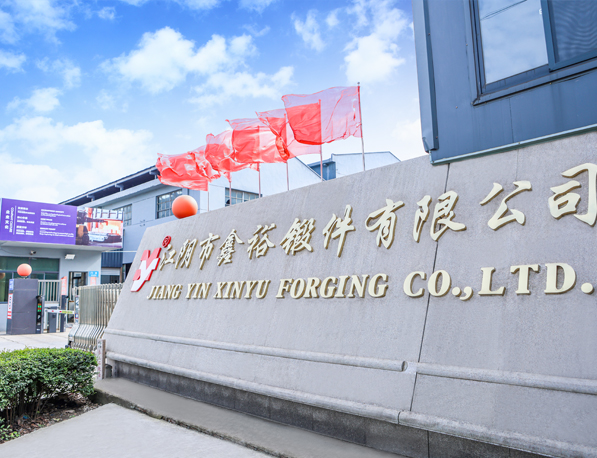
At Jiangyin Xinyu Forging, we produce forged components from both grades, applying controlled forging and heat-treatment practices to deliver consistent material properties in valve forgings, oil and gas components, nuclear project forgings, and mining equipment parts. Our technical team works directly with customers to select the right material for their specific service conditions, balancing corrosion performance, mechanical requirements, and cost.