

 英语
英语 德语
德语 阿拉伯语
阿拉伯语

Content
- 1 What Counts as Low-Carbon and High-Carbon Steel?
- 2 Mechanical Properties Head-to-Head
- 3 Weldability, Machinability, and Formability
- 4 Where Each Steel Grade Makes Sense
- 5 Forging Behavior: Temperature Windows and Shop Considerations
- 6 Heat Treatment: The Hidden Variable
- 7 Cost and Procurement Reality
- 8 How to Choose Between Low-Carbon and High-Carbon Steel
- 9 Frequently Asked Questions
- 9.1 Which steel is stronger: high-carbon or low-carbon?
- 9.2 Why is high-carbon steel harder to weld than low-carbon steel?
- 9.3 Is low-carbon steel the same as mild steel?
- 9.4 Can high-carbon steel be used for forged valve components?
- 9.5 How does heat treatment affect the comparison?
- 9.6 What is the most reliable way to tell the two steels apart in a workshop?
The short answer: high-carbon steel is harder, stronger, and more wear-resistant than low-carbon steel, while low-carbon steel is far easier to weld, bend, machine, and form. Carbon content drives the whole trade-off. Low-carbon grades typically contain 0.05-0.25% carbon; high-carbon grades contain roughly 0.60-1.00% carbon, and that small difference in weight percent completely changes the microstructure, service behavior, and manufacturing cost of a forged or machined component.
Neither grade is "better" in absolute terms. A forged valve body that must seal under high pressure, a mining wear part that rubs against abrasive rock, a spring that must return to shape millions of times, and a structural bracket that only carries static load all need different answers. This guide explains the measurable differences between high-carbon and low-carbon steel and gives you a practical way to choose the right one before you commit to material, tooling, heat treatment, and supplier selection.
What Counts as Low-Carbon and High-Carbon Steel?
Carbon steel is an iron-carbon alloy in which carbon is the main hardening element. The carbon content, measured in weight percent, is the first thing a buyer or engineer checks when comparing quoted forgings or bar stock. According to the Wikipedia entry on carbon steel, plain low-carbon steel is usually defined as containing 0.05-0.15% carbon, medium-carbon steel roughly 0.30-0.50% carbon, and high-carbon steel approximately 0.60-1.00% carbon. Many mills and fabricators also treat material up to 0.25% carbon as mild or low-carbon grade because its weldability and formability remain predictable up to that level.
| Class | Carbon Content (wt%) | Typical Tensile Strength | Typical Behavior |
|---|---|---|---|
| Low-carbon (mild) | 0.05-0.25% | 400-540 MPa | Soft, ductile, easy to weld and form |
| Medium-carbon | 0.30-0.50% | 550-870 MPa | Balanced strength and ductility; heat-treatable |
| High-carbon | 0.60-1.00% | 700-1,050 MPa | Hard, strong, more brittle; resists wear |
| Ultra-high-carbon | 1.00-2.00% | Up to 1,200 MPa or more | Very hard; limited ductility; used for tools and dies |
The mechanism behind these numbers is well established. Carbon atoms occupy interstitial positions between iron atoms and promote the formation of pearlite and cementite during cooling. More carbon means more cementite, which is hard but brittle. That is why the same steel family can deliver everything from a bendable sheet-metal grade to a spring wire that cuts through rock if the carbon percentage is raised.
Mechanical Properties Head-to-Head
If the part must resist plastic deformation, indentation, or sliding wear, high-carbon steel wins. If the part must bend, absorb impact, or survive a welded joint next to a stress concentration, low-carbon steel wins. The table below summarizes the property gaps you will see in standard supplier data sheets.
| Property | Low-Carbon Steel | High-Carbon Steel |
|---|---|---|
| Hardness | 120-180 HB (as-rolled) | 200-300 HB; 38-55 HRC after quench and temper |
| Ultimate tensile strength | 400-540 MPa | 700-1,050 MPa |
| Yield strength | 250-360 MPa | 400-700 MPa |
| Elongation at break | 20-35% | 5-15% |
| Impact toughness | Higher; absorbs shock well | Lower; more sensitive to notches |
| Wear resistance | Moderate | Excellent |
How these differences matter in a real part
Consider a forged gear blank. If the gear runs in a clean, oil-lubricated gearbox and sees steady torque, a low-carbon case-hardened steel is often chosen because the core stays tough while the surface becomes hard. If the same gear carries abrasive dust or lacks reliable lubrication, a high-carbon quenched-and-tempered steel will hold its surface longer but demands more careful design to avoid notch sensitivity. The data above explains that trade in numbers: roughly double the tensile strength comes at the cost of cutting elongation from about 30% down to 10%.
Weldability, Machinability, and Formability
Manufacturing cost is not only about the price of the raw material. Welding, cutting, drilling, milling, bending, and straightening all respond differently to carbon content. The differences are large enough that a low-carbon part can come out cheaper even when its material cost is nearly identical, simply because processing time is shorter and scrap rates are lower.
- Welding: low-carbon steel welds readily with standard MIG or stick electrodes and normally needs no preheat below about 20 mm thickness. High-carbon steel forms hard, brittle martensite in the heat-affected zone when it cools quickly after welding. Practical rules for high-carbon welding include preheating to 150-260°C, using low-hydrogen electrodes, controlling interpass temperature, and performing post-weld heat treatment to restore ductility.
- Machining: low-carbon steel is soft and can produce stringy, gummy chips that tend to build up on the cutting edge; sharp tools and higher cutting speeds solve the problem. High-carbon steel in the annealed state machines reasonably well because the pearlite structure breaks chips into shorter segments, but once hardened, it requires carbide or ceramic tooling and slower speeds. If you plan to thread, drill, or broach a high-carbon forging, machine it before the final quench and temper.
- Forming and straightening: low-carbon steel can be cold-bent, flattened, flanged, and straightened without cracking. High-carbon steel needs hot forming or very generous bend radii; attempts to cold-straighten a hardened high-carbon part frequently end in fracture. This is a common root cause of rejected shafts and die blocks.
- Stamping and shearing: plasma cutting, oxy-fuel cutting, and blanking are slower on high-carbon steel because the heat-affected zone hardens. Edge cracking after cutting is more common, so many shops specify low-carbon steel for components that will be sheared at the edge and then bent.
This is why the manufacturing route should be decided before final material selection. A welded structure with complex plate geometry is almost always a low-carbon steel job. A part that is simply forged to shape, heat-treated, and then ground, such as a wear plate or cutting tool, can make better use of high-carbon steel.
Where Each Steel Grade Makes Sense
Application selection follows the mechanical logic above. Low-carbon grades dominate structural and pressure-containing components because weldability and toughness reduce the risk of catastrophic failure. High-carbon grades dominate parts whose main job is to resist wear, hold a cutting edge, or store elastic energy.
| Steel Class | Common Components | Why This Grade Works |
|---|---|---|
| Low-carbon | Forged flanges, valve bodies, pipe fittings, brackets, structural parts, automotive frames, general machine parts | Welds easily, bends without cracking, resists shock loading |
| Medium-carbon | Gears, axles, shafts, couplings, connecting rods | Balanced strength and toughness; responds well to quench and temper |
| High-carbon | Springs, wire rope, cutting tools, saw blades, wear plates, shear blades, mining equipment components | High hardness and wear resistance; elastic limit is much higher |
| Ultra-high-carbon | Dies, knives, scrapers, drill bodies | Maximum hardness with very limited ductility |
In the mining sector, for example, near-wear components such as crusher hammers, bucket teeth, and conveyor scrapers are frequently forged from medium-carbon or high-carbon steel and then heat-treated to a wear-resistant hardness. The same operation also relies on low-carbon forged structural parts, including shaft brackets and framework components, that need dependable weldability on site. A component manufacturer that offers both directions of this material range is easier to work with because the buyer does not have to split the order among multiple suppliers.
Forging Behavior: Temperature Windows and Shop Considerations
Because this site is built around a forging manufacturer, the forging angle deserves special attention. Carbon content changes how a billet behaves under the hammer or press, how narrow the acceptable temperature window is, and how the part must be cooled after forging. The Wikipedia carbon steel entry lists typical forging temperature ranges that illustrate the point.
| Steel Class | Forging Temperature Range | Shop Considerations |
|---|---|---|
| Low-carbon | 850-1,250°C | Wide window; forgiving even if the billet is too hot or too cool |
| Medium-carbon | 850-1,200°C | Moderate window; requires consistent billet heating |
| High-carbon | 830-1,100°C | Narrower window; risk of overheating, grain growth, and edge cracking |
Three production risks are specific to high-carbon forging. First, decarburization: the surface loses carbon at high temperature, leaving a soft layer that must be machined off or a surface that will not harden to specification. Second, cracking during cooling: high-carbon steel should be cooled slowly, often in lime, sand, or a furnace, to avoid thermal stress and transformation cracking. Third, narrower reheating tolerance: if the billet exceeds the upper limit, the grain structure grows rapidly and the final mechanical properties drop even if the chemical analysis is correct.
A reliable supplier will give you not just the final mechanical report, but also evidence that the process was controlled at the forging stage. For that reason, buyers of forged components increasingly prefer a shop that owns the whole sequence of material selection, heating, forging, heat treatment, and machining. When the same operator is responsible for all steps, the carbon content of the grade can be matched to the actual deformation and cooling conditions rather than treated as a laboratory number.
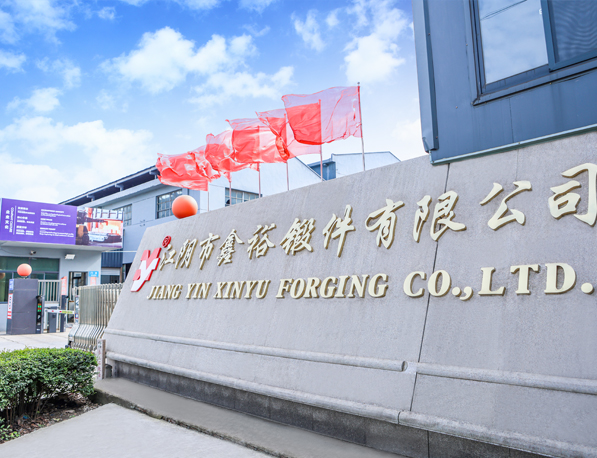
At Jiangyin Xinyu Forging, the in-house flow of material, forging, heat treatment, and machining capabilities means a low-carbon or high-carbon grade is not left to a separate workshop that has no idea what happened to the billet before it arrived. Oil and gas flanges, valve components, and petrochemical fittings frequently sit at the low-carbon end of the range, precisely because pressure-containing parts need weldability and impact toughness after they leave the shop.
 Oil and Gas Petrochemical Forgings for High-Pressure ComponentsThese forgings suit pressure vessels needing weldability and impact toughness, where low-carbon grades are typical. The integrated forging, heat treatment, and machining process ensures consistent quality.View Product →
Heat Treatment: The Hidden Variable
A raw carbon content comparison only tells part of the story. Heat treatment shifts the final properties so much that a properly treated low-carbon steel can be harder than an untreated high-carbon steel. The two steels respond differently to each process, and this is where many purchasing mistakes are made.
- Low-carbon steel: cannot be significantly hardened by quenching alone because the carbon supply is too small. It is usually strengthened by cold working or by case hardening processes such as carburizing or carbonitriding. Carburized low-carbon steel produces a hard case of roughly 0.8-1.0% carbon at the surface while the core keeps its toughness. This is the standard route for gears, shafts, and pins that need a hard outer layer and a shock-resistant core.
- High-carbon steel: can be hardened through the full section by austenitizing, quenching in oil or water, and then tempering. A steel such as AISI 1080 can reach 55-60 HRC after proper quenching. The catch is that hardenability also means residual stress, distortion, and cracking risk during the quench. Complex high-carbon forgings should be designed with generous radii and uniform section thickness to minimize these problems.
- Spheroidizing anneal: high-carbon steels are often spheroidized before machining or cold forming. The process converts lamellar pearlite into spheroidal carbides, lowering hardness and improving machinability or allowing cold extrusion that would otherwise crack. Many buyers forget to ask whether the quote includes this step; skipping it can double the machining cost.
The practical takeaway: specify the final hardness, yield strength, and elongation you need, not just the carbon content. A forged component made of low-carbon steel and carburized can outperform a high-carbon part in a fatigue-driven application, and a quenched-and-tempered high-carbon part can outperform a low-carbon part in a wear-driven one. Always include the required heat treatment condition in your inquiry.
Cost and Procurement Reality
Material price is the easiest number to compare, but it is not the number that decides total cost. The table below breaks down where the money actually goes on a typical forged order.
| Cost Item | Low-Carbon Steel | High-Carbon Steel |
|---|---|---|
| Raw material | Lower per tonne | Higher per tonne |
| Machining | Fast, cheap; gummy chips manageable | Slower, more tool wear; may need spheroidizing first |
| Heat treatment | Only if carburizing is required | Quench and temper usually mandatory |
| Welding on site | Routine | Often prohibited or very restrictive |
| Scrap and rework | Lower risk | Higher risk of quench cracks and distortion |
| Service life in wear | Shorter | Much longer if properly hardened |
For a simple bracket or flange, low-carbon steel will almost always produce the lowest total cost. For a wear plate that replaces every three months, paying two or three times more for high-carbon steel can cut the yearly maintenance bill in half. That service-life calculation is the strongest argument for not defaulting to the cheapest grade.
How to Choose Between Low-Carbon and High-Carbon Steel
Base the decision on a small set of engineering questions. Answer these five before you request a quote:
- Will the part be welded? If yes, low-carbon steel is the safe default. If high-carbon steel is unavoidable, budget for preheat, controlled cooling, and post-weld heat treatment.
- What is the failure mode you fear most? Fatigue and impact failures favor low-carbon or medium-carbon steel with good toughness. Wear failures favor high-carbon steel with high hardness.
- How much deformation must the finished part tolerate? Low-carbon steel can bend and absorb shock. High-carbon steel becomes notch-sensitive; avoid sharp corners and abrupt section changes.
- What heat treatment is available at the supplier? If you need carburizing, start with low-carbon. If you need through-hardening of a thin section, high-carbon is the better fit.
- What is the operating temperature? Both steels lose strength at elevated temperature. High-carbon steel is generally not used above 200°C in load-bearing applications because continued tempering slowly softens the structure.
| If the application looks like... | Choose... | Typical grade example |
|---|---|---|
| Welded pressure part | Low-carbon | AISI 1018 or 1020 |
| Pin or shaft needing tough core and hard surface | Low-carbon, carburized | AISI 1018 case-hardened |
| Wear plate or scraper | High-carbon | AISI 1080 |
| Spring or flexible element | High-carbon | AISI 1095 or spring steel |
| Valve body, flange, fitting | Low-carbon | AISI 1020 or A105-type |
If you are still uncertain, provide the supplier with the drawing, the loading condition, and the required weldability or hardness rather than only a steel name. A good shop can then recommend the carbon level that fits the process. You can also discuss your application directly with an experienced engineer before locking in the material grade and heat treatment path.
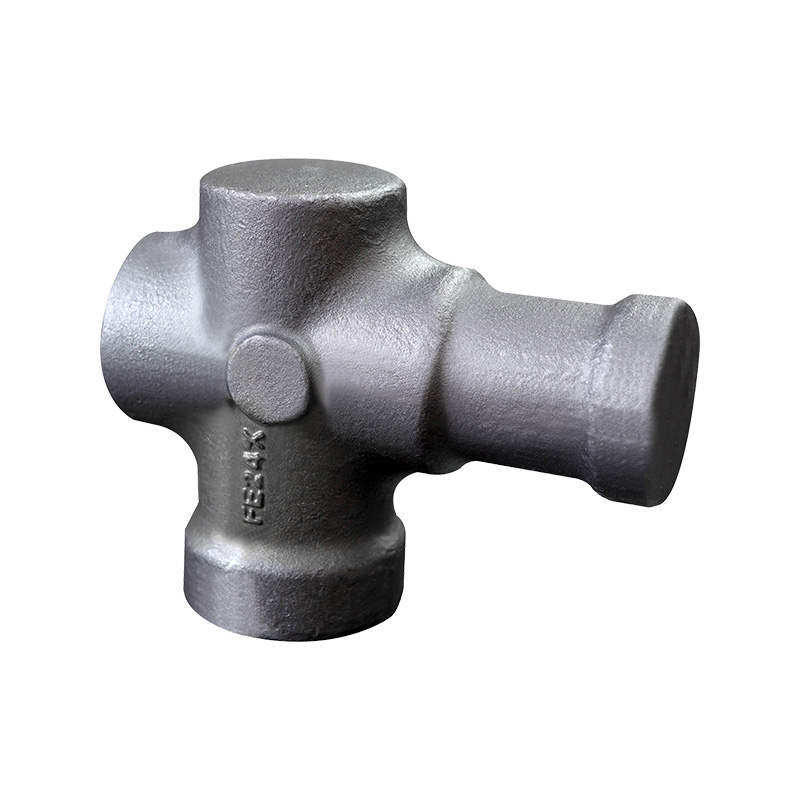
Valve Parts Forgings with Optimized Strength and ToughnessDiscussed alongside the strength-toughness trade-off, this product suits applications requiring high yield strength. The forging process refines fiber flow for reliable performance under stress.View Product →Frequently Asked Questions
Which steel is stronger: high-carbon or low-carbon?
High-carbon steel is stronger in terms of yield and tensile strength when both are compared in the same heat-treated condition. Typical plain low-carbon grades offer 400-540 MPa ultimate tensile strength, while high-carbon grades offer roughly 700-1,050 MPa. However, strength should be weighed against toughness: the same carbon that raises strength lowers the elongation at break from around 30% to below 15%.
Why is high-carbon steel harder to weld than low-carbon steel?
When the weld area cools, high-carbon steel transforms to hard martensite in the heat-affected zone. Martensite is strong but brittle and can crack under shrinkage stress. Low-carbon steel does not form enough martensite to create that risk, so it can be welded without preheat or post-weld treatment in most shop situations.
Is low-carbon steel the same as mild steel?
The terms are usually interchangeable. Mild steel generally refers to plain low-carbon steel with carbon in the range of 0.05-0.25%. Some mills restrict "mild" to the lowest end below 0.15%, while structural specifications allow up to 0.25%. The practical meaning is the same: a soft, weldable, formable grade that cannot be hardened by quenching alone.
Can high-carbon steel be used for forged valve components?
It can, but it is uncommon. Forged valve bodies and flanges in oil and gas service are normally made from low-carbon or medium-carbon steel because the component is welded into a pipeline and must pass hydrostatic testing without brittle failure. High-carbon trim parts such as seats and stems appear in special wear-resistant designs, but the pressure-containing body stays in the low-carbon family.
How does heat treatment affect the comparison?
Heat treatment can change properties more than the base carbon content. Low-carbon steel gains a hard surface through carburizing while retaining a tough core. High-carbon steel gains full-section hardness through quench and temper. A carburized low-carbon pin can match the wear resistance of a high-carbon pin, yet survive repeated bending impacts that would crack the fully hardened high-carbon part.
What is the most reliable way to tell the two steels apart in a workshop?
A comparison of machining chips and the behavior under a bench grinder gives a quick qualitative answer. Low-carbon steel produces continuous, stringy chips and a long, bright spark stream. High-carbon steel produces shorter, breaking chips and a spark stream with more branching and small star-like bursts. For a quantitative answer, send a sample to a laboratory for optical emission spectroscopy; a hardness test is also useful but can be misleading if the low-carbon part was carburized.