

 英语
英语 德语
德语 阿拉伯语
阿拉伯语

Content
- 1 Start with composition: two elements create every real difference
- 2 Mechanical properties: where the strength gap actually shows up
- 3 Hardenability and heat treatment: the thicker the section, the bigger the gap
- 4 Weldability: the strongest argument for 4130
- 5 Machinability: the case where 4140 can look better
- 6 Applications: two design philosophies, one decision
- 7 Cost and procurement: what the premium actually buys
- 8 How to choose: a five-question decision check
- 9 Forging considerations: how the two grades behave in the shop
- 10 Frequently asked questions
- 11 Final word
If you need a one-line answer first: 4140 is the stronger, harder and more fatigue-resistant grade, while 4130 is the tougher, more weldable and more forgiving grade. For machined-and-heat-treated mechanical parts such as shafts, gears, valve bodies and pins, 4140 is the common choice. For welded structures such as frames, tubular assemblies and pressure containers, 4130 is the safer default.
Both belong to the AISI-SAE 41xx family of chromium-molybdenum low-alloy steels. They carry the same chromium content, 0.80-1.10%, and the same molybdenum content, 0.15-0.25%. Almost every difference that matters to a design engineer, a purchasing manager or a forging supplier comes down to two deliberate changes: 4140 contains about 0.10% more carbon and 0.35% more manganese than 4130.
This article compares the two grades across composition, mechanical properties, hardenability, weldability, machinability, applications, cost and forging behavior, and closes with a practical selection checklist and an FAQ. The content is organized so that you can reach a defensible material decision without reading a 400-page materials handbook.
Start with composition: two elements create every real difference
The composition ranges below follow SAE J404 and ASTM A29 grade listings, which are the reference documents that steel mills and forging shops use when they define a heat. Maximum impurity limits for phosphorus and sulfur are identical in both grades, so the practical comparison starts with carbon and manganese.
| Element | 4130 (%) | 4140 (%) | What the difference does |
|---|---|---|---|
| Carbon | 0.28-0.33 | 0.38-0.43 | Raises achievable strength, hardness and hardenability; lowers ductility and weldability. |
| Manganese | 0.40-0.60 | 0.75-1.00 | Deepens hardening response; improves chip breaking during machining. |
| Silicon | 0.15-0.35 | 0.15-0.35 | Identical; acts mainly as a deoxidizer during melting. |
| Chromium | 0.80-1.10 | 0.80-1.10 | Identical; improves hardenability and wear resistance. |
| Molybdenum | 0.15-0.25 | 0.15-0.25 | Identical; maintains strength at elevated temperature and reduces temper embrittlement risk. |
| Phosphorus (max) | 0.035 | 0.035 | Identical; held low to protect ductility and toughness. |
| Sulfur (max) | 0.040 | 0.040 | Identical; controlled for sound forging and welding behavior. |
The 0.10% carbon increase in 4140 is not a minor detail. Carbon controls the maximum hardness a steel can reach after quenching. It also raises the carbon equivalent value that welding engineers monitor most carefully. At mid-range compositions, 4130 sits at a carbon equivalent of roughly 0.61, while 4140 reaches about 0.78. That single shift moves 4140 from "weldable with precautions" into "weldable only with strict procedure control."
Mechanical properties: where the strength gap actually shows up
Mechanical values shift with section size, heat treatment and test direction, so the numbers below are typical values for 25-millimeter bars, compiled from ASM International Handbook Volume 1 and common commercial supplier data. They are useful for comparison, not for final design. Always design from the minimum values stated on the actual purchase specification.
| Grade | Condition | Tensile strength (MPa) | Yield strength (MPa) | Elongation (%) | Hardness |
|---|---|---|---|---|---|
| 4130 | Annealed | ~560 | ~460 | ~28 | ~156 HB |
| 4140 | Annealed | ~655 | ~420 | ~26 | ~197 HB |
| 4130 | Normalized | ~670 | ~475 | ~25 | ~190 HB |
| 4140 | Normalized | ~1020 | ~760 | ~18 | ~262 HB |
| 4130 | Oil-quenched, tempered 540°C | ~1030 | ~890 | ~17 | ~32 HRC |
| 4140 | Oil-quenched, tempered 540°C | ~1240 | ~1100 | ~14 | ~38 HRC |
In the normalized condition, 4140 delivers roughly 50% more yield strength than 4130. After quench and temper at 540°C, 4140 still holds a 20% strength advantage, but with lower elongation. The trade-off is consistent: every time you push carbon and manganese up, you gain strength and hardness and give up ductility and impact resistance.
The toughness side of the same table
Impact toughness follows the opposite curve. In typical published Charpy V-notch data, normalized 4130 lands in the 60-80 J range, while 4140 quenched and tempered to 38 HRC usually sits around 30-40 J. For a component that must absorb impact without cracking - a mining pin, a lifting lug, a heavily braced frame joint - that toughness gap can matter more than the strength gap.
Hardenability and heat treatment: the thicker the section, the bigger the gap
Hardenability is the ability to form martensite through the cross-section during quenching. 4130 is a shallow-hardening grade; 4140 is a deep-hardening grade. In a 50-millimeter round, an oil quench will reach roughly 40 HRC at the center of 4140, while 4130 typically stops around 25-30 HRC at the same depth. That is why 4140 is regularly ordered as a pre-hardened bar in large diameters and 4130 is not.
Typical heat-treatment routes
- 4130: austenitize 845-870°C, quench in oil (water is sometimes used for thin sections), temper 205-650°C depending on the target hardness. After forging, normalize at 870-925°C.
- 4140: austenitize 845-870°C, quench in oil, temper 205-650°C. After forging, normalize at 870-900°C or proceed directly to quench-and-temper for high-strength service.
| Tempering temperature (°C) | 4130 hardness (HRC) | 4140 hardness (HRC) |
|---|---|---|
| 205 | ~50 | ~54 |
| 315 | ~47 | ~51 |
| 430 | ~40 | ~45 |
| 540 | ~32 | ~38 |
| 650 | ~25 | ~30 |
At the same tempering temperature, 4140 runs about 5-6 HRC harder than 4130. This has a practical consequence: a part specified at 32-36 HRC can be produced in 4140 at a higher tempering temperature, which gives more ductility for the same hardness. In 4130, reaching the same hardness would require a lower temper, leaving the material more brittle at the same strength level.
Weldability: the strongest argument for 4130
If the part will be welded - a frame, a tubular assembly, a pressure vessel, a fabricated arm, a bracket - 4130 gives you a much wider process window. Its lower carbon content keeps the heat-affected zone softer, so cooling-rate sensitivity and cracking risk both drop. 4140 can be welded, but the procedure carries real consequences for shop cost and weld integrity.
4130 welding practice
- Preheat 150-260°C for sections thicker than about 12 mm; heavily restrained joints need the upper end of that range.
- Use low-hydrogen filler: ER80S-D2 for strength matching, ER70S-2 when the weld is allowed to be slightly softer than the base material.
- Keep interpass temperature at or below 260°C and avoid slow cooling in the martensite-forming range.
- Post-weld stress relief at 480-650°C is recommended for restrained joints; critical aerospace work often calls for a full normalize-and-temper after welding.
4140 welding practice
- Preheat 200-315°C; use at least 250°C for highly constrained joints.
- A low-hydrogen process is mandatory: GTAW or GMAW with low-hydrogen filler; avoid any electrode that can introduce hydrogen into the weld.
- Post-weld heat treatment is normally required to restore ductility and prevent delayed heat-affected-zone cracking.
- Design rule: 4140 welding makes sense when the weld is non-structural or the part will be fully re-heat-treated afterwards. For continuous load-carrying welds, reconsider the grade.
The bottom line: for welded assemblies, 4130. For machined components that only need a minor weld, 4140 with a controlled procedure can work, but every additional weld raises the risk and the inspection cost.
Machinability: the case where 4140 can look better
It sounds counterintuitive, but in the annealed condition 4140 often machines slightly more predictably than 4130. The higher manganese content improves chip breaking, and the slightly higher starting hardness lets the cutting tool take a cleaner shearing cut. Neither grade is difficult to machine; both respond well to carbide tooling.
- 4130 is commonly supplied normalized at about 190 HB. Machine it, then send it out for heat treatment if the final hardness is above ~35 HRC.
- 4140 is often bought pre-hardened at 28-32 HRC. Machine directly to finish and skip the post-machining heat-treatment step entirely.
- For turning 4130 or 4140, carbide inserts at 60-120 m/min with coolant are typical; use positive rake geometries for the softer annealed condition.
- Threading and keyway cutting favor 4140 pre-hardened, because the finished threads keep their wear resistance without a second operation.
When you compare total cost, the pre-hardened 4140 route frequently wins over 4130 plus a separate heat-treatment pass, even though the material itself costs more. The savings come from fewer shop operations, shorter lead times and no distortion correction after hardening.
Applications: two design philosophies, one decision
The common shorthand in machine design is simple: 4130 for structures, 4140 for machines. The longer version depends on how the part is loaded, joined and manufactured.
Where 4130 is the right call
- Aircraft structural tubing, engine mounts and roll cages, where welded chromoly tube is the established standard.
- Racing chassis, suspension arms and bicycle frame tubing, where thin walls and weldability matter more than peak hardness.
- High-pressure hydraulic cylinders and tubing where the design pressure stays moderate.
- Lightweight brackets, gussets and welded sub-frames in transportation equipment.
Where 4140 is the right call
- Power-transmission shafts, axles, spindles, crankshafts and connecting rods.
- Gears, pinions, sprockets and couplings that need a hard, wear-resistant surface.
- Forged valve bodies, bonnets, stems and end connections for oil and gas service.
- Drill collars, stabilizers, subs and tool joints in drilling assemblies.
- Pins, bushings, rollers and wear plates in mining and heavy construction equipment.
- Forging dies, shear blades and production tooling.
What this means when you order forgings
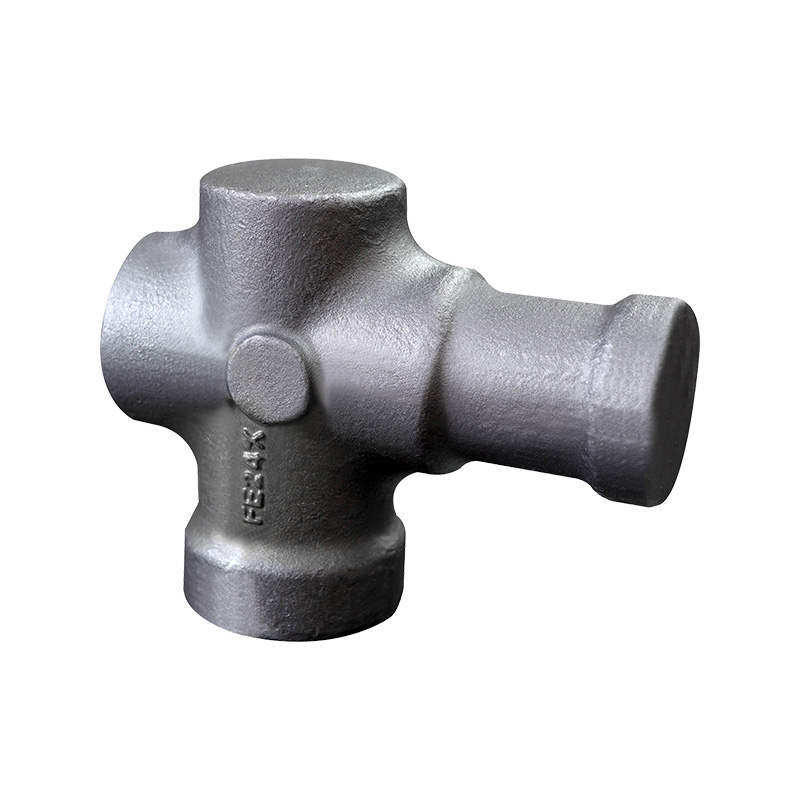
In valve manufacturing, most forged bodies and bonnets are made from 4140 because the pressure rating and the stiffness of the sealing area depend on proof stress, not just ultimate strength. That is why buyers working with valve forgings usually ask for 4140 with a specified quench-and-temper hardness band.
 Custom Valve Parts Forgings Manufacturer, Supplier, FactoryJiangyin Xinyu Forging Co., Ltd is China OEM/ODM valve parts forgings manufacturer and valve parts forgings company, We professional whol...View Product →
Subsurface drilling tools follow the same logic. The combination of through-hardening, fatigue resistance and impact toughness is exactly why 4140 dominates oil and gas petrochemical forgings for drill collars, stabilizers and wellhead components.
Oil and Gas Petrochemical Forgings Manufacturer, Supplier, FactoryAs a China OEM/ODM oil and gas petrochemical forgings supplier and Oil and oil and gas petrochemical forgings company, Jiangyin Xinyu For...View Product →
For mining machinery, gear blanks, drive shafts and crusher pins take heavy shock loads, and 4140 forgings are usually quenched and tempered to 28-36 HRC to survive that duty. When the part is mainly welded into a machine frame, the design often moves back to 4130. The choice is a routine discussion in our mining machinery forgings work.
Custom Mining Machinery Forgings Manufacturer, Supplier, FactoryJiangyin Xinyu Forging Co., Ltd is China OEM/ODM mining machinery forgings manufacturer and mining machinery forgings company, We special...View Product →
| Application | Preferred grade | Main reason |
|---|---|---|
| Aircraft tubing, roll cage, frame | 4130 | Weldability and toughness |
| Shafts, axles, gears, spindles | 4140 | Strength, fatigue life, hardenability |
| Forged valve bodies and bonnets | 4140 | Proof stress and hardness control |
| Welded pressure parts | 4130 | Lower weld cracking risk |
| Drill collars, subs, tool joints | 4140 | Balance of strength and toughness |
4140 costs more as a raw material. Bar, billet and forging-blank prices for 4140 typically run 5-15% higher per kilogram than equivalent 4130 forms, mostly because of the higher alloy content. But material cost is only part of the total part cost. The procurement route often matters more.
| Parameter | 4130 | 4140 |
|---|---|---|
| Relative material price | Baseline | +5% to +15% |
| Common supply form | Bar, tube, plate, forged blanks | Bar, billet, forged blanks, pre-hardened bar |
| Typical delivery condition | Normalized | Normalized, or quenched and tempered to 28-32 HRC |
| Hardness on arrival | ~180-220 HB | ~240-290 HB; 280-320 HB when pre-hardened |
| Additional shop cost | Heat treatment after machining for high-hardness parts | Often none when pre-hardened |
As an illustrative calculation, if a forged shaft blank costs $1.50 per kilogram in 4130, the same blank in 4140 might run $1.60-$1.72. On a 100-kilogram blank, the alloy premium is roughly $10-$22 per part. A separate quench-and-temper cycle, by comparison, can add $80-$150 per part plus handling time and distortion risk. For strength-critical machined parts, the pre-hardened 4140 route usually closes the cost gap and often comes out ahead.
If valve body strength is the main design risk, it is worth reading why strength targets steer valve forging grade selection before you freeze the specification.
How to choose: a five-question decision check
Work through these five questions in order. Each one points to a grade before you look at any data sheet.
- Is the part welded as a load-carrying joint? If yes, choose 4130. Welding risk will dominate every other material consideration.
- Is the section thick, over about 30 mm, and does it need through-hardness? Choose 4140. 4130 cannot deliver center hardness in heavy sections.
- Does the part carry rotating or repeated bending loads, such as a shaft or gear? Choose 4140 for the higher fatigue strength.
- Is weight the priority, with thin walls and formed tubing? Choose 4130, and design around its weldability.
- How will the part be heat-treated? If you want to machine pre-hardened material and skip a separate heat-treatment step, 4140 at 28-32 HRC is the practical answer.
Before committing the grade to a drawing, confirm that your supply chain can hold the required process window. Checking a supplier's in-house forging, heat treatment and machining capabilities removes a lot of guesswork, especially for 4140 parts that depend on a disciplined quench-and-temper cycle.
Forging considerations: how the two grades behave in the shop
Both grades forge well, but the shop must treat them differently. Forging temperature windows overlap only partly: 4130 is usually forged starting at 1150-1230°C and must finish above 870°C; 4140 starts at 1100-1200°C and must finish above 900°C. Going below the finish temperature leaves a mixed grain structure that is hard to correct later.
Post-forge cooling is where shops lose 4140 parts. A large 4140 section air-cooled too fast can develop quench cracks in the die or on the cooling bed. The standard practice is furnace cooling or immediate normalizing. 4130 is more tolerant and can be slow-cooled in air for smaller sections, which is one more reason it is cheaper to process.
Reduction ratio and grain flow matter just as much. Designers ordering forged parts should state a minimum reduction ratio, commonly 3:1 in critical sections, because transverse ductility in rolled bar is inherently lower than in a forging whose grain flow follows the part contour. A 4140 shaft forged and then quenched-and-tempered will beat a machined-from-bar part on fatigue life in almost every side-by-side test.
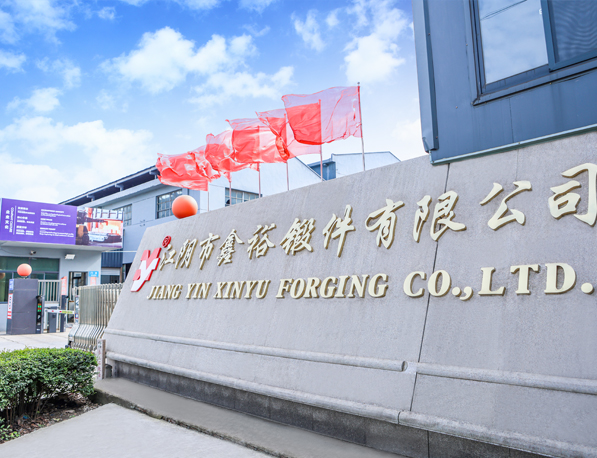
After forging, the coarse as-forged structure must be refined. Normalizing at 870-900°C is the minimum for both grades; for 4140, most oil-and-gas and mining drawings call for a full quench-and-temper cycle to a specified hardness band. A shop that controls the whole chain under one roof is easier to qualify for this work, because the critical cooling step is never left to a subcontractor. The full production facility at our Jiangyin plant covers forging, heat treatment and machining in one location, which shortens the process chain and keeps the heat-treatment history traceable.
Frequently asked questions
Which is stronger, 4130 or 4140?
4140 is stronger in every heat-treated condition. In the normalized state it provides roughly 50% more yield strength than 4130. Even after both are quenched and tempered at the same temperature, 4140 holds about a 20% strength advantage and runs 5-6 HRC harder.
Can 4140 be welded?
Yes, but only with a controlled procedure: preheat at 200-315°C, low-hydrogen filler, interpass control and post-weld heat treatment for load-bearing joints. 4130 is considerably more forgiving and is the standard choice for welded chromoly structures.
Is 4130 or 4140 better for shafts?
For power-transmission and rotating shafts, 4140 is the better choice because of its higher yield strength, deeper hardenability and superior fatigue resistance. Choose 4130 only when the shaft will be welded into a larger structure.
What is the hardness difference after heat treatment?
After oil quenching and tempering at 540°C, 4130 lands at roughly 32 HRC and 4140 at roughly 38 HRC. In large sections the gap widens because 4140 hardens deeply while 4130 remains shallow-hardening.
Is 4130 or 4140 more expensive?
4140 typically costs 5-15% more per kilogram. However, the pre-hardened 4140 route can remove an entire heat-treatment operation from the shop floor, which often makes the finished part cheaper than a 4130 part that requires separate hardening.
When would a design engineer choose 4130 over 4140?
When welding dominates the fabrication, when the section is thin, when impact toughness is critical, or when weight saving through thin-wall design is more important than maximum strength. Aircraft tubing and racing frames are the classic examples.
Final word
Between 4130 and 4140 there is no universal winner. There is only the right grade for the geometry, the load case and the joining method. Use 4140 for machined-and-hardened mechanical parts that carry load in thick sections; use 4130 for welded structures where cracking risk and toughness decide the outcome. A supplier that can forge, heat-treat and machine both grades in one house makes the trade-off easier to manage, because the material change is just a line item - the real value is in the process control around it.