

 英语
英语 德语
德语 阿拉伯语
阿拉伯语

Content
- 1 1045 vs 4140 Steel: The Direct Answer
- 2 Chemical Composition: What Actually Separates Them
- 3 Mechanical Properties: Strength, Hardness, and Toughness
- 4 Heat Treatment: Why Quench Medium Matters
- 5 Machinability and Weldability: Practical Fabrication Differences
- 6 Application Comparison: Forged Components in Real Service
- 7 Cost Considerations and How to Decide
- 8 Frequently Asked Questions About 1045 vs 4140 Steel
- 9 The Practical Bottom Line
1045 vs 4140 Steel: The Direct Answer
An engineer sends us a drawing for a forged valve shaft with 1045 specified on the print. A week later, the same engineer asks why a mining gear pinion lists 4140 instead of the cheaper 1045. That is exactly the moment when the 1045 vs 4140 decision needs to be made on data, not on habit.
Here is the short answer: choose 4140 when the part must deliver high strength, deep-section hardenability, and impact toughness; choose 1045 when you are optimizing material cost, simplifying heat treatment, and keeping weldability at the top of your list.
1045 is a plain carbon steel with roughly 0.45% carbon. 4140 is a chromium-molybdenum alloy steel with roughly 0.40% carbon plus about 1% chromium and 0.20% molybdenum. That chemical difference drives most of the practical differences between the two grades: achievable strength after heat treatment, hardening depth, distortion risk, and final price per part.
For a quick decision path, think in terms of service severity. Valve bodies, pump shafts, high-load gears, and mining components generally justify 4140. Crane wheels, tie rods, structural brackets, and general machine parts usually perform well with 1045.
Chemical Composition: What Actually Separates Them
The nominal chemistry of 1045 is carbon plus manganese, with no deliberate alloy additions. The chemistry of 4140 adds chromium and molybdenum, which are responsible for its deeper hardening response and improved resistance to softening when the part is heavily loaded or exposed to elevated operating temperatures.
| Element | 1045 (%) | 4140 (%) |
|---|---|---|
| Carbon | 0.43–0.50 | 0.38–0.43 |
| Manganese | 0.60–0.90 | 0.75–1.00 |
| Silicon | 0.15–0.35 | 0.15–0.35 |
| Phosphorus (max) | 0.040 | 0.035 |
| Sulfur (max) | 0.050 | 0.040 |
| Chromium | None | 0.80–1.10 |
| Molybdenum | None | 0.15–0.25 |
Notice that 4140 keeps carbon lower than 1045. Lower carbon reduces quench-cracking risk, while chromium and molybdenum compensate by making the steel hardenable at slower cooling rates. Plain carbon 1045 has no alloying elements to rely on, so water quenching is normally required to reach high surface hardness.
Mechanical Properties: Strength, Hardness, and Toughness
In the hot-rolled or normalized condition, the two steels are closer than many buyers expect. The difference becomes significant after hardening and tempering, which is why most engineering comparisons focus on the quenched-and-tempered condition.
| Property | 1045 | 4140 |
|---|---|---|
| Yield, hot rolled or annealed (MPa) | 310–375 | 415–480 |
| Tensile, hot rolled or annealed (MPa) | 565–630 | 655–700 |
| Yield, normalized (MPa) | 370–410 | 460–520 |
| Tensile, normalized (MPa) | 620–680 | 700–780 |
| Yield, quenched and tempered (MPa) | 450–650 | 690–1030 |
| Tensile, quenched and tempered (MPa) | 700–850 | 850–1150 |
| Hardness, typical as-delivered | 163–190 HB | 197–237 HB |
| Hardness, achievable in hardened parts | 52–56 HRC, thin sections only | 28–36 HRC in heavier sections |
The key takeaway is that 4140, after oil quenching and tempering, can reach tensile levels that 1045 cannot hit without a high risk of distortion and cracking. For fatigue-loaded parts such as crankshafts, pinion shafts, and valve stems, 4140 provides a higher safety margin at the same section size.
Toughness differs as well. At equal hardness, 4140 generally retains higher Charpy impact energy because the alloy-hardened microstructure is finer and more uniform after quenching. That margin becomes decisive in mining and oilfield components where shock loads are routine.
Heat Treatment: Why Quench Medium Matters
The most practical difference for a forging shop is the quench medium. It changes the way the part is processed, how much distortion you can tolerate, and how large a section you can harden successfully.
1045 is normally hardened from 820–860°C with a water quench. Water gives fast cooling, so thin sections can reach roughly 52–56 HRC, but thermal stress is high. Distortion and quench cracks become major risks on parts with sharp shoulders, holes, or uneven cross sections. A batch of water-quenched 1045 forgings will often need straightening, and a small percentage may be scrapped.
4140 is normally hardened from 840–880°C with an oil quench. Oil cools more slowly, so the part distorts less and remains much safer near notches and section changes, while the alloy content still produces a fully hardened structure. For finished forged components with tight tolerances, that difference alone is enough to justify the pricier grade.
Because 4140 has deeper hardenability, it can be hardened in much larger sections. A 60–80 mm diameter 4140 forging, quenched and tempered, will keep useful core hardness; the same section in 1045 will only harden near the surface. For forged components above roughly 50 mm section thickness, 4140 is often the only realistic choice if the design requires through-hardening.
Tempering response tells the same story. 4140 resists softening at higher tempering temperatures, so it can be tempered at 540–650°C for a balanced combination of strength and ductility. 1045 loses hardness faster at those temperatures, which forces you to choose between strength and toughness instead of getting both.
Not every shop carries the heat-treatment lines needed to match each grade with the right quench medium and tempering cycle. Before you fix the material grade, confirm that your supplier's forging and heat-treatment capability covers the route you need, including stress relieving for complex forged shapes.
Machinability and Weldability: Practical Fabrication Differences
A common assumption is that 1045 machines better simply because it is a simpler steel. Standard machining reference tables tell a more nuanced story. Both grades are rated against AISI 1212 at 100%. 1045 is rated at about 57%, while 4140 is rated at about 66%, according to widely cited machinist reference data.
In soft annealed form, 1045 can feel easier on cutting tools during light cuts because it is softer. But in normalized form, its structure is less uniform and the material can be gummy. 4140 blanks that have been annealed or normalized generally produce more repeatable chip control and better surface finish in CNC turning of forged blanks.
Practical rule for machining: if you are cutting large batches of forged parts, compare tool life on test blanks rather than trusting the grade name alone. The heat-treatment condition of the forged blank often matters more than the grade.
Weldability favors 1045 in most practical evaluations, even though it contains more carbon. The reason is that 4140 hardens in the weld heat-affected zone more aggressively: chromium and molybdenum increase hardenability, so the HAZ of a welded 4140 component transforms to hard, crack-sensitive martensite unless you preheat thoroughly and apply post-weld heat treatment. In practical welding literature, 1045 is generally listed as having the higher weldability and as tolerating simpler welding procedures.
If you must weld 4140, preheat to the 200–300°C range, control interpass temperature, and temper immediately after welding. For a weld-fabricated frame, bracket, or field repair, 1045 is the safer choice.
Application Comparison: Forged Components in Real Service
Where 1045 Forgings Make Sense
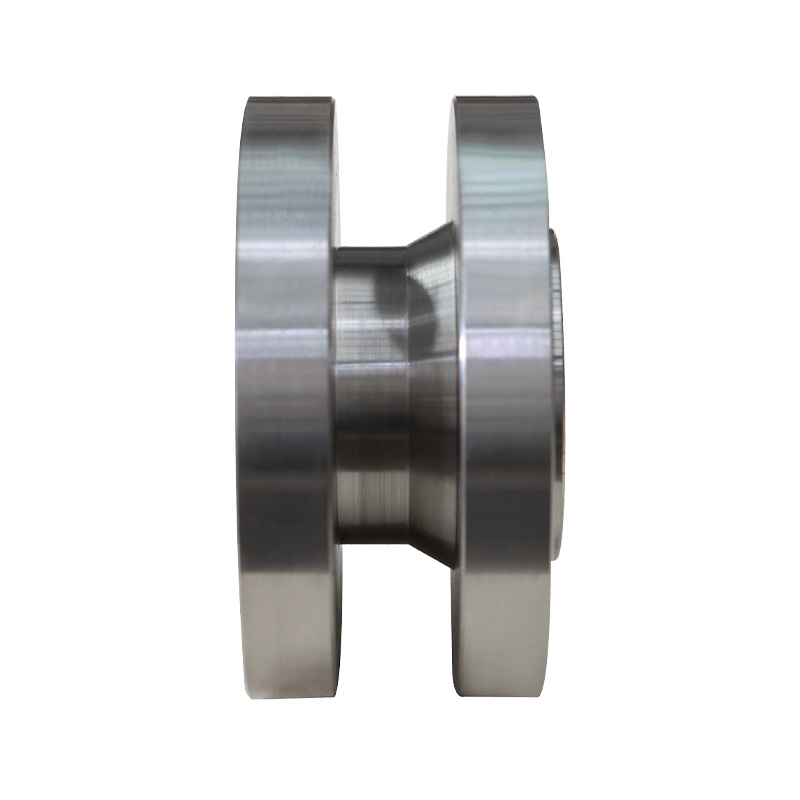
- Crane wheels and sheaves, where moderate surface hardness and predictable wear are acceptable.
- Shafts, pins, axles, tie rods, and coupling links that carry steady bending loads without heavy shock.
- Forged brackets, levers, and general machine parts that will later be welded into larger assemblies.
- Cost-sensitive components where section thickness stays under roughly 50 mm and the design does not demand through-hardening.
Where 4140 Forgings Are the Right Call
- Valve forgings
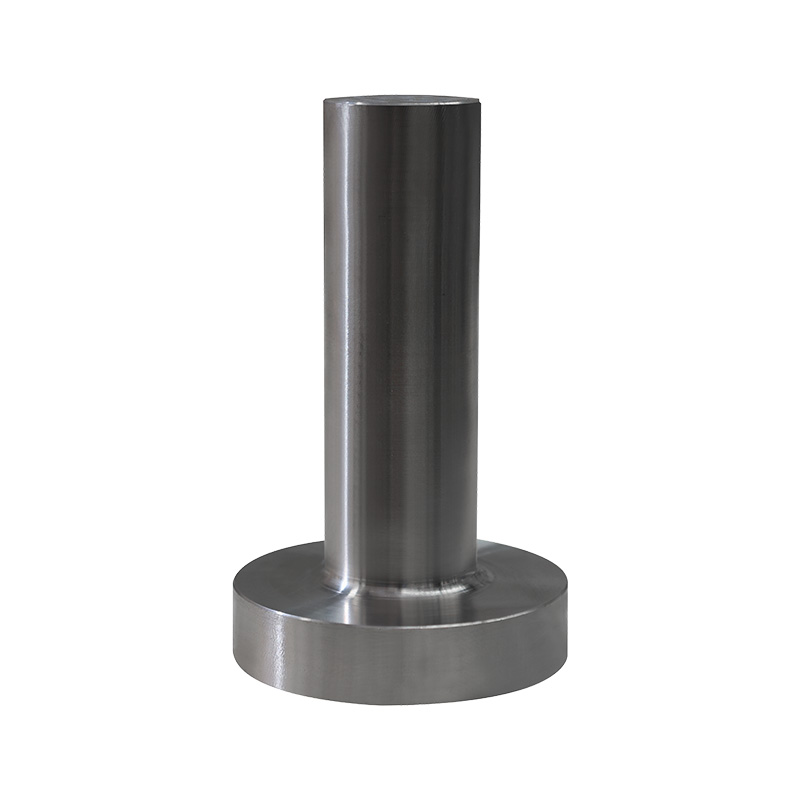
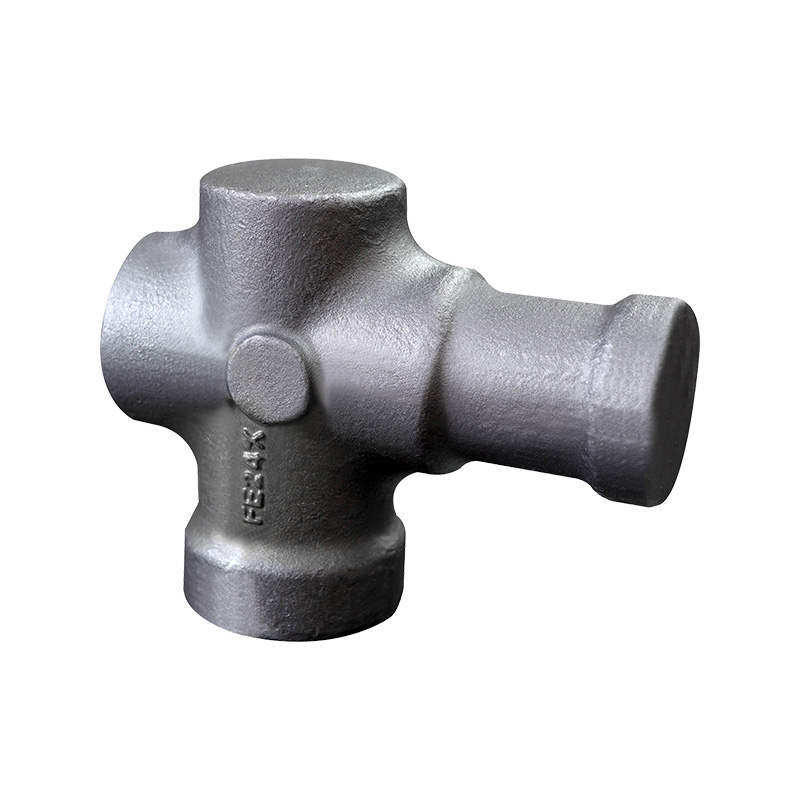
 Custom Valve Parts Forgings Manufacturer, Supplier, FactoryJiangyin Xinyu Forging Co., Ltd is China OEM/ODM valve parts forgings manufacturer and valve parts forgings company, We professional whol...View Product → — bodies, bonnets, gland nuts, and stems — where pressure ratings and temperature cycles demand high strength and fatigue resistance.
 - Mining machinery forgingsCustom Mining Machinery Forgings Manufacturer, Supplier, FactoryJiangyin Xinyu Forging Co., Ltd is China OEM/ODM mining machinery forgings manufacturer and mining machinery forgings company, We special...View Product → — gears, pinions, hammer shafts, and shock-loaded structural parts — where toughness matters as much as strength.
- Oil and gas petrochemical forgingsOil and Gas Petrochemical Forgings Manufacturer, Supplier, FactoryAs a China OEM/ODM oil and gas petrochemical forgings supplier and Oil and oil and gas petrochemical forgings company, Jiangyin Xinyu For...View Product → — pump shafts, blowout preventer parts, and flanged components — where leak-free integrity under pressure is the design driver.
- High-strength fasteners, torsion bars, spring retainers, and gearbox shafts where 1045 cannot meet the required yield strength.
Because forging refines the cast structure of the steel, both 1045 and 4140 forgings show better mechanical values than the same grade in rolled bar form. The performance gap between the two grades, however, stays in the same direction.
At our production facility in Jiangyin, we forge both grades in open-die, closed-die, and seamless-ring formats, and we routinely advise customers when the grade on their drawing does not match the actual load case. For mining applications in particular, the quality-control practices applied to mining machinery forgings start with grade verification and traceability before the first heating.
Cost Considerations and How to Decide
Material cost: 4140 typically costs 15–25% more per ton than 1045, depending on mill, region, and market conditions. That premium comes from the chromium and molybdenum content.
Lifecycle cost: material is usually only 20–40% of the delivered cost of a machined forging. If 4140 lets you reduce the section size for the same strength, the total part cost can end up lower than a heavier 1045 design. Evaluate on strength-to-weight ratio, not on material price alone.
Heat treatment cost: 1045 water quenching is cheaper per part, but rejection rates from distortion and cracking push real costs higher. Oil-quenched 4140 costs more per part but delivers better consistency across a production run.
| Selection Driver | Choose 1045 | Choose 4140 |
|---|---|---|
| Required tensile strength | Under about 700 MPa after Q&T | 850 MPa and above |
| Section thickness | Thin and uniform | Thick or variable |
| Welding frequency | Regular welding | Limited, with preheat and PWHT |
| Distortion tolerance | Generous | Tight |
| Impact and fatigue loads | Moderate | High |
| Budget priority | Lower material cost | Higher performance |
Frequently Asked Questions About 1045 vs 4140 Steel
Is 4140 always stronger than 1045?
Not in the as-rolled or normalized state; before hardening, the difference is moderate. After quenching and tempering at equivalent parameters, 4140 can deliver tensile strengths roughly 300–400 MPa higher than 1045 at the same section size.
Can 1045 be hardened as deep as 4140?
No. 1045 has much lower hardenability. Thin sections can reach high surface hardness by water quenching, but a 50 mm or thicker forging will develop only a shallow hardened case, while 4140 can maintain useful core hardness in much larger sections using oil.
Which steel is easier to weld?
1045 is generally considered easier to weld in practical evaluations because its weld heat-affected zone is less hardenable and therefore less prone to cracking. Both grades require preheat, and 4140 should always receive post-weld heat treatment in critical assemblies.
Which steel is better for forged shafts?
For moderate-duty shafts carrying steady loads, 1045 is a cost-effective choice. For fatigue-loaded shafts, larger diameters, or severe service in mining and oilfield equipment, forged 4140 is the better option.
Is the higher price of 4140 worth paying?
It depends on the loading and the section size. If the application demands high strength, impact toughness, or through-hardening in thick sections, 4140 pays for itself through fewer field failures and smaller part sizes. If the operating loads are modest, 1045 keeps the cost down without sacrificing reliability.
The Practical Bottom Line
Specify 1045 for cost-sensitive, moderate-duty forged components, especially when welding will be part of the fabrication process. Specify 4140 for high-strength, fatigue-loaded, thick-section, or severe-service components in valves, mining machinery, and oil and gas equipment.
Whatever the drawing says, confirm the grade against the actual section size, heat-treatment route, and loading condition before committing to tooling. A well-chosen steel saves money; a poorly chosen one costs far more in scrap, rework, and field failures. Discussing the forged part condition with an experienced supplier is the most reliable way to avoid the wrong call.