+86-13915203580

316 vs 316L Stainless Steel: Key Differences Explained

Home / News / Industry News / 316 vs 316L Stainless Steel: Key Differences Explained

316 vs 316L Stainless Steel: Key Differences Explained

The core difference between 316 and 316L stainless steel comes down to carbon content. 316 contains up to 0.08% carbon, while 316L is a low-carbon variant capped at 0.03% carbon. That seemingly small gap has significant consequences for weld integrity, corrosion resistance, and service life — particularly in chemical processing, marine environments, and medical device manufacturing. For stainless steel forgings, this distinction often dictates which grade is specified at the engineering stage.

Carbon Content: The Root of Every Difference

Both grades belong to the austenitic family of stainless steels and share the same nominal alloying additions of chromium (16–18%), nickel (10–14%), and molybdenum (2–3%). Molybdenum is what separates the 316 family from the more common 304 grade — it dramatically improves resistance to chloride pitting and crevice corrosion, making 316-series alloys the standard choice for coastal infrastructure, chemical handling, and pharmaceutical equipment.

The divergence between 316 and 316L stems entirely from how much carbon is permitted in the melt. Carbon in austenitic stainless steel is not neutral: at elevated temperatures, such as those reached during welding or hot forging, carbon migrates to grain boundaries and combines with chromium to form chromium carbides. This process — called sensitization — depletes the surrounding matrix of chromium, leaving those zones with less than the 10.5% chromium threshold needed for passive film formation. The result is intergranular corrosion in the heat-affected zone.

316L's maximum carbon level of 0.03% is too low for significant carbide precipitation to occur, even after extended heat exposure. This makes it the safer choice whenever welding is involved, or wherever the component will see service temperatures between 425°C and 860°C (797°F–1580°F) — the sensitization range.

316
  • Carbon: ≤ 0.08%
  • Higher tensile strength
  • Risk of sensitization after welding
  • Lower cost per kg
  • Suited for machined or non-welded parts
316L
  • Carbon: ≤ 0.03%
  • Excellent weld-zone corrosion resistance
  • No sensitization in heat-affected zones
  • Preferred for fabricated assemblies
  • Standard for medical and pharmaceutical use

Side-by-Side Chemical and Mechanical Properties

The table below captures the full compositional and mechanical comparison per ASTM A276 and ASTM A182 standards, which govern bar stock and stainless steel forgings respectively.

Table 1 – 316 vs 316L: Chemical Composition and Mechanical Properties (ASTM Standards)
Property 316 316L
Carbon (max %) 0.08 0.03
Chromium (%) 16.0 – 18.0 16.0 – 18.0
Nickel (%) 10.0 – 14.0 10.0 – 14.0
Molybdenum (%) 2.0 – 3.0 2.0 – 3.0
Tensile Strength (min MPa) 515 485
Yield Strength (min MPa) 205 170
Elongation (min %) 40 40
Hardness (Brinell max) 217 217
Density (g/cm³) 7.99 7.99
Sensitization Risk Yes (425–860°C) Negligible

Notice that tensile strength for 316 is rated at a minimum of 515 MPa versus 485 MPa for 316L. This 6% difference is a direct consequence of the lower carbon content in 316L reducing solid-solution strengthening. In structural applications where full load-bearing capacity is required and no welding is needed, standard 316 can offer a modest strength advantage. However, in most fabricated components and stainless steel forgings destined for aggressive environments, that small strength premium is outweighed by the corrosion benefits of 316L.
How Welding Behavior Differs Between the Two Grades

Welding is where the difference between 316 and 316L becomes most consequential in practice. When 316 is welded using common processes such as TIG, MIG, or stick welding, the heat-affected zone (HAZ) adjacent to the weld pool is held within the sensitization range long enough for chromium carbide precipitation to begin. In a marine or chemical environment, these chromium-depleted grain boundaries act as corrosion initiation sites. Failures in this zone are well-documented — a paper published in the journal Corrosion Science documented intergranular attack in sensitized 316 stainless weld zones exposed to chloride-bearing seawater, with penetration depths reaching 0.2 mm after just 90 days of exposure.

316L eliminates this failure mode. Because its carbon level is so low, there simply is not enough carbon available to form a continuous network of chromium carbides at grain boundaries, even after slow cooling through the sensitization range. This is why ASME pressure vessel codes (Section VIII, Division 1) permit 316L to be used in the as-welded condition for many service environments, while standard 316 may require post-weld solution annealing to restore corrosion resistance — a costly and not always practical operation for large fabrications.

For stainless steel forgings that will later be welded into assemblies — valve bodies, pump housings, flanges, manifold blocks — 316L is the standard specification precisely because it protects the integrity of the finished assembly rather than just the forged component itself.

01

316 After Welding

Carbon migrates to grain boundaries between 425–860°C, forming Cr₂₃C₆ carbides. Chromium-depleted zones form. Post-weld annealing at 1010–1120°C is required to dissolve carbides and restore the passive layer.

02

316L After Welding

Insufficient carbon for continuous carbide network formation. Grain boundary chromium levels remain above the 10.5% passive film threshold. Component can be used in the as-welded condition in most service environments.

316 and 316L in Stainless Steel Forgings: What Engineers Specify and Why

Stainless steel forgings in 316 and 316L are produced to ASTM A182 for flanges and fittings, ASTM A473 for general forgings, and ASTM A336 for pressure vessels. These standards define not just chemical composition but also the required mechanical testing, heat treatment, and documentation trail. Both grades are routinely forged; the selection depends on end-use conditions.

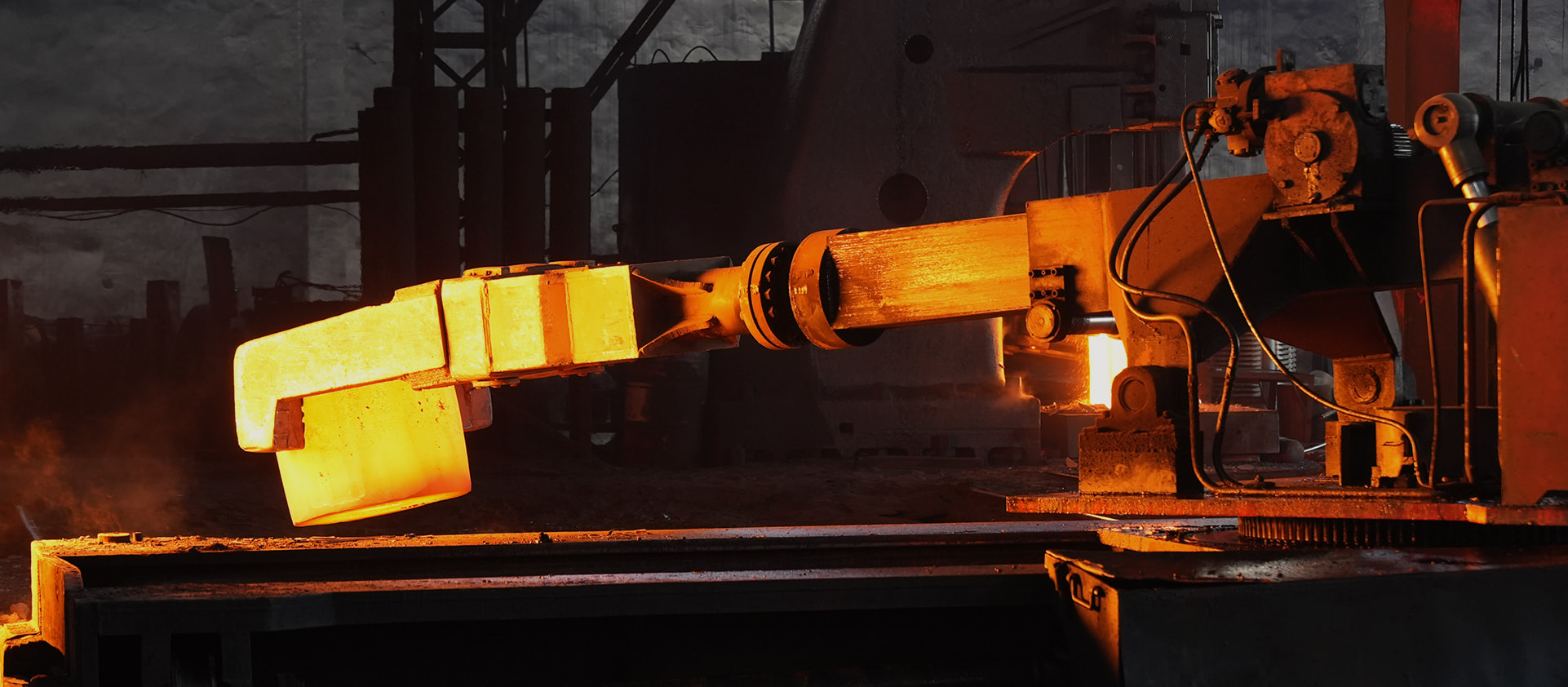
In hot forging operations, billets are typically heated to 1150–1260°C (2100–2300°F), which is above the sensitization range. After forging, the parts are solution annealed — heated to 1010°C or above, then water quenched — to dissolve any carbides that may have formed and restore full corrosion resistance. After proper solution annealing, both 316 and 316L stainless steel forgings exhibit comparable corrosion resistance in the forged condition. The distinction reasserts itself only when the component is subsequently welded or subjected to prolonged service heat.

Application Split in Real Projects

In the oil and gas sector, subsea Christmas tree valve bodies are typically specified as 316L stainless steel forgings because field repair welding must be possible without triggering sensitization. In pharmaceutical manufacturing, 316L is the universal choice for reactor vessels, mixing equipment, and pipe fittings because it passes biocompatibility testing under USP Class VI and ISO 10993 standards, and because hygienic welding is central to equipment fabrication. In architectural and structural applications — decorative fittings, fasteners, cable clamps — standard 316 forgings are often specified where no welding is involved and the slightly higher strength and lower cost are beneficial.

Dual-Certified Material: A Common Commercial Reality

In commercial supply chains, much of the 316/316L material available today is dual-certified — the heat meets both the chemical and mechanical requirements of both grades simultaneously. This is possible because modern steelmaking can reliably control carbon below 0.03% while still achieving 316's mechanical minimums. Dual-certified 316/316L stainless steel forgings satisfy both specifications on a single test report, eliminating grade confusion in procurement and reducing inventory complexity. However, engineers must still understand which specification governs the design — in high-temperature service above 425°C, even dual-certified material should be treated as 316L from a design standpoint.

Industry Applications Where the Grade Choice Matters Most

The 316 vs 316L decision is not academic — it has direct consequences on asset integrity in the following industries:

Chemical Processing

Reactors, heat exchangers, and pipe spools handling acetic acid, phosphoric acid, or chlorinated solvents are fabricated from 316L stainless steel forgings and plate. Sensitization at weld joints in this environment can cause rapid intergranular attack, leading to leaks and process contamination within months of commissioning.

Marine and Offshore

Seawater contains approximately 19,000 ppm chloride — well above the threshold for pitting in unsensitized stainless steel. Sensitized 316 weld zones accelerate chloride attack dramatically. Offshore platform deck fittings, boat shaft brackets, and subsea forged flanges are invariably specified as 316L.

Medical Devices and Implants

ISO 5832-1 governs 316L for surgical implant applications. The low carbon ensures no sensitized zones exist in machined or forged implant components that come into contact with body fluids. Standard 316 is not permitted for implantable devices under this standard.

Food and Beverage Processing

Tanks, fittings, and valves in dairy, brewing, and food processing lines are welded together and repeatedly cleaned with hot CIP (clean-in-place) solutions containing caustic and acidic cleaners. 316L stainless steel forgings and fabricated components maintain a clean, passive surface through these repeated thermal and chemical cycles without sensitization-related pitting.

Pulp and Paper

Bleaching towers and digesters in kraft pulping operations handle chlorine dioxide and sulfuric acid at elevated temperatures. Sensitized weld zones in 316 would not survive the combination of acid, chloride, and heat. 316L or higher-alloyed grades are the accepted standard.

Pressure Vessels and Piping

ASME B31.3 Process Piping and ASME Section VIII pressure vessel codes both permit 316L in the as-welded condition for many services. Using standard 316 in the same application may require post-weld heat treatment, adding cost and schedule risk. For forged pressure components such as nozzles, flanges, and valve bodies, specifying 316L stainless steel forgings from the start eliminates a regulatory hurdle.

Corrosion Resistance: Pitting, Crevice, and Stress Corrosion Cracking

In the unsensitized (properly annealed) condition, 316 and 316L have essentially identical corrosion resistance. Both achieve a Pitting Resistance Equivalent Number (PREN) of approximately 24–26, calculated as Cr% + 3.3×Mo% + 16×N%. This is substantially higher than 304/304L's PREN of around 18–20, confirming the benefit of molybdenum.

Where 316L gains a measurable advantage is in the post-welded or thermally exposed condition. Stress corrosion cracking (SCC) tests conducted on sensitized 316 versus 316L in magnesium chloride solution at 154°C show that sensitized 316 fails in a fraction of the time required to crack unsensitized material. 316L in the same test, even after welding without post-weld anneal, shows no significant acceleration of SCC initiation because the passive film is not compromised at grain boundaries.

For crevice corrosion — a concern in bolted flange joints, under deposits, and in threaded connections — both grades perform similarly in the fully annealed state. Forged components with tight dimensional tolerances reduce crevice geometry risk compared to cast parts, which is one argument for choosing stainless steel forgings over castings in corrosive services: the denser grain structure and absence of porosity removes internal crevice sites.

Effect of Nitrogen Addition (316LN)

A nitrogen-strengthened variant, 316LN, addresses the one weakness of 316L — its lower tensile and yield strength. By adding 0.10–0.22% nitrogen, the alloy recovers strength comparable to standard 316 while retaining the low-carbon benefits. Nitrogen also raises the PREN slightly, improving pitting resistance. In large stainless steel forgings for nuclear or cryogenic applications, 316LN is often the preferred material, balancing corrosion resistance, strength, and weldability in a single specification.

Cost Differences and Procurement Considerations

The price difference between 316 and 316L has narrowed considerably as steelmakers have optimized melt practice. In 2024 market pricing for bar and billet, the premium for 316L over 316 is typically 2–5% at standard sizes. For stainless steel forgings produced to ASTM A182, the premium is similar — most forging suppliers work from dual-certified stock that satisfies both grades, so the actual material cost difference is negligible.

The more significant cost factor is what happens downstream. Specifying 316 in an application that requires post-weld heat treatment can add 15–30% to fabrication cost for a typical pressure vessel, once the annealing furnace time, re-inspection, and potential dimensional correction are accounted for. In contrast, 316L eliminates this step entirely. Over the life of a project with multiple fabricated assemblies, the material cost saving of 316 is quickly erased by the fabrication cost premium it imposes.

Procurement engineers should also note that lead times for 316 and 316L bar, plate, and forging stock are essentially identical through most distribution channels. In specialty sizes or certified-to-print forgings, the choice of grade does not typically affect delivery schedule, though 316L tends to have higher stock availability given its dominance in most industrial specifications.

Common Questions About 316 vs 316L in Engineering Practice

Can 316L be used as a direct substitute for 316 in all applications?

In most applications, yes. The slightly lower yield strength of 316L (170 MPa minimum vs 205 MPa for 316) may require wall thickness or cross-section adjustment in high-stress structural applications. In welded, corrosion-critical, or medical applications, 316L is always the preferred or mandatory choice. For non-welded, non-critical stainless steel forgings in dry or mildly corrosive service, standard 316 is fully adequate and marginally less expensive.

Can you weld 316 with 316L filler?

Yes — and this is a common practice. Using ER316L filler wire on a 316 base metal brings the weld metal itself to a low-carbon composition, protecting the deposited weld from sensitization. However, the heat-affected zone in the base metal still experiences sensitization if the base metal is standard 316. For maximum protection in corrosive service, both base metal and filler wire should be 316L.

Do stainless steel forgings require different processing for 316 vs 316L?

Forging temperature ranges are essentially the same — typically 1100–1260°C for hot forging. Both grades require solution annealing after forging to restore corrosion resistance. The annealing temperature (minimum 1010°C, water quench) is identical. In closed-die or open-die forging, neither grade presents significantly different tooling wear characteristics. The main process consideration is that 316L, with its lower carbon, has slightly lower hot deformation resistance, which can actually make it marginally easier to forge at given temperatures.

What is the maximum service temperature for 316L?

For oxidation resistance in dry air, both 316 and 316L are rated to approximately 870°C (1600°F) for intermittent service and 925°C (1700°F) for continuous service. However, for pressure-retaining applications, ASME design allowables for 316L drop off more steeply above 450°C than standard 316 due to its lower minimum yield strength. Above 450°C in pressurized service, standard 316 — or higher-alloyed creep-resistant grades — is the better specification.

How to Choose Between 316 and 316L for Your Application

The following decision framework captures the practical engineering logic applied by materials engineers across industries:

  1. Welding involved? If yes, specify 316L unless the assembly will be fully solution annealed after welding.
  2. Service temperature above 425°C in corrosive media? Standard 316 is acceptable only if no welding is involved; otherwise 316L or stabilized grades (316Ti) are required.
  3. Medical, food, or pharmaceutical application? 316L is mandatory in most jurisdictions regardless of welding requirements.
  4. High static load, no welding, mild environment? Standard 316 stainless steel forgings can be used where the slightly higher yield strength provides a margin benefit.
  5. Unsure or specifying for future flexibility? Specify dual-certified 316/316L. The material cost difference is negligible and you retain full flexibility for fabrication decisions later.

For the majority of industrial and commercial projects, 316L is the default correct answer — it offers no meaningful downside compared to standard 316 in most environments, and it eliminates the single most common failure mode in austenitic stainless fabrications: sensitization-induced intergranular corrosion at weld joints. Stainless steel forgings produced to 316L are the workhorses of the chemical, offshore, food processing, and medical industries for exactly this reason.

Contact us now