

 英语
英语 德语
德语 阿拉伯语
阿拉伯语

Content
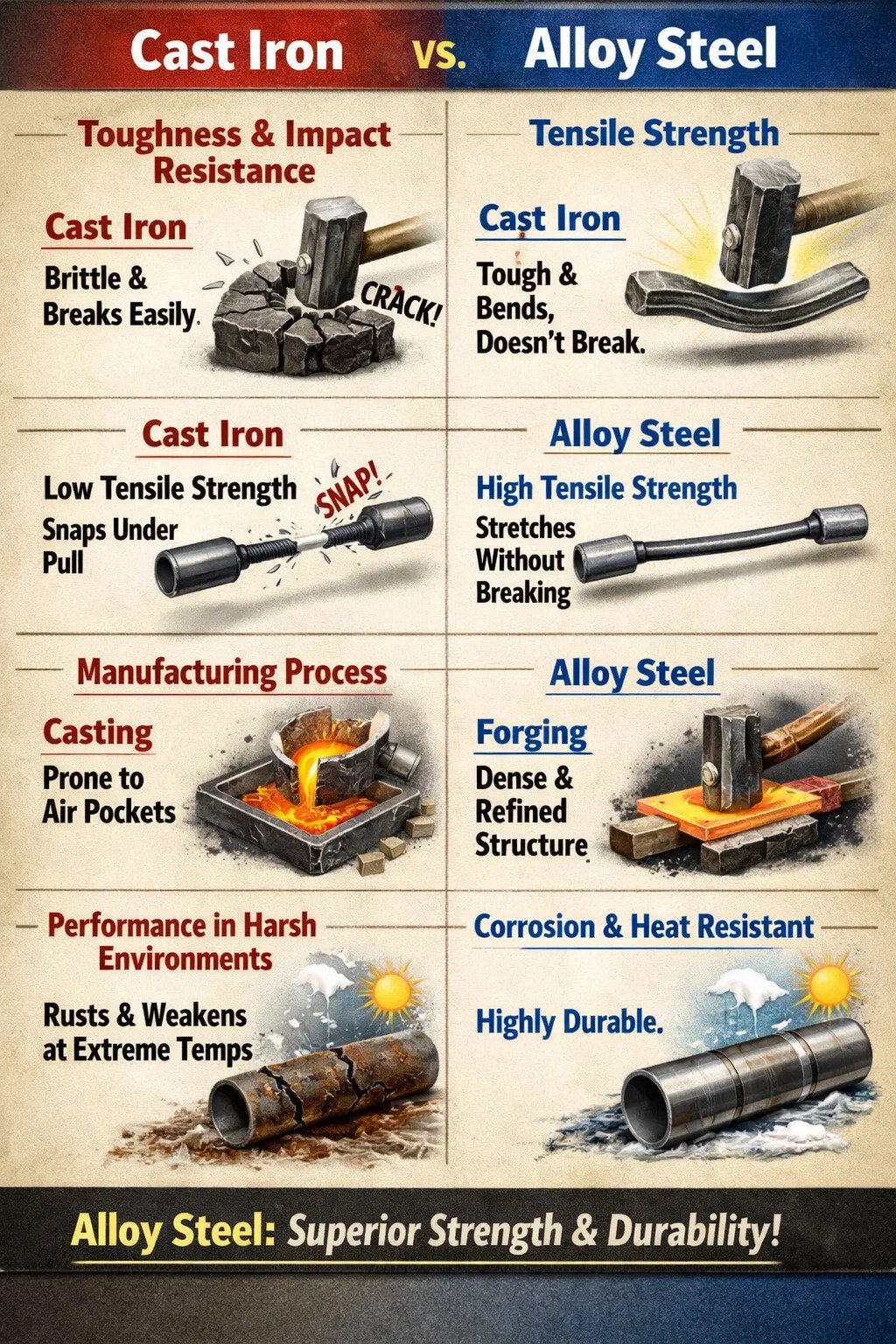
Alloy steel is generally stronger and more durable than cast iron, especially when subjected to impact, tension, and heavy pressure. While cast iron has its strengths in certain specific applications (such as making pots or machine tool bases), alloy steel is the superior material in terms of overall performance.
1. Toughness and Impact Resistance: Which is more afraid of a head-on collision?
Cast Iron: Cast iron has a very high carbon content, which makes it very hard, but also very brittle. Like a ceramic bowl, you can press it very hard without deforming it, but if you hit it hard with a hammer, it will shatter.
Alloy Steel: Alloy steel is not only hard but also very tough. Even under sudden, violent impact, it tends to bend slightly rather than break. This "flexible" quality makes it far superior in terms of safety.
2. Tensile Strength: Which can withstand greater force?
Cast Iron: Its strength is mainly concentrated in "compressive strength," but if you pull it from both ends, it breaks easily.
Alloy Steel: Especially alloy steel after steel forging, its tensile strength is extremely high. This means it can be used to manufacture thinner, lighter parts that can withstand greater tensile forces than bulky cast iron. This is why critical parts of aircraft are never made of cast iron.
3. Manufacturing Advantages: Forging vs. Casting
Cast Iron: As the name suggests, it is mainly formed by "casting"—pouring molten iron into a mold. This method easily leaves air pockets inside, resulting in a relatively loose structure.
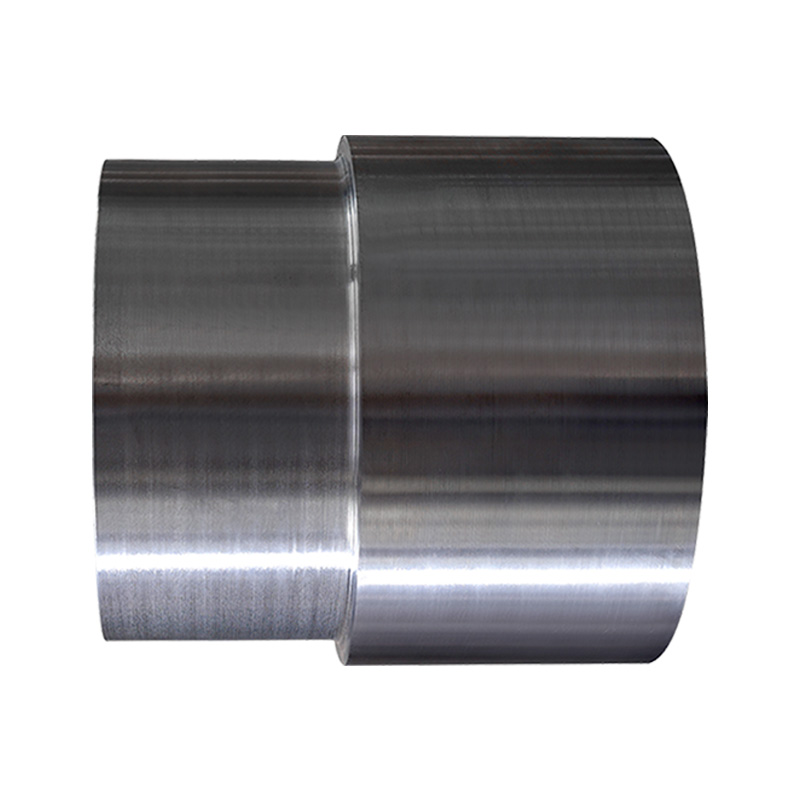
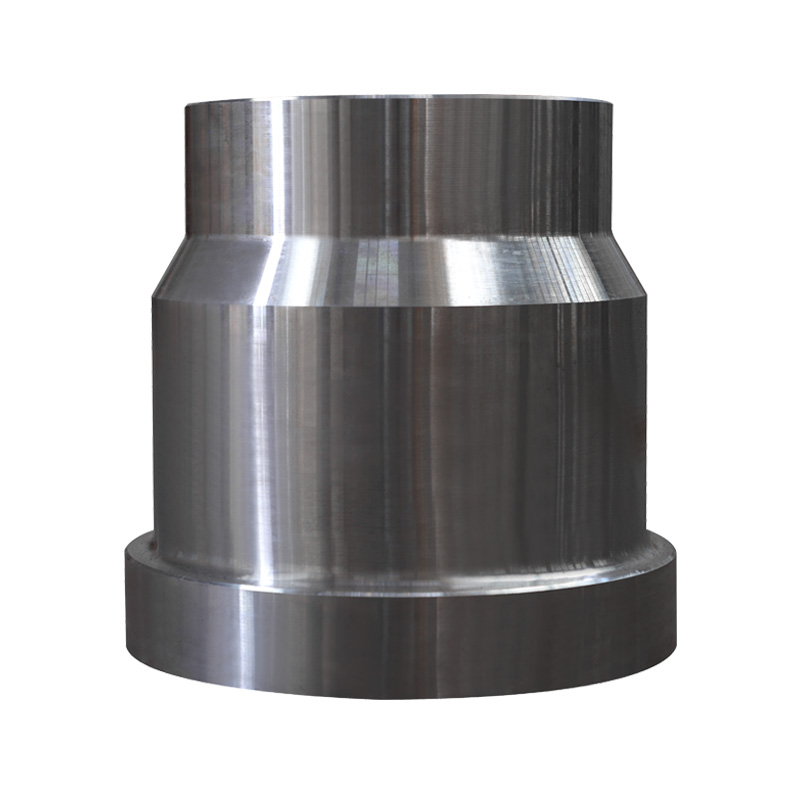
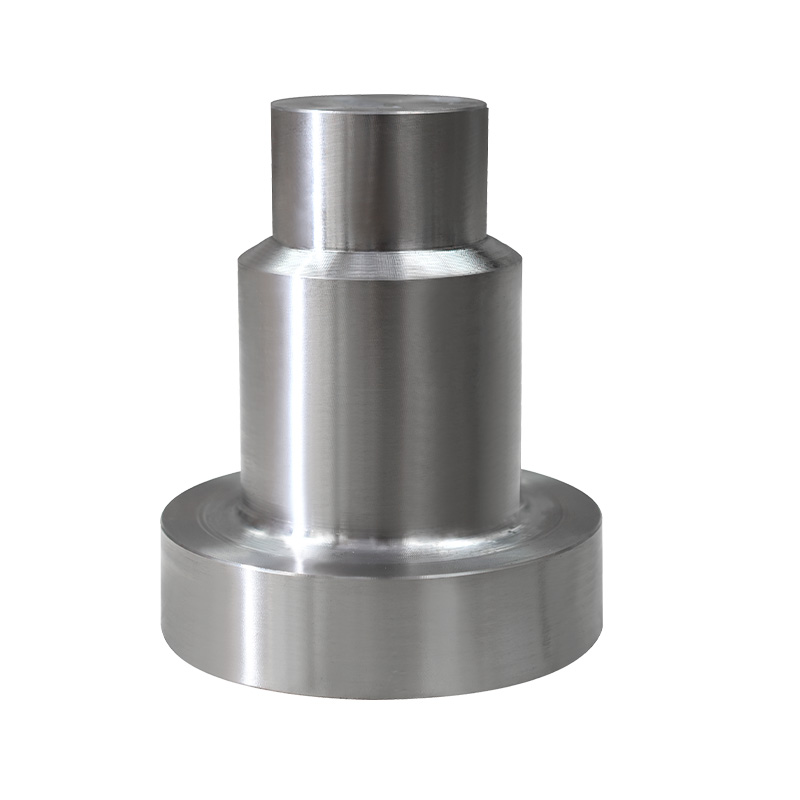
Alloy Steel Forgings: Alloy steel can be processed through forging, where it is powerfully compressed at high temperatures. This compression, like kneading dough, presses the metal particles inside extremely tightly and neatly. This "tried and tested" structure is much stronger than cast iron produced by casting.
4. Performance in Harsh Environments
Temperature and Corrosion Resistance: By adding metals such as chromium and nickel, alloy steel can become very resistant to rust and high temperatures. Although cast iron has a certain degree of wear resistance, its performance deteriorates rapidly at extremely high or low temperatures, and it is also more susceptible to rusting in the atmosphere.