

 英语
 德语
 阿拉伯语


Content
- 1 What Is Chromoly Steel and How Does It Differ from Plain-Carbon Steel?
- 2 Mechanical Properties at a Glance
- 3 The Density Myth: Chromoly Is Not Lighter by Itself
- 4 Fatigue and Impact Toughness: Where Chromoly Earns Its Keep
- 5 Weldability and Fabrication: What Costs More
- 6 Cost: Material Price Is Only the Beginning
- 7 Corrosion: Neither Grade Is Stainless
- 8 Where Chromoly Replaces Carbon Steel in Industry
- 9 Chromoly in Mining Machinery and Heavy Equipment
- 10 Selection Guide: Which Steel Should You Specify?
- 11 Frequently Asked Questions
- 11.1 Is chromoly steel the same as stainless steel?
- 11.2 Is chromoly stronger than regular steel?
- 11.3 Does chromoly weigh less than steel?
- 11.4 Can I weld 4130 chromoly with a regular MIG welder?
- 11.5 Do forged chromoly parts always need heat treatment?
- 11.6 What is the best grade for a custom forged component?
The short answer to "chromoly steel vs steel" is that chromoly is a low-alloy steel containing chromium and molybdenum (typically AISI 4130), while ordinary "steel" in this comparison usually means plain-carbon steel such as AISI 1020 or 1045. Chromoly delivers 40-80% higher yield strength in common conditions, roughly 2 to 3 times the fatigue endurance limit when quenched and tempered, and better low-temperature impact toughness. It also costs 2 to 3 times more per tonne of raw material and demands more process control during welding and heat treatment.
So chromoly is not automatically the better material. It wins when your design is strength-limited or fatigue-limited, and plain-carbon steel is a legitimate, lower-cost choice for non-critical static parts. This guide gives you the chemical compositions, mechanical property tables, fabrication rules, cost ratios, and a selection checklist for making that decision, whether you are designing a bicycle frame, a roll cage, a valve body, or a mining-machinery component. The numbers quoted come from AISI/SAE reference data and typical mill test certificates.
What Is Chromoly Steel and How Does It Differ from Plain-Carbon Steel?
Chromoly gets its name from its two intentional alloying elements: chromium and molybdenum. In grade 4130, chromium is present at about 0.80-1.10% and molybdenum at 0.15-0.25%. Chromium improves hardenability, wear resistance, and oxidation resistance at elevated temperature. Molybdenum refines the grain structure, raises the softening temperature, and reduces the risk of temper embrittlement. Plain-carbon steels contain no intentional chromium or molybdenum, so their mechanical properties come mainly from carbon and manganese.
The table below compares the three grades most often involved in chromoly-versus-steel decisions.
| Element (weight %) | AISI 4130 Chromoly | AISI 1020 | AISI 1045 |
|---|---|---|---|
| Carbon | 0.28-0.33% | 0.17-0.23% | 0.42-0.50% |
| Manganese | 0.40-0.60% | 0.30-0.60% | 0.60-0.90% |
| Chromium | 0.80-1.10% | - | - |
| Molybdenum | 0.15-0.25% | - | - |
| Phosphorus (max) | 0.035% | 0.040% | 0.040% |
| Sulfur (max) | 0.040% | 0.050% | 0.050% |
| Iron | Balance | Balance | Balance |
The practical result of this alloying is hardenability. A 25 mm round bar of 4130 can be oil-quenched to produce martensite through the cross-section; the same bar in 1020 will not harden much beyond a thin surface layer even with a fast water quench. That is why forged 4130 parts can be heat treated to high strength over a wide range of section sizes, while 1020 and 1045 parts depend on case-hardening methods such as carburizing or induction hardening.
Mechanical Properties at a Glance
Use the following table as a first-pass comparison. The values are typical ranges from published AISI/SAE data, not minimum guarantees. Always request the mill test certificate for your specific heat, because product form and section size change the numbers.
| Condition / Grade | Yield Strength (MPa) | Tensile Strength (MPa) | Hardness (HB) | Elongation (%) |
|---|---|---|---|---|
| 1020 hot-rolled | 210-350 | 360-540 | 111-156 | 15-36 |
| 1045 hot-rolled | 310-450 | 480-630 | 156-217 | 12-25 |
| 4130 annealed | 360-400 | 500-600 | 143-168 | 25-30 |
| 4130 normalized | 400-460 | 600-710 | 156-197 | 20-25 |
| 4130 QT (tempered near 400C) | 830-950 | 950-1100 | 269-321 | 16-20 |
Read those numbers in context: normalized 4130 has roughly 70-90% higher yield strength than hot-rolled 1020. Quenched-and-tempered 4130 can reach yield strengths above 900 MPa, more than double the highest yield of hot-rolled 1045. That strength gap is the reason chromoly parts can be made with thinner walls while still holding the same safety factor.
The Density Myth: Chromoly Is Not Lighter by Itself
All of these steels have nearly identical density, approximately 7.85 g/cm3 (0.284 lb/in3). Weight savings with chromoly come from geometry, not from density. If a fabricator welds a frame using 4130 tubes with the same outer diameter and wall thickness as a 1020 frame, both frames weigh exactly the same. The saving only appears when the higher yield strength permits thinner walls.
Consider a simple strength-limited tube. A 32 mm OD tube made of 1020 with a 1.6 mm wall has a cross-sectional area of about 153 mm2. If the material is switched to normalized 4130 with roughly double the yield strength, the wall can drop to around 0.8 mm to carry the same tensile yield load, cutting the section area nearly in half, assuming buckling and stiffness are not constraints. For stiffness-limited designs, where deflection controls, there is no weight benefit at all because the elastic modulus of every steel is about 200 GPa (29,000 ksi).
In forged parts the same logic applies on a larger scale, including stress concentrators and impact loading. Thin sections reduce the dead weight of valves, suspension links, and rotating components, which is often where chromoly earns its reputation.
Fatigue and Impact Toughness: Where Chromoly Earns Its Keep
For parts that see repeated loading, fatigue limits matter more than static strength. In rotating-beam fatigue tests reported in engineering handbooks, hot-rolled 1020 has an endurance limit of roughly 180-220 MPa. Normalized 4130 comes in around 240-280 MPa, and quenched-and-tempered 4130 at 269-321 HB typically shows endurance limits of about 460-600 MPa. The practical meaning is that a QT chromoly part can survive indefinitely at stresses that would eventually crack a carbon-steel part.
Impact toughness follows a similar pattern. At -40C, normalized-and-tempered 4130 Charpy V-notch specimens typically absorb 27-54 J depending on tempering; plain 1020 often shows much lower values at the same temperature and becomes increasingly brittle. For outdoor equipment in cold climates, such as mining machinery and oil and gas components, this difference directly affects field failure rates.
Weldability and Fabrication: What Costs More
In welding, 1020 is forgiving. For sections thinner than 50 mm, no preheat is normally required, and most structural joints need no post-weld heat treatment. The weld puddle is fluid, and the absence of hardenability keeps the heat-affected zone tough.
4130 demands respect. Because of its hardenability, the heat-affected zone can form hard, brittle martensite on fast cooling. Recommended practice for structural or pressure-containing welds includes:
- Preheat to 150-260C, with higher values for thicker sections.
- Keep interpass temperature below roughly 315C.
- Use low-hydrogen filler such as ER80S-D2 or ER70S-2 on clean surfaces.
- Apply post-weld heat treatment, either stress relief or quench-and-temper, for critical assemblies.
- Verify hardness after welding on production components.
For hot forging, 4130 has a forming window of roughly 980-1230C, while 1020 forges comfortably at 1100-1260C. The narrower range is manageable only with good furnace control and pyrometer monitoring, because overheating causes grain growth and lower fatigue life. A forge that controls the entire billet-to-heat-treatment sequence is strongly preferred for chromoly parts. That is exactly what an integrated shop can do; see our forging and heat-treatment capabilities for the full process scope.
Cost: Material Price Is Only the Beginning
At the raw-material stage, 4130 alloy bar typically costs 2 to 3 times more per tonne than 1020 or 1045 carbon steel. The alloying elements themselves account for most of the gap, and global alloy surcharges make the ratio move. But the fabricated part cost depends on far more than the billet price.
| Cost Factor | Carbon Steel 1020/1045 | Chromoly 4130 |
|---|---|---|
| Raw material | Baseline | 2-3 x baseline |
| Cutting and machining | Easy, but soft steel can be gummy | Similar or better chip control when heat treated |
| Welding labor | Low, minimal preheat | Higher: preheat, controlled interpass, often PWHT |
| Heat treatment | Often not required | Normalize + quench + temper is standard practice |
| Inspection | Standard dimensional checks | Often extra hardness, ultrasonic and magnetic-particle checks |
| Fabricated part total | Economical baseline | Typically 30-80% higher depending on geometry |
The apparent cost disadvantage of chromoly disappears in life-cycle terms when a failure is expensive. In mining equipment and high-pressure valve service, a premature fatigue crack can cost far more than the material savings. Buyers should compare lifetime cost, not just the number on the quote.
Corrosion: Neither Grade Is Stainless
It is a common misconception that the chromium in 4130 makes it corrosion-resistant. At 0.80-1.10% chromium and 0.15-0.25% molybdenum, 4130 is not stainless steel. It does form a more tenacious oxide scale and rusts somewhat more slowly than 1020 in mild atmospheric exposure, but outdoors both grades need protection: paint, powder coating, zinc plating, zinc-rich primers, or hot-dip galvanizing. In saltwater or chemical service, uncoated 4130 will corrode at rates that make both grades unacceptable without proper coatings or cathodic protection. If corrosion is the primary risk factor, specify a stainless or duplex grade instead, which is a different material selection problem entirely.
Where Chromoly Replaces Carbon Steel in Industry
The classic industries for chromoly are those where weight, fatigue, and safety dominate. Typical applications include:
- Bicycle frames and motocross or snowmobile chassis made from thin-wall 4130 tubing.
- Motorsport roll cages and chassis welded to certified procedures.
- Aircraft structural brackets and engine mounts.
- Forged valve bodies, bonnets, and flanges for oil and gas service.
- Mining machinery shafts, gears, and pins under impact loading.
- Nuclear project forgings that must survive long fatigue life and seismic loads.
Forged Valves for Pressure Service
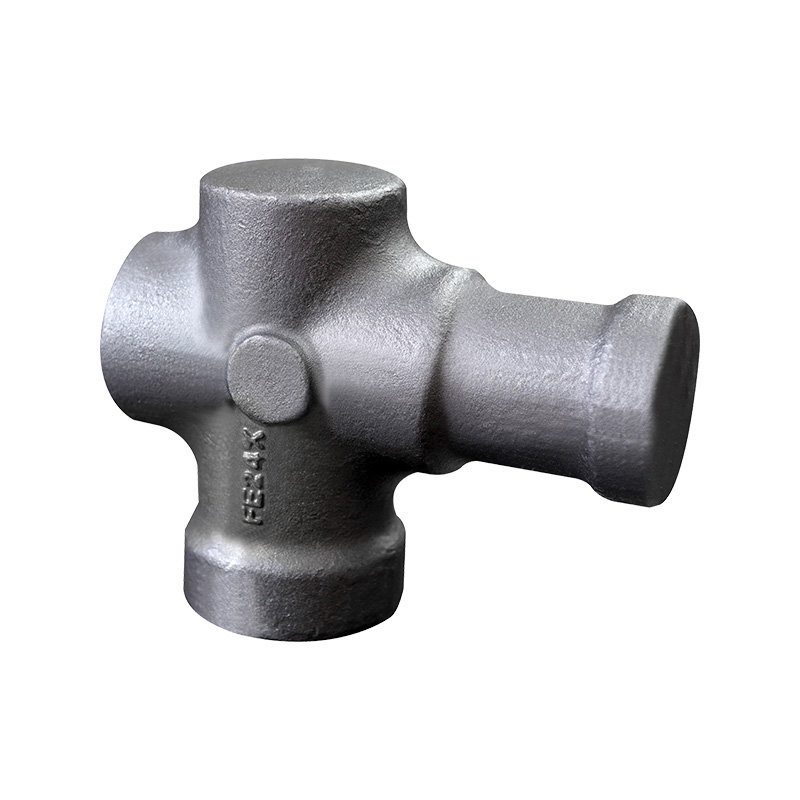
Forged valve parts are a prime example of chromoly's value. A valve body or high-pressure closure in carbon steel must be thick enough to keep stress below the lower yield strength. Switching to 4130 permits a thinner wall that also weighs less, which reduces the supporting structure and makes the piping system easier to maintain. That is why many high-pressure oil and gas valves are forged from 4130 and heat treated to a defined hardness range.
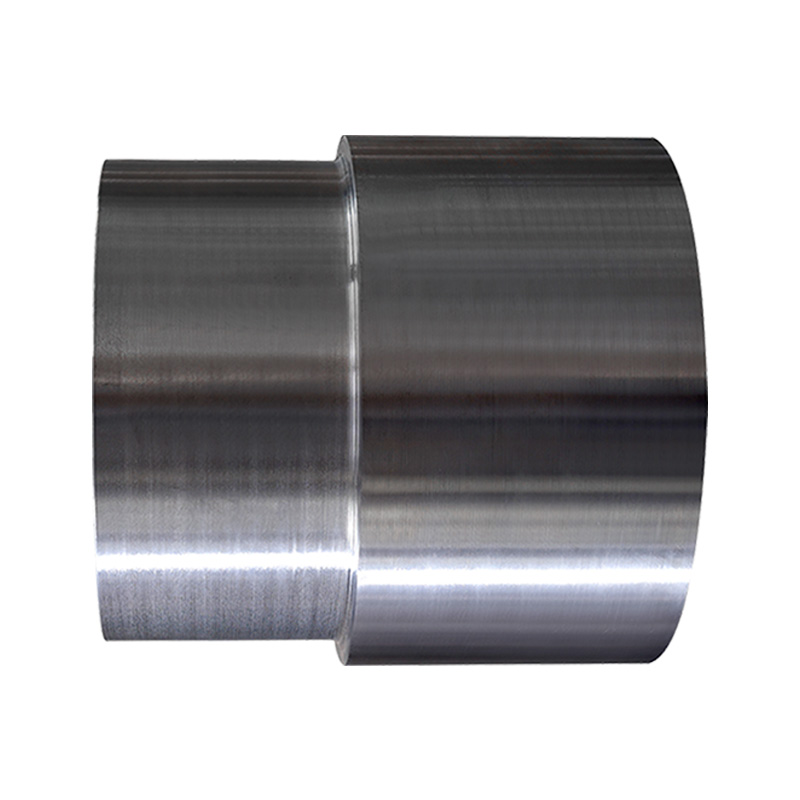
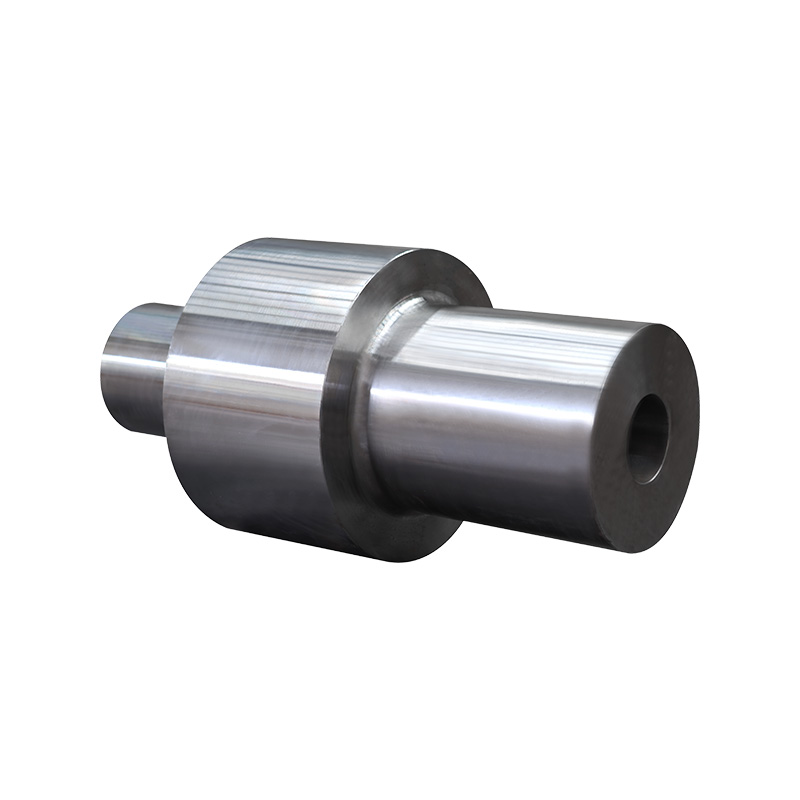
 Chromoly 4130 Forged Valve Parts for High-Pressure SystemsChromoly forgings offer higher yield strength and impact toughness than carbon steel, enabling thinner valve walls that reduce weight and simplify support structures. Ideal for flanges, connectors, and pressure-containing parts in oil and gas equipment.View Product →
Oil and Gas Petrochemical Forgings
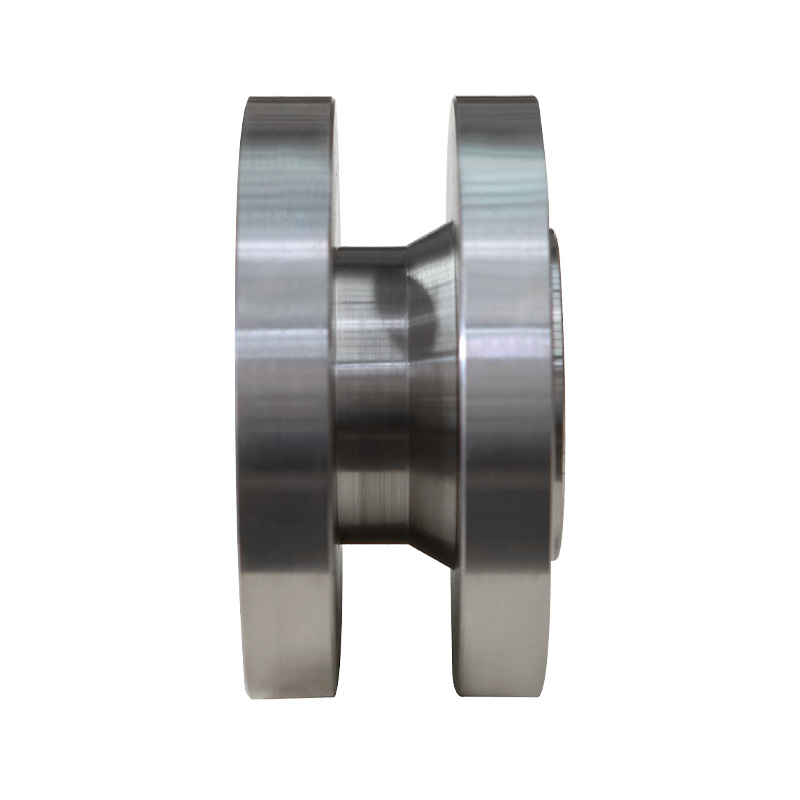
Oil and gas equipment must survive pressure transients, temperature swings, and sour service environments. Chromoly forgings are specified for flanges, connectors, and pressure-containing parts where carbon steel cannot meet the combination of yield strength and impact toughness. The forged and heat-treated structure also gives a better grain-flow pattern than machined-from-bar alternatives, which reduces the risk of leaks along stress paths.
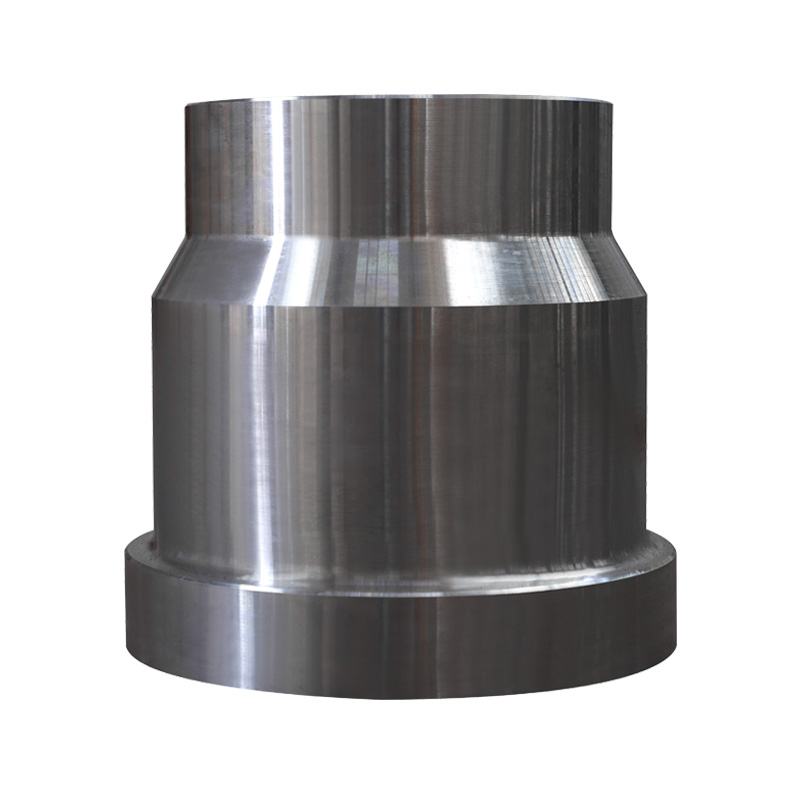
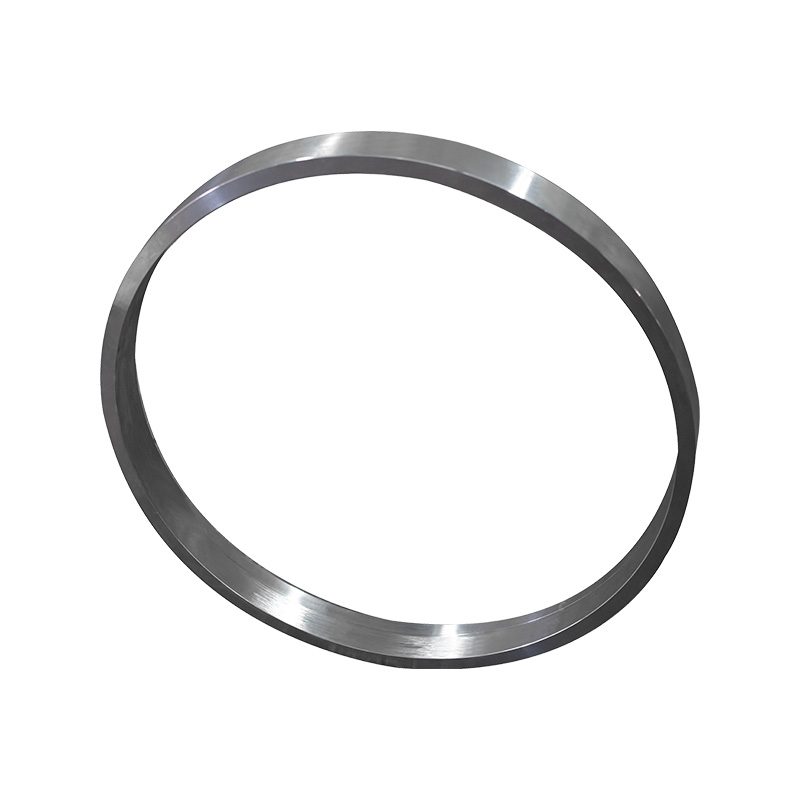
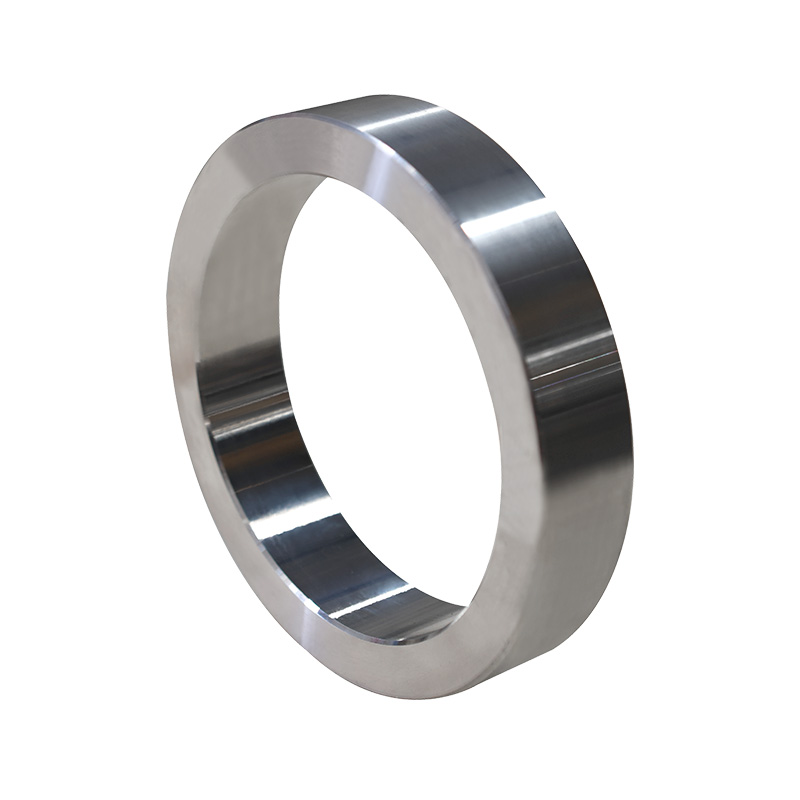
Oil and Gas Petrochemical Forgings for Extreme EnvironmentsThese forgings withstand pressure transients, temperature swings, and sour service. The forged grain-flow pattern reduces leak risks compared to machined-from-bar alternatives, making them reliable for flanges and connectors.View Product →Chromoly in Mining Machinery and Heavy Equipment
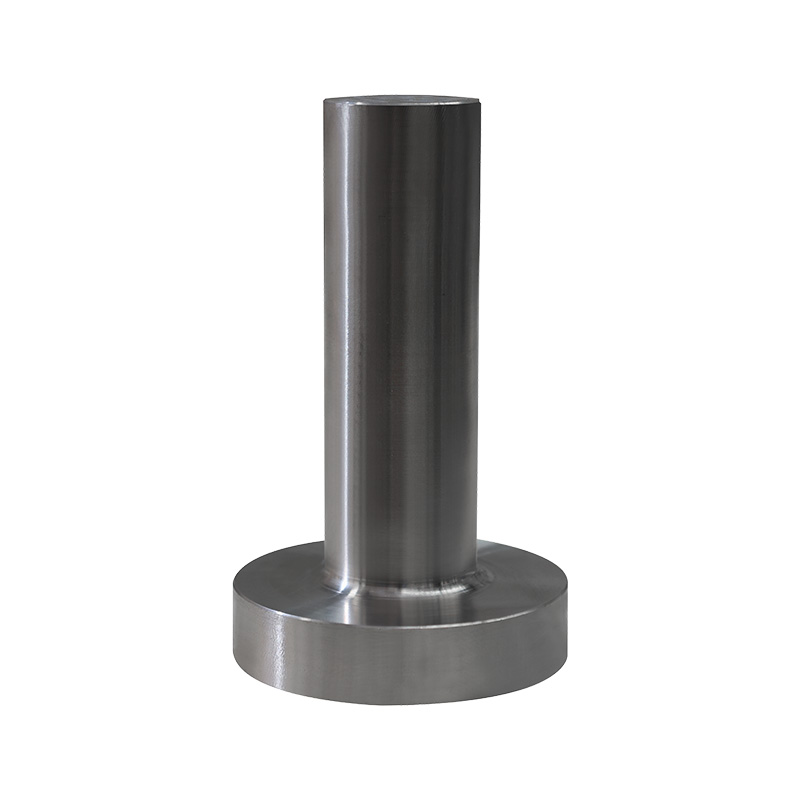
Mining equipment lives on shock loads. Bucket pins, gear shafts, drum shafts, and wear components see torque spikes and cyclic bending that quickly expose a weak fatigue design. Chromoly 4130 is frequently selected for forged shafts and gears in these systems because the heat-treated strength allows a smaller shaft diameter, which matters when a shaft must fit inside an existing gear hub or bearing bore.
For example, a forged dump-body hinge pin that needs a yield strength of at least 750 MPa could be made from 4130 quenched and tempered. A 1045 carbon steel pin would need a larger diameter to reach the same design margin, often forcing a redesign of the lugs and bushings. The chromoly version costs more per kilogram, but it saves weight and avoids a costly mechanical redesign.
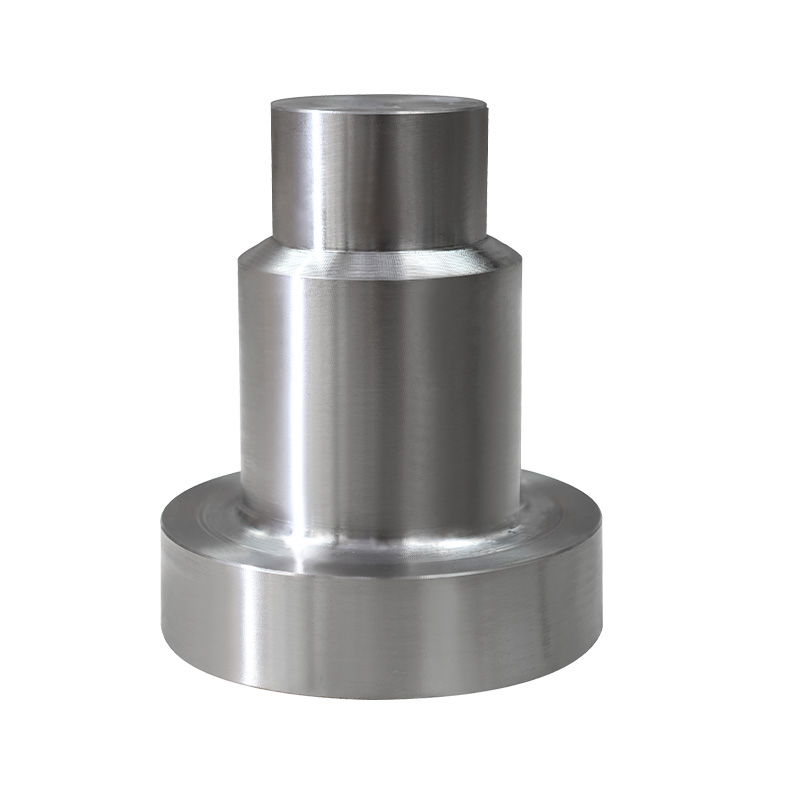
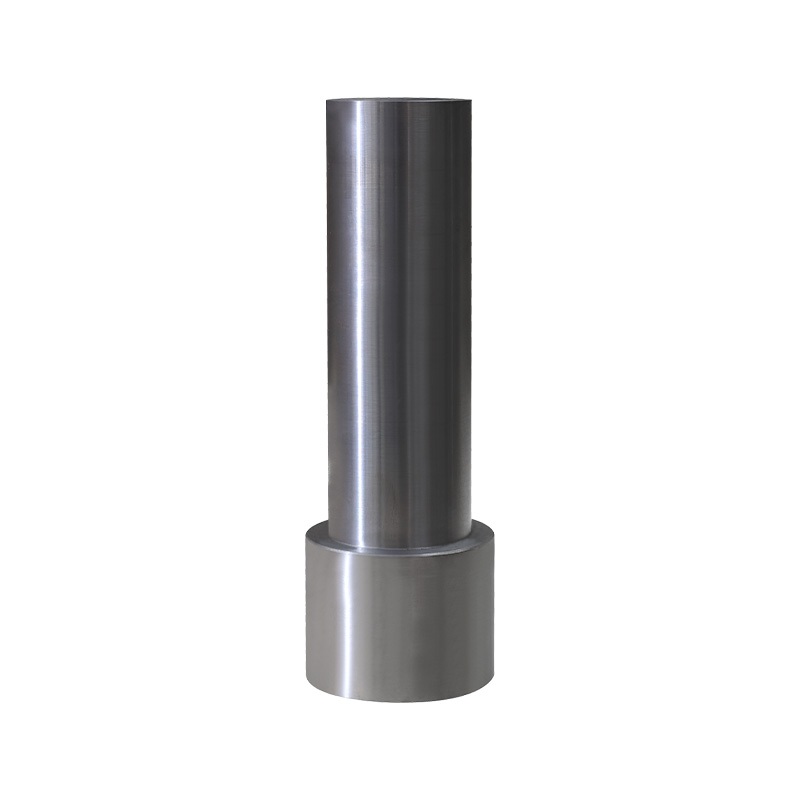
Chromoly 4130 Forged Shafts and Gears for Mining MachineryFor shock-loaded components like bucket pins and drum shafts, chromoly's heat-treated strength allows smaller diameters that fit existing hubs, saving weight and avoiding costly redesigns of lugs and bushings.View Product →Selection Guide: Which Steel Should You Specify?
Here is a practical checklist to apply to any project.
| Condition | Choose Carbon Steel (1020/1045) | Choose Chromoly (4130) |
|---|---|---|
| Load nature | Steady, low-tension parts | Cyclic, impact, high-magnitude loads |
| Weight | Not critical | Critical for frames, rotating parts, suspended valves |
| Fabrication route | Simple sawing, machining, welding | Controlled welding, preheat, and available heat treatment |
| Section thickness | Thin sections with fast quench acceptable | Thick sections needing through-hardening |
| Budget | Fixed low budget, low output volumes | Higher nominal cost accepted for reliability |
| Environment | Mild, coated service | Cold climates, high-dynamic service |
Remember that chromoly is not a license to ignore design. An oversized chromoly part still costs more, and a badly heat-treated 4130 performs worse than a well-designed 1045 part. The correct decision comes from an honest review of loads, environment, and the fabricator's capability.
Frequently Asked Questions
Is chromoly steel the same as stainless steel?
No. Chromoly (4130) is a low-alloy steel with roughly 1% chromium and 0.2% molybdenum. It is not corrosion-resistant like the stainless grades that contain at least 10.5% chromium. Chromoly is selected for strength, fatigue resistance, and toughness, not for corrosion resistance.
Is chromoly stronger than regular steel?
Yes, in practical terms. Annealed 4130 has a yield strength around 360-400 MPa. Normalized 4130 reaches about 400-460 MPa, and quenched-and-tempered conditions exceed 800 MPa. Hot-rolled 1020 is typically 210-350 MPa, and 1045 is about 310-450 MPa.
Does chromoly weigh less than steel?
No, because the density of both materials is essentially the same at about 7.85 g/cm3. Chromoly parts are often lighter only because the designer can reduce wall thickness or cross-section due to higher strength. The elastic modulus is also the same, so stiffness-dominated designs gain no weight benefit.
Can I weld 4130 chromoly with a regular MIG welder?
Yes, with the correct procedure. Use low-hydrogen filler and keep the heat input moderate. For sections above roughly 6 mm, preheat to 150-260C. Post-weld tempering or stress relief is strongly recommended for load-bearing joints. MIG works for non-critical joints; TIG with careful technique is preferred for safety components.
Do forged chromoly parts always need heat treatment?
Not always, but it is almost always beneficial. Forgings can be used in the normalized or annealed condition if the design allows, but the full strength advantage appears only after quench-and-temper. Critical parts should be heat treated and then verified by hardness testing.
What is the best grade for a custom forged component?
It depends on the load and budget. For high-fatigue, weight-sensitive parts, 4130 is a proven choice. For static structural parts or when forming cost is the priority, 1020 or 1045 carbon steel is the most economical path. Reviewing the drawing with the forge shop before final grade selection usually catches cost traps early.
Chromoly steel and plain-carbon steel are two honest materials with different jobs. Carbon steel wins on price and simplicity; chromoly wins on strength, fatigue life, and low-temperature toughness. When a part is safety-critical, weight-sensitive, or fatigue-loaded, the cost premium of chromoly is usually the cheapest insurance available.
If you are not sure which grade fits your forging application, send your drawings and loading conditions to our engineering and sales team for a grade recommendation and a forging route that matches your production requirements.