

 英语
 德语
 阿拉伯语


Content
- 1 What Actually Separates 316 From 316L
- 2 Chemical Composition Side by Side
- 3 Strength, Ductility and Temperature Limits
- 4 Weldability and Sensitization: Why 316L Exists
- 5 Where Each Grade Actually Wins
- 6 Forging, Heat Treatment and Machining Differences
- 7 Matching the Grade to the Application
- 8 Cost, Availability and Dual-Certified Material
- 9 Inspection and Purchasing Checklist
- 10 Frequently Asked Questions
- 10.1 Is 316L stronger or weaker than 316?
- 10.2 Can I substitute 316 for 316L in a welded valve body?
- 10.3 Can 316 and 316L be welded to each other?
- 10.4 Is 316L magnetic?
- 10.5 Which grade is better for seawater exposure?
- 10.6 What does dual-certified 316/316L actually mean?
- 10.7 Why not use 316L for high-temperature service?
- 10.8 Which grade should be used for cryogenic components?
- 10.9 Does the grade choice change the forging process?
- 11 The Bottom Line
The difference between 316 and 316L stainless steel comes down to one measurable number: the maximum carbon content. Grade 316 allows up to 0.08% carbon, while grade 316L, where the "L" stands for low carbon, allows a maximum of 0.030% carbon. Chromium, nickel, molybdenum and the general corrosion character of the two grades are otherwise almost identical.
That single number decides three very practical things: whether a welded part can survive corrosive service without a full post-weld solution anneal, how much yield strength the annealed material can deliver, and which temperature ceiling a design code will allow for the finished component.
Buying conclusion first: if the part will be welded into a corrosive system and cannot receive a complete post-weld solution anneal, specify 316L. If the part is a solid forged component that stays below roughly 427 degrees C (800 degrees F) and the design is driven by strength and cost, 316 is normally the better purchase.
What Actually Separates 316 From 316L
Both grades are austenitic chromium-nickel-molybdenum stainless steels. The molybdenum addition of roughly 2 to 3% is what lifts them above 304 or 304L in chloride environments, and it is the reason both grades appear in pumps, valve bodies, flanges, heat exchanger parts and marine hardware. The carbon ceiling is the only specification line that genuinely changes behaviour in service.
Carbon matters because of what it does at the grain boundaries. When an austenitic stainless steel sits in the range of roughly 425 to 870 degrees C (800 to 1600 degrees F), carbon migrates toward grain boundaries and combines with chromium to form chromium-rich carbides. The chromium that gets locked into those carbides is no longer available to build the passive oxide layer, so a narrow chromium-depleted band forms along each grain boundary. In a chloride or acidic environment that band becomes the preferred attack path, and the part fails from the inside out through intergranular corrosion.
With 0.08% carbon, grade 316 has enough carbon to form those carbides during welding. With 0.030% carbon or less, grade 316L stays below the practical threshold where carbide precipitation becomes a serious risk in most welded assemblies. That is the entire design logic behind the L grades.
- Carbon controls resistance to intergranular corrosion after welding.
- Carbon also raises annealed yield and tensile strength, which is why 316 is the stronger of the pair.
- Carbon affects the temperature ceiling that design codes publish for the material.
Chemical Composition Side by Side
The table below lists typical specification ranges taken from widely used wrought and forged product standards for these two grades. The only row that differs in substance is carbon, with nitrogen worth noting because some forged 316L specifications permit a small nitrogen addition that recovers part of the lost strength.
| Element | 316 | 316L | Practical Effect |
|---|---|---|---|
| Carbon | 0.08 max | 0.030 max | Controls sensitization and strength |
| Chromium | 16.0 to 18.0 | 16.0 to 18.0 | Passive film formation |
| Nickel | 10.0 to 14.0 | 10.0 to 14.0 | Austenite stability and toughness |
| Molybdenum | 2.00 to 3.00 | 2.00 to 3.00 | Pitting and crevice resistance |
| Nitrogen | Not specified | 0.10 max | Recovers some yield strength |
| Pitting resistance equivalent | About 24 to 26 | About 24 to 27 | Nearly identical chloride performance |
Notice that the pitting resistance equivalent is essentially the same. In a neutral chloride environment with no welding and no hot forming, a 316 part and a 316L part often perform almost identically. The gap only opens up where heat has been applied, or where the design code caps the allowable stress at a temperature that one grade cannot reach.
Strength, Ductility and Temperature Limits
The common statement that "316L is weaker than 316" is correct but incomplete. The difference in annealed minimum yield strength is roughly 35 MPa (about 5 ksi), which matters for thin-wall or highly stressed designs and matters much less for a thick forged valve body that is sized by stiffness or by wall thickness allowance for corrosion.
| Property | 316 | 316L |
|---|---|---|
| Tensile strength, minimum | 515 MPa (75 ksi) | 485 MPa (70 ksi) |
| Yield strength, 0.2% offset | 205 MPa (30 ksi) | 170 MPa (25 ksi) |
| Elongation in 2 inches | 30% minimum | 30% minimum |
| Hardness, maximum | 197 HBW | 197 HBW |
| Approximate code temperature ceiling | Up to about 816 degrees C (1500 degrees F) for many product forms | Typically capped near 427 degrees C (800 degrees F) |
| Relative material cost | Baseline | Usually 3% to 10% higher |
The temperature row is the one that catches engineers out. Above roughly 800 degrees F, low-carbon grades are not the answer. The correct upgrade for hot service is a high-carbon variant such as 316H, which is designed for creep strength at elevated temperature, not 316L. Using 316L in a hot, sustained-load application is a common and avoidable design error.
Weldability and Sensitization: Why 316L Exists
Welding is a controlled sensitization experiment. The weld pool reaches well over 1400 degrees C, and the surrounding heat-affected zone passes slowly through the carbide precipitation range as heat drains into the base metal. On a 12 mm thick 316 flange, that heat-affected zone can extend several millimetres from the fusion line. If the assembly then goes into a chloride-bearing or acidic process stream without a post-weld anneal, the chromium-depleted boundaries become the failure path.
Grade 316L reduces that risk dramatically because there is simply less carbon available to form carbides. It does not eliminate the risk in every case. Very high heat input, multiple repair passes, or service in hot concentrated acids can still sensitize a low-carbon grade, and that is why some specifications require an intergranular corrosion test such as ASTM A262 Practice E on the finished part.
Practical welding notes
- Use a low-carbon filler such as ER316L or E316L-16 when joining either grade for corrosive service.
- Limit interpass temperature, commonly to 150 degrees C or less, to reduce carbide precipitation in the heat-affected zone.
- Keep heat input in a moderate band; excessive input widens the sensitized zone, while very low input can produce hard, crack-prone welds.
- If a 316 part must be welded and left un-annealed in a corrosive line, a full solution anneal at roughly 1040 to 1120 degrees C followed by rapid cooling is the alternative to switching grades.
For welded valve bodies, flanges and pipe spools in refinery or petrochemical service, the industry default is 316L for exactly this reason. Where a valve component is a solid, unwelded forging and the pressure class is high, the extra yield strength of 316 can justify its use.
Where Each Grade Actually Wins
Choose 316 when
- The component is a single forged part with no weld joints, such as a stem, a disc, or a machined coupling.
- Yield strength is the limiting design condition and there is no room to increase wall thickness.
- Service temperature sits between roughly 427 and 816 degrees C and a low-carbon grade would exceed its published design stresses.
- Purchase volume is large and the small price gap per tonne is meaningful to the project budget.
Choose 316L when
- The part will be welded and cannot be solution annealed afterwards, which covers most field-fabricated piping and fabricated valve assemblies.
- Service involves chlorides, dilute acids, or process streams where intergranular attack is a known failure mode.
- The application involves low-temperature or cryogenic duty, where the lower carbon grade offers better toughness.
- The end user specification, such as a refinery or nuclear project standard, explicitly names a low-carbon grade.
Forging, Heat Treatment and Machining Differences
In the forge shop, 316 and 316L behave in a broadly similar way. Both are austenitic, both are non-magnetic in the annealed condition, and both are forged in roughly the same temperature window, commonly starting around 1150 to 1230 degrees C and finishing well above 925 degrees C to avoid cracking. The lower carbon grade is marginally softer at temperature, which slightly reduces deformation resistance but also slightly reduces the resistance to grain growth if the finishing temperature runs too high.
The decisive step for both grades is the post-forging solution anneal at approximately 1040 to 1120 degrees C followed by rapid cooling, usually a water quench. Slow cooling from the annealing temperature through the carbide range will sensitize even a 0.030% carbon heat, so quench practice is not a formality. Our own forging, heat treatment and machining capability is built around that sequence because a forged valve body or ring that is annealed incorrectly will fail an intergranular corrosion test no matter how good the steel was.
On the machining side, both grades are gummy and prone to work hardening, so tooling strategy matters more than grade choice. A heavier feed per tooth, a positive rake geometry, generous coolant and no dwelling in the cut will keep both grades cutting cleanly. Tool life differences between 316 and 316L are usually within measurement noise.
- Confirm the heat analysis carbon value, not just the grade name on the certificate.
- Confirm the annealing temperature range and the cooling method recorded on the process route.
- Confirm mechanical test results from the actual part or its test coupon, not from a generic mill report.
Matching the Grade to the Application
Most grade selection decisions in heavy industry follow a recognisable pattern. Here is how the two grades typically sort themselves out across the main forged product families.
Valves and flow control hardware
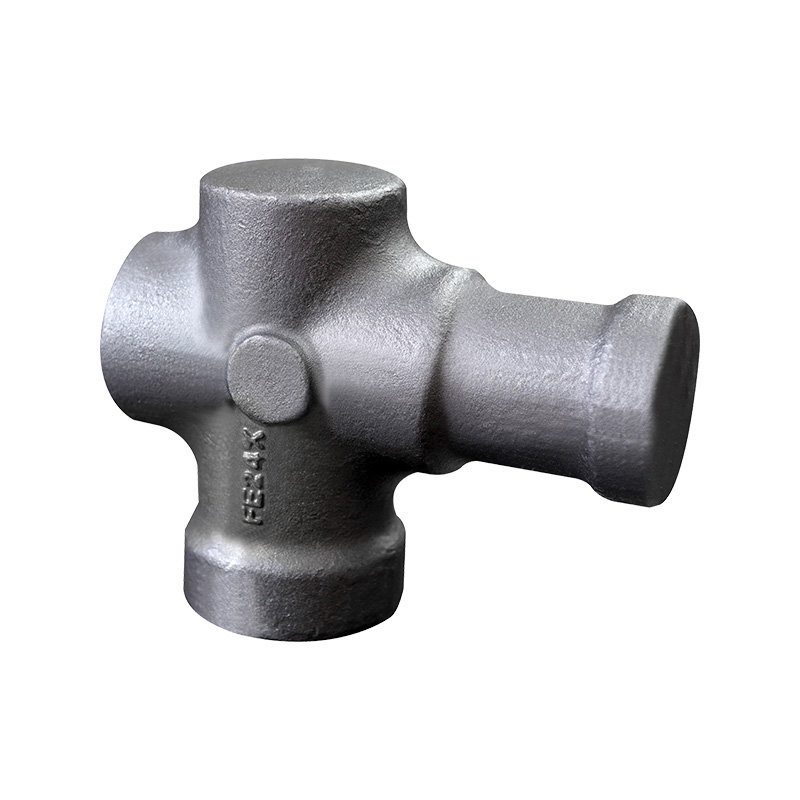
Valve bodies and bonnets are frequently welded, overlay-clad, or repaired, and they sit in wet chloride-bearing process streams. That combination pushes the specification toward 316L for bodies and covers, while stems or trim where strength and wear resistance matter may still be produced in 316 or a higher-alloy grade. The quality controls behind valve forging production matter as much as the grade decision here, because grain flow direction and internal soundness determine whether the part survives pressure cycling.
 Professional Valve Parts Forgings ManufacturerStainless Steel vs Mild Steel: Key Differences for Forging and Industrial Applications Industry News 2026-09-14 When selecting a material for a forged industrial compo...View Product →
Oil, gas and petrochemical plant
Wet sour service, heat exchanger components and fabricated spools in refinery units typically call for 316L or a dual-certified equivalent. Where hydrogen sulfide is present, the material must also satisfy the hardness and chemistry limits of the relevant sour service standard, which constrains maximum hardness and sometimes restricts nickel content. A forged flange or fitting ordered as 316 for these duties will often be rejected at inspection simply because the specification called for a low-carbon heat.
Professional Oil and Gas Petrochemical Forgings ManufacturerStainless Steel vs Mild Steel: Key Differences for Forging and Industrial Applications Industry News 2026-09-14 When selecting a material for a forged industrial compo...View Product →
Mining and heavy machinery
Mining equipment uses 316 or 316L mainly for corrosion resistance in wet, acidic or saline process water, not for abrasion resistance, since both grades are relatively soft in the annealed state. Where slurry abrasion dominates, a carbon or low-alloy steel with a hard facing layer is usually the more cost-effective answer, and 316L is reserved for pump components, screens and fastener hardware exposed to aggressive water chemistry.
Professional Mining machinery forgings ManufacturerStainless Steel vs Mild Steel: Key Differences for Forging and Industrial Applications Industry News 2026-09-14 When selecting a material for a forged industrial compo...View Product →
Nuclear and other critical projects
Nuclear specifications almost always name controlled low-carbon grades because weldability and intergranular corrosion resistance outweigh the small yield strength penalty. Typical additional requirements include controlled cobalt levels, nitrogen ranges, grain size limits, and intergranular corrosion testing on the finished component. Forging suppliers working in this field must hold tight control over heat identity and traceability from raw billet to finished part.
Cost, Availability and Dual-Certified Material
316L typically carries a premium of roughly 3% to 10% over 316 in bar and forged form. The premium comes from the extra processing needed to drive carbon down to 0.030% and from tighter control of nitrogen, not from any additional alloying element. In periods of tight supply, the gap can widen considerably, and the practical difference between the two grades becomes a genuine procurement decision rather than a technical one.
Many suppliers stock dual-certified 316/316L material, marked to satisfy both specifications at once. To be genuinely dual certified, a heat must meet the carbon ceiling of 316L and the higher tensile and yield minimums of 316. That combination is achievable but not automatic, and some heats marketed loosely as dual certified only meet the 316L mechanical values. Always read the actual test certificate values rather than accepting the dual marking at face value.
If a project has a mix of welded and unwelded components, standardising on dual-certified material across the whole package is often cheaper overall than managing two separate grades, two sets of spares and two sets of welding procedures on site.
Inspection and Purchasing Checklist
A few simple checks prevent almost every grade mix-up that reaches a fabrication yard.
- Read the actual carbon value on the heat analysis. A value of 0.031% fails a 316L specification even though the grade is often described informally as "about 0.03%".
- Check yield strength against the grade ordered. A part sold as 316 with a yield of 180 MPa is not compliant.
- Confirm the solution annealing temperature and cooling method on the process record for forged parts.
- Ask for intergranular corrosion testing where the application involves welded assemblies in acidic or chloride service.
- Verify hardness limits if the component will be used in sour service, since an over-hard base metal can fail the service standard regardless of grade.
- Confirm the nitrogen range if the material is ordered as 316L, because nitrogen content materially changes the delivered yield strength.
Frequently Asked Questions
Is 316L stronger or weaker than 316?
316L is slightly weaker in the annealed condition. Minimum yield strength is typically 170 MPa (25 ksi) versus 205 MPa (30 ksi) for 316. A nitrogen-bearing 316L heat can narrow that gap, but it will not match a fully compliant 316 heat on the certificate.
Can I substitute 316 for 316L in a welded valve body?
Only if the finished assembly receives a full solution anneal after welding, or if the service environment is demonstrably free of sensitization risk and the end user approves the deviation in writing. In most corrosive process service, the substitution increases the risk of intergranular corrosion in the heat-affected zone.
Can 316 and 316L be welded to each other?
Yes. The two grades are fully metallurgically compatible, and a low-carbon filler metal such as ER316L is normally used for the joint. The 316 side will behave as the weaker link only in the sense that its carbon content is higher, which matters for corrosion resistance rather than for joint strength.
Is 316L magnetic?
Both grades are austenitic and essentially non-magnetic in the annealed condition. Cold working, heavy machining, or the delta ferrite present in some weld deposits can produce a slight magnetic response. A magnet test is therefore not a reliable way to distinguish 316 from 316L.
Which grade is better for seawater exposure?
Neither is ideal for continuously wetted seawater, because both are susceptible to pitting and crevice corrosion in chloride environments, particularly in stagnant or warm conditions above roughly 60 degrees C. Where welded fabrication is unavoidable, 316L is the better of the two because it resists sensitization around the welds.
What does dual-certified 316/316L actually mean?
It means a single heat of material meets the requirements of both specifications at the same time, including the 0.030% maximum carbon of 316L and the 515 MPa tensile and 205 MPa yield minimums of 316. It is convenient, but the certificate values should still be checked against both sets of requirements.
Why not use 316L for high-temperature service?
Design codes generally publish allowable stresses for 316L only up to about 427 degrees C (800 degrees F). Above that, creep behaviour becomes the governing concern and a high-carbon grade such as 316H is the appropriate selection. Using 316L in hot, sustained-load service is a specification error, not a safety margin.
Which grade should be used for cryogenic components?
316L is generally preferred because the lower carbon content supports better toughness at low temperature, and many cryogenic specifications require impact testing at the relevant service temperature. Confirm the required impact energy and test temperature before releasing the forging order.
Does the grade choice change the forging process?
Only marginally. Forging temperatures, reduction ratios and the need for a post-forging solution anneal and quench are broadly the same. The main difference is that 316L demands tighter control of the annealing and cooling cycle, because the lower carbon content leaves less margin against sensitization if cooling is too slow.
The Bottom Line
316L exists because welding creates a corrosion vulnerability that 0.08% carbon cannot tolerate in aggressive service. If a forged part is welded and left un-annealed, choose 316L. If it is a solid forging operating below 427 degrees C and the design is strength limited, 316 delivers more capacity for less money. Above that temperature, neither grade is the right answer, and a high-carbon variant takes over.
The grade name on a purchase order is a starting point, not a guarantee. Carbon content, annealing practice, cooling method and mechanical test values from the actual part are what determine whether the finished forging performs in service. Read the certificate values, not the label.