

 英语
英语 德语
德语 阿拉伯语
阿拉伯语

Content
- 1 The Short Answer: 316 Offers Better Corrosion Resistance, But 304 Covers Most Applications
- 2 Chemical Composition: The Role of Molybdenum
- 3 Corrosion Resistance: Where the Real Difference Shows Up
- 4 Mechanical Properties: More Similar Than Different
- 5 Forgeability and Manufacturing Considerations
- 6 Common Applications for Each Grade
- 7 304L and 316L: The Low-Carbon Variants
- 8 Cost Difference and When It Matters
- 9 How to Choose Between 304 and 316 Stainless Steel Forgings
- 10 Summary: 304 vs 316 at a Glance
The Short Answer: 316 Offers Better Corrosion Resistance, But 304 Covers Most Applications
If you need stainless steel for a general-purpose environment—food processing equipment, kitchen fixtures, architectural panels, or indoor industrial parts—304 stainless steel is almost always sufficient and more cost-effective. If your parts will face chloride exposure, saltwater, acids, or aggressive chemical environments, 316 stainless steel is the right choice, and the added cost is justified by significantly longer service life.
This distinction matters across many product forms, from sheet and bar stock to stainless steel forgings used in valves, flanges, fittings, and marine hardware. The wrong grade choice can lead to premature pitting, crevice corrosion, or structural failure—especially in high-stress forged components where surface integrity is critical.
Chemical Composition: The Role of Molybdenum
The fundamental difference between 304 and 316 stainless steel comes down to one element: molybdenum. Both are austenitic stainless steels in the 300 series, but their compositions diverge in ways that directly affect performance.
| Element | 304 Stainless Steel | 316 Stainless Steel |
|---|---|---|
| Chromium (Cr) | 18–20% | 16–18% |
| Nickel (Ni) | 8–10.5% | 10–14% |
| Molybdenum (Mo) | None | 2–3% |
| Carbon (C) | ≤0.08% | ≤0.08% |
| Manganese (Mn) | ≤2% | ≤2% |
| Silicon (Si) | ≤1% | ≤1% |
The addition of 2–3% molybdenum in 316 is what sets it apart. Molybdenum enhances the passive film on the steel's surface, making it far more resistant to chloride-induced pitting and crevice corrosion. This is not a marginal difference—in chloride-rich environments, 304 can begin pitting at chloride concentrations as low as 200 ppm, while 316 tolerates significantly higher concentrations before degradation begins.
316 also contains more nickel (10–14% vs. 8–10.5% in 304), which contributes to its greater toughness and improved performance at both elevated and cryogenic temperatures. These compositional differences directly influence how each grade performs in forging operations and in long-term service.
Corrosion Resistance: Where the Real Difference Shows Up
Corrosion resistance is the defining factor when choosing between these two grades. Both form a passive chromium oxide layer that resists oxidation, but their performance diverges sharply under specific conditions.
Chloride Environments
Chlorides are the primary corrosion threat for stainless steels. They attack the passive oxide layer, leading to pitting—small, deep holes that can penetrate through a component's wall over time. Seawater contains roughly 19,000 ppm chloride, well above the tolerance threshold of 304 stainless steel. Marine hardware, offshore equipment, and coastal architectural components made from 304 will show visible pitting within months. 316 stainless steel, with its molybdenum content, is the minimum acceptable grade for direct saltwater contact.
Acidic Environments
316 also outperforms 304 in sulfuric acid, phosphoric acid, and acetic acid environments—all common in chemical processing and pharmaceutical manufacturing. At moderate concentrations (10–30%) of sulfuric acid, 316 shows corrosion rates measured in single-digit mils per year, while 304 can corrode at rates 10 to 20 times higher under the same conditions. For stainless steel forgings used in valve bodies, pump housings, and chemical reactor fittings, this difference in acid resistance is critical to component longevity.
Stress Corrosion Cracking
Stress corrosion cracking (SCC) is a failure mode where tensile stress combined with a corrosive environment causes cracks to propagate in otherwise ductile materials. Both 304 and 316 are susceptible to SCC in chloride environments above roughly 60°C. Neither grade is immune, but 316's superior passive film offers slightly better resistance. For applications where SCC is a primary concern—such as high-pressure forged fittings in hot seawater systems—duplex stainless steels or higher-alloyed grades may be more appropriate than either 304 or 316.
Mechanical Properties: More Similar Than Different
One area where 304 and 316 are closely matched is mechanical performance. Both grades share similar strength and ductility profiles at room temperature, which means selecting between them based on mechanical properties alone is rarely necessary.
| Property | 304 Stainless Steel | 316 Stainless Steel |
|---|---|---|
| Tensile Strength (annealed) | 515 MPa (75 ksi) min | 515 MPa (75 ksi) min |
| Yield Strength (0.2% offset) | 205 MPa (30 ksi) min | 205 MPa (30 ksi) min |
| Elongation | 40% min | 40% min |
| Hardness (Brinell) | ≤201 HB | ≤217 HB |
| Density | 7.93 g/cm³ | 7.98 g/cm³ |
Both grades respond well to cold working, which significantly increases their strength. For stainless steel forgings, however, the forging process itself—rather than cold work—provides the primary mechanical improvement through grain refinement and directional strength. Forged 304 and 316 components consistently outperform cast equivalents in impact toughness and fatigue resistance, making forgings the preferred product form for high-pressure, high-cycle applications in both grades.
Where 316 does hold a slight mechanical edge over 304 is at elevated temperatures. At 500°C, 316 retains better creep resistance due to its higher nickel content and the solid solution strengthening effect of molybdenum. This makes 316 stainless steel forgings more suitable for high-temperature valve components, exhaust system parts, and heat exchanger fittings that see sustained thermal loads.
Forgeability and Manufacturing Considerations
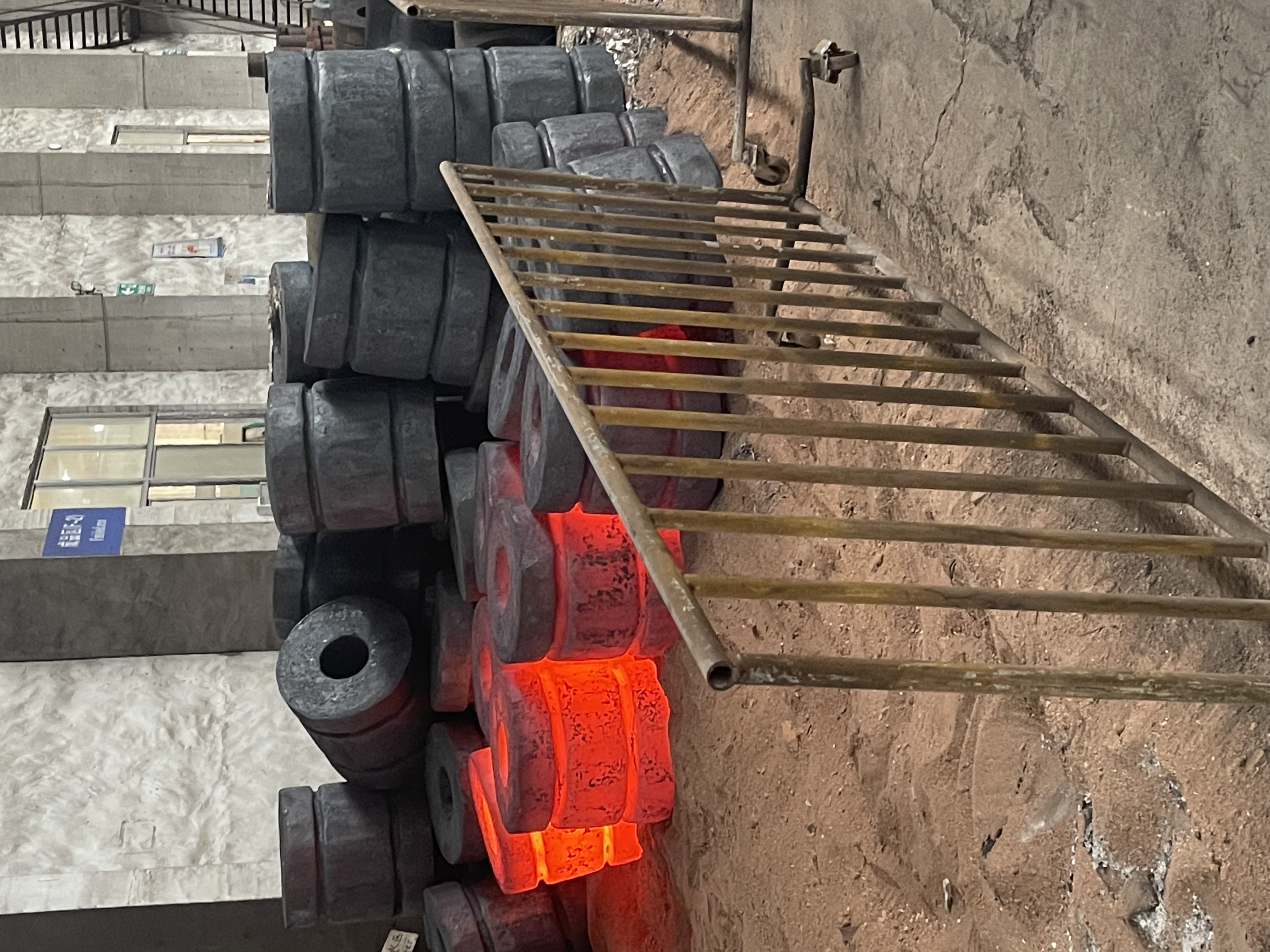
Both 304 and 316 are suitable for hot forging, but there are practical differences that affect processing parameters and tooling wear.
Hot Forging Temperature Ranges
304 stainless steel is typically forged in the range of 1149°C to 1260°C (2100°F to 2300°F). 316 stainless steel requires a similar range, though it tends to have slightly higher flow stress at equivalent temperatures due to its molybdenum content. This means forging presses must exert greater force when working 316, which increases tooling wear and can raise per-piece costs on high-volume runs. Experienced forge shops account for this by adjusting die design and lubrication protocols for 316 stainless steel forgings.
Work Hardening Behavior
Both grades work harden rapidly during cold forming, which is why most stainless steel forgings are produced as hot forgings rather than cold forgings. 316 has a slightly lower work hardening rate than 304 at equivalent strain levels, which makes it marginally easier to cold-form in thin-walled configurations—though this is rarely the deciding factor in grade selection.
Post-Forge Heat Treatment
After forging, both grades are typically solution annealed at 1010°C to 1120°C (1850°F to 2050°F) and then rapidly quenched to restore full corrosion resistance and eliminate any sigma phase or carbide precipitation that may have occurred during hot working. For stainless steel forgings destined for food-grade, pharmaceutical, or marine service, this post-forge annealing step is not optional—it is a process requirement that directly affects the final corrosion performance of the component.
Machinability
304 is generally considered slightly easier to machine than 316, though neither grade is particularly free-cutting. Both gall on cutting tools and require sharp tooling, appropriate feed rates, and flood coolant. Free-machining variants—303 (for 304) and 316F (for 316)—are available for applications where extensive secondary machining is required, though these variants sacrifice some corrosion resistance and are not suitable for forging applications due to their higher sulfur content.
Common Applications for Each Grade
Understanding where each grade is used in practice helps clarify the selection logic better than abstract specifications alone.
Typical Applications for 304 Stainless Steel
- Food and beverage processing equipment (tanks, conveyors, mixing vessels)
- Kitchen sinks, countertops, and commercial catering equipment
- Architectural cladding, handrails, and structural fasteners in non-coastal environments
- Storage tanks for water, beer, wine, and dairy products
- General-purpose pipe fittings and flanges in low-chloride service
- Automotive trim and exhaust systems where heat resistance, not chloride resistance, is the primary driver
- 304 stainless steel forgings for valve bodies, pump shafts, and structural brackets in clean-service industrial environments
Typical Applications for 316 Stainless Steel
- Marine hardware: boat fittings, propeller shafts, anchor chains, and deck equipment
- Offshore oil and gas equipment: subsea connectors, pipeline flanges, and wellhead components
- Pharmaceutical and biotech manufacturing: reactors, filtration systems, and CIP (clean-in-place) pipework
- Chemical processing: heat exchangers, distillation columns, and agitator shafts handling halide-containing streams
- Coastal and marine architecture: handrails, sculptures, and structural elements within 1 km of the ocean
- Medical implants and surgical instruments requiring high sterilization chemical resistance
- 316 stainless steel forgings for high-pressure valve trim, gate valves, pump impellers, and subsea flange fittings
304L and 316L: The Low-Carbon Variants
When welding is part of the manufacturing process, low-carbon variants—304L and 316L—are often specified. The "L" designation indicates a carbon content of 0.03% maximum, compared to 0.08% maximum in the standard grades.
The reason for this distinction: during welding, the heat-affected zone around the weld can reach temperatures between 425°C and 870°C (800°F to 1600°F), a range where carbon migrates to grain boundaries and combines with chromium to form chromium carbides. This depletes chromium from the surrounding matrix, creating sensitized zones that are vulnerable to intergranular corrosion—a failure mode called "weld decay." Low-carbon L grades are resistant to this mechanism.
For stainless steel forgings that are not subsequently welded, the distinction between 304 and 304L (or 316 and 316L) is largely academic in terms of corrosion performance. However, in fabricated assemblies where forgings are welded to pipe or plate, specifying the L grade is standard practice to ensure consistent corrosion resistance throughout the joined structure. Many material certifications will dual-certify as 304/304L or 316/316L when carbon content and mechanical properties permit, which is common for forged bar and plate stock.
Cost Difference and When It Matters
316 stainless steel consistently carries a price premium over 304, driven primarily by its higher nickel content and the addition of molybdenum. In raw material terms, 316 typically costs 20–40% more per kilogram than 304, though this premium fluctuates with nickel and molybdenum commodity prices.
For stainless steel forgings, the cost differential extends beyond raw material. 316 forgings require more press force, accelerate tooling wear slightly, and may require longer annealing cycles to achieve the same grain uniformity as 304. On a per-piece basis for complex forged geometries—flanges, valve bodies, impellers—316 parts may cost 25–50% more than equivalent 304 parts depending on geometry, tolerances, and required certifications.
The calculus changes when total life-cycle cost is considered. A 316 valve body in a chloride-containing service might last 15–20 years with minimal maintenance, where a 304 equivalent would require replacement or re-coating within 3–5 years. In offshore, pharmaceutical, or chemical processing applications, the installation cost alone—which can be 5 to 10 times the material cost for subsea or confined-space applications—makes the initial grade premium insignificant compared to the cost of early replacement.
The practical guidance is straightforward: do not substitute 304 for 316 to reduce upfront costs without evaluating the operating environment thoroughly. The savings rarely survive first contact with a corrosive service environment.
How to Choose Between 304 and 316 Stainless Steel Forgings
When specifying stainless steel forgings for a project, work through these questions in sequence to arrive at the correct grade.
- What is the chloride concentration in the process or environment? If chloride levels exceed 200 ppm, or if the part will be exposed to seawater, deicing salts, or chlorinated cleaning chemicals, specify 316.
- What acids or chemicals will contact the surface? If halide acids, sulfuric acid above 10% concentration, or phosphoric acid are involved, 316 is the safer choice.
- What are the operating temperatures? For sustained service above 400°C, 316 provides better creep resistance. For cryogenic service, both grades perform well due to their austenitic structure and absence of a ductile-to-brittle transition.
- Will the forgings be welded? If yes, consider 304L or 316L to prevent sensitization in the heat-affected zone.
- What are the regulatory or industry code requirements? ASME, ASTM, and API specifications may mandate specific grades for pressure-containing stainless steel forgings in defined service categories. Always verify applicable codes before finalizing grade selection.
- If none of the above apply, 304 is the technically sound and economically sensible default choice for the vast majority of general industrial, architectural, and food-processing applications.
When in doubt, consulting with your forging supplier early in the design phase is worthwhile. Reputable producers of stainless steel forgings can advise on grade selection, test data from comparable service environments, and any dual-certification options that might give flexibility without increasing procurement costs.
Summary: 304 vs 316 at a Glance
| Factor | 304 | 316 |
|---|---|---|
| Molybdenum content | None | 2–3% |
| Chloride resistance | Moderate | High |
| Acid resistance | Good | Superior |
| High-temp performance | Good | Better creep resistance |
| Tensile / yield strength | Equivalent | Equivalent |
| Forgeability | Slightly easier | Slightly higher flow stress |
| Material cost | Lower | 20–40% higher |
| Best for | General industrial, food, architecture | Marine, chemical, pharmaceutical |
The choice between 304 and 316 stainless steel—whether for plate, bar, pipe, or stainless steel forgings—ultimately comes down to the corrosive severity of the service environment. For most applications, 304 is the right grade. For any application involving meaningful chloride exposure, acids, or aggressive cleaning agents, 316 is worth every cent of the premium. Getting this selection right at the design stage is far less costly than dealing with premature corrosion failures in the field.